Which Lasts Longer in the Arizona Heat?
Travertine and porcelain pavers are two of the most popular options for patios and pool decks in the East Valley—but which holds up better under the Arizona sun?
Understanding the Materials
Travertine Pavers
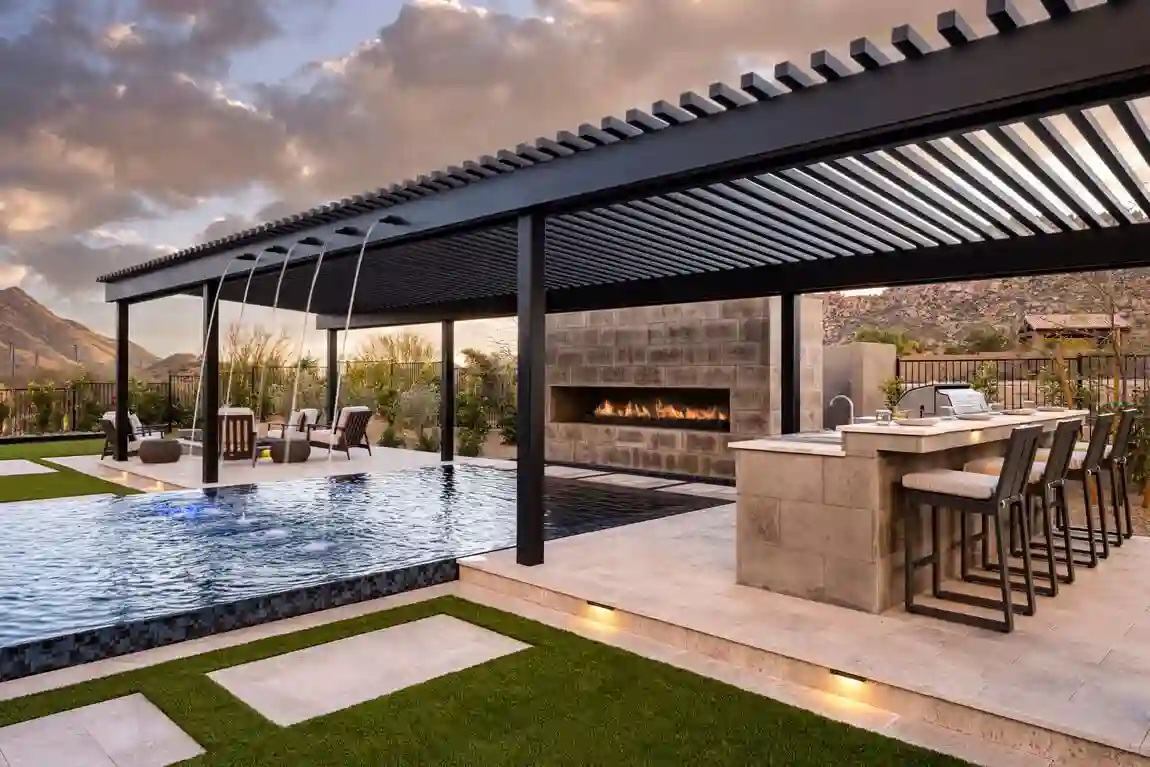
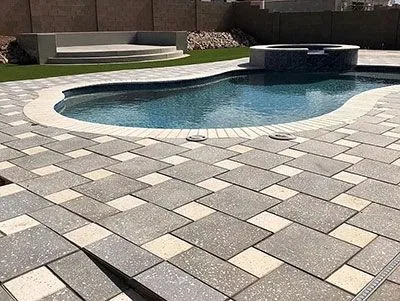
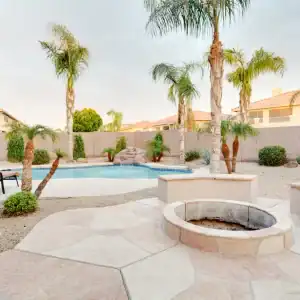
Travertine is a natural limestone prized for its soft color tones and cool surface feel. Its porous structure helps it stay comfortable underfoot, even during the hottest summer afternoons. The organic variation and texture make each installation unique—perfect for premium patios and pool decks in Queen Creek, Gilbert, and Chandler.
Porcelain Pavers
Porcelain pavers are engineered slabs made from pressed clay fired at extremely high temperatures. They’re dense, durable, and nearly maintenance-free. Modern porcelain styles mimic travertine, concrete, or natural stone, offering a clean, contemporary finish that performs well in Arizona’s extreme heat when light tones are chosen.
Performance in the Arizona Sun
Surface Temperature & Comfort
Local studies show that travertine runs cooler than concrete or darker porcelain pavers. At 108°F ambient temperature in Phoenix, neutral travertine measured just 115°F at the surface—while standard concrete registered 138–140°F. Other Arizona installers report that travertine pavers stay 20–30% cooler than concrete under direct sunlight.
Porcelain pavers can perform similarly well if you choose light colors with high reflectance. Archatrak’s SRI data shows a light “Sandy White” porcelain with an SRI of 79, meaning it reflects most sunlight and stays cooler. Darker tones drop into the 40s, becoming noticeably hotter to walk on.
Durability & Lifespan
Both materials deliver excellent durability, but with different strengths:
| Factor | Travertine | Porcelain |
|---|---|---|
| Composition | Natural limestone, porous, cooler surface | Engineered, dense, non-porous clay |
| Water Absorption | ~2–3% (requires sealing) | <0.5% (no sealing required) |
| Fade Resistance | Excellent when sealed | Excellent—UV stable glaze or through-body color |
| Expected Lifespan | Centuries with proper care | Up to 100 years with minimal maintenance |
| Maintenance | Seal every 2–3 years; pH-neutral cleaner | Low maintenance; simple rinse or sweep |
Local Examples in the Valley
“Travertine remains a favorite for high-end outdoor living in the desert. Thanks to its porous composition and lighter color range, it absorbs less heat than poured concrete or porcelain pavers, staying cooler to the touch during summer afternoons.”
 
— Lavender Landscape Design Co., Scottsdale AZ
In a recent Gilbert pool deck remodel, installers replaced old concrete with peach tumbled travertine, creating a cooler, more inviting outdoor space that stayed comfortable in July’s 110°F heat.
Maintenance & Upkeep
- Travertine: Seal every 2–3 years and clean with a pH-neutral cleaner. Avoid acidic products.
- Porcelain: Requires little care—just sweep or rinse occasionally. Non-porous and stain-resistant.
- Both: Proper installation with compacted base, drainage, and expansion joints ensures long-term performance.

Which One Lasts Longer in the Arizona Heat?
The short answer: both last decades or longer when installed correctly. Travertine offers unmatched barefoot comfort and a timeless look, while porcelain provides unbeatable strength and low maintenance.
Travertine: Best for pool decks and shaded patios where surface comfort matters.
Porcelain: Best for driveways, outdoor kitchens, and modern patios where durability and easy upkeep are priorities.
Many homeowners combine both—using travertine around pools and porcelain for patios and walkways.
Expert Tips for Arizona Homeowners
Test your samples in the sun
Place travertine and porcelain pieces in full sun at 2 p.m. and compare temperature by touch.
Pick light tones
Lighter colors (Ivory, Cream, Beige) reflect more heat and stay cooler.
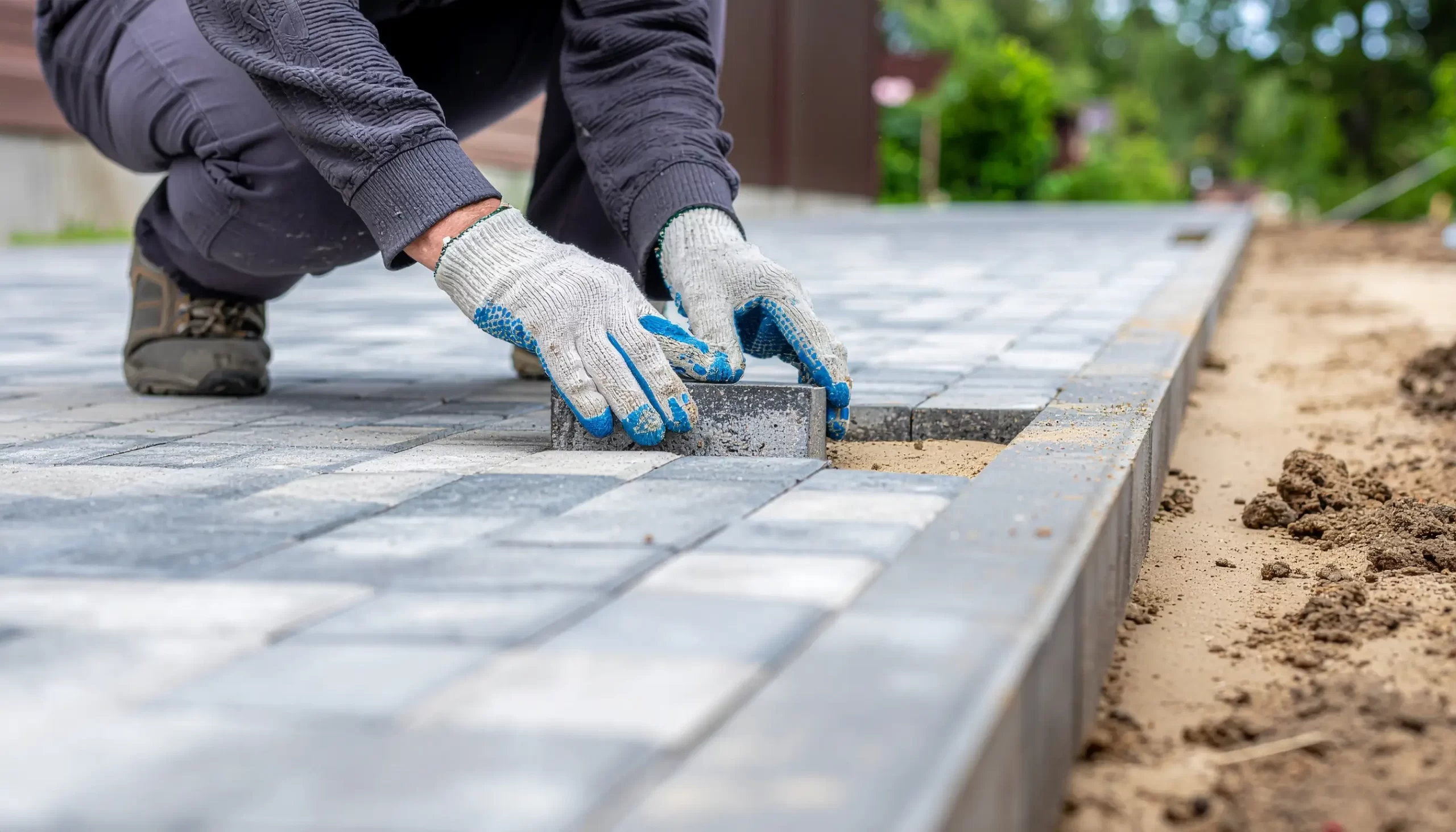
Hire certified installers
Arizona’s expanding soils and temperature cycles demand a professional base and drainage system.
Plan for drainage
Monsoon rain can damage poorly prepared sub-bases—ensure proper slope and weep systems.
Ready to Upgrade Your Patio or Pool Deck?
Platinum Outdoors designs and installs custom patios, yard remodels, and outdoor lighting systems across
Queen Creek, Gilbert, Chandler, Mesa, and the East Valley.