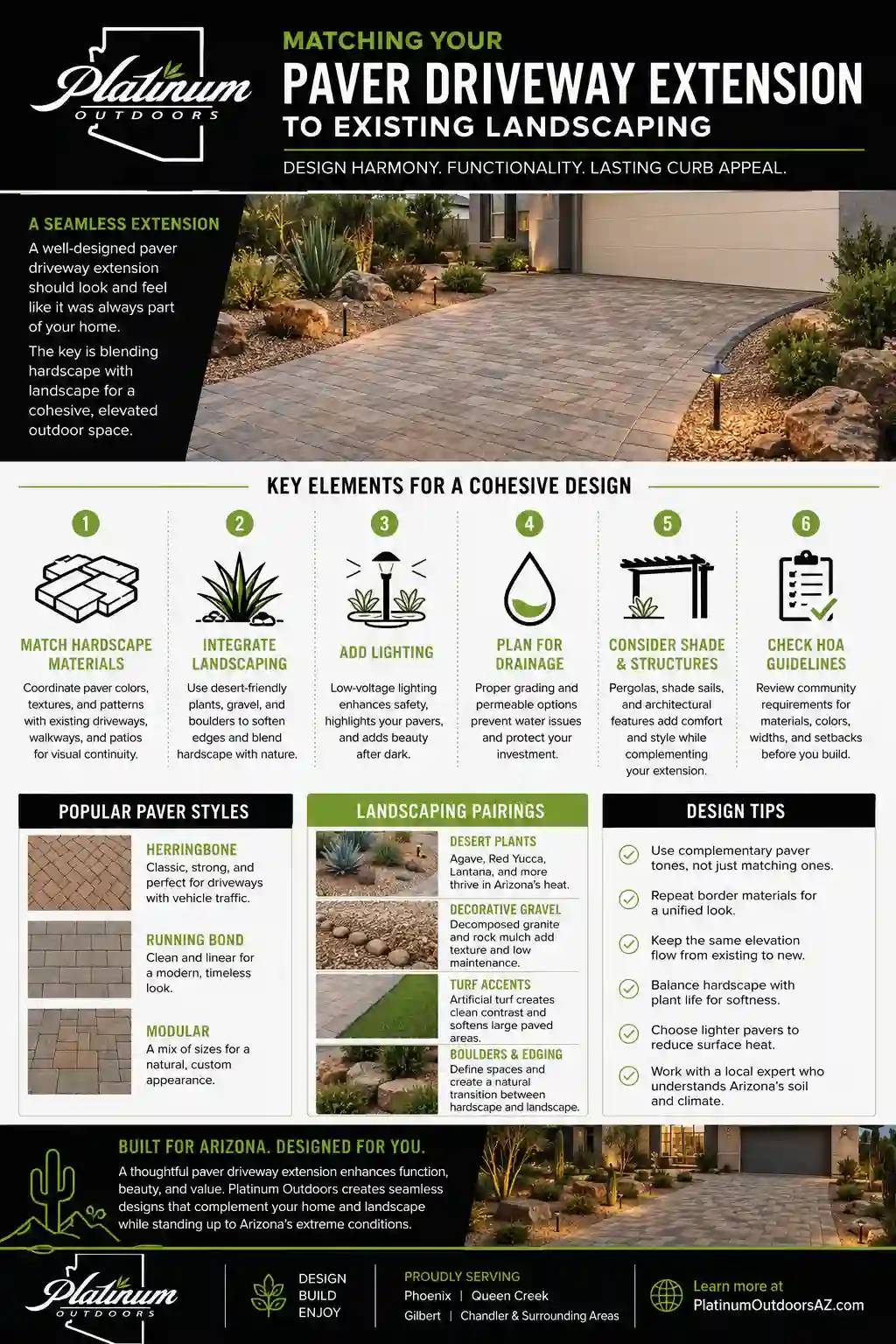
A well-designed Paver Driveway Extension should feel like it was always part of the property — not like an add-on placed beside the original driveway years later. In Arizona neighborhoods where curb appeal, HOA consistency, and low-maintenance landscaping all matter, the transition between hardscape and landscape design plays a major role in how polished the finished project looks.
Whether you are expanding parking space for a growing household, improving access beside a garage, or updating an older concrete driveway with modern pavers, matching the extension to your existing landscaping creates a cleaner and more intentional outdoor design.
Why Landscaping Matters When Planning a Driveway Paver Extension
Many homeowners focus only on the pavers themselves — color, pattern, or shape — while overlooking the surrounding landscaping. But the landscaping around the driveway is what visually connects the extension to the rest of the property.
Plants, lighting, edging, gravel selection, irrigation layout, and elevation changes all affect how cohesive the final design feels.
In Arizona, this matters even more because many front yards feature:
- Desert landscaping
- Xeriscape layouts
- Artificial turf accents
- Rock mulch
- Modern hardscape-heavy designs
- HOA-regulated front yard layouts
If the new extension ignores those elements, the finished result can look disconnected from the rest of the property.
For homeowners already planning connected outdoor spaces, Platinum Outdoors also shares additional planning considerations in this guide to designing connected paver layouts.
Start With the Existing Hardscape Materials
The first step in designing a driveway paver extension is evaluating the existing hardscape already on the property.
This includes:
- The original driveway surface
- Walkways
- Front entry pavers
- Border materials
- Retaining walls
- Pool decking
- Patio spaces
One of the most common mistakes homeowners make is choosing a completely unrelated paver color or texture. Even if the new pavers look good individually, they can clash with existing hardscape features.
Matching does not always mean identical. In many Arizona homes, complementary tones work better than exact duplication, especially if older pavers have faded under years of sun exposure.
Neutral earth tones, warm grays, charcoal borders, and natural stone-inspired textures usually integrate best with desert landscaping palettes.
How Arizona Climate Impacts Paver Selection
Arizona’s climate changes how homeowners should approach driveway extension design.
Extreme summer temperatures, monsoon runoff, UV exposure, and expansive desert soil all influence long-term performance.
For that reason, many homeowners prefer:
- Interlocking concrete pavers
- Travertine-inspired pavers
- Porcelain pavers in select applications
- Lighter color palettes that absorb less heat
- Permeable layouts for drainage management
Homeowners comparing surface temperatures and maintenance requirements can review this breakdown of travertine versus porcelain pavers in Arizona.
Drainage is also important. A driveway extension should never redirect water toward the home, garage, or neighboring properties. Proper grading and base preparation become especially important in monsoon season.

Paver Driveway Extension Ideas That Blend Naturally With Landscaping
1. Desert Border Integration
One of the cleanest ways to integrate a driveway extension into Arizona landscaping is using desert planting beds as transition zones.
Instead of running pavers directly into bare gravel, homeowners can soften edges using:
- Agave
- Red yucca
- Decomposed granite
- Desert spoon
- Lantana
- Low-water ornamental grasses
This approach prevents the driveway from feeling overly heavy while helping the hardscape connect naturally with the rest of the front yard.
2. Matching Front Walkways
If the driveway extension uses the same border style or field pattern as the front walkway, the entire entry sequence feels more intentional.
Even small details like repeating a charcoal soldier course border around both the walkway and driveway extension can visually unify the space.
Homeowners planning larger outdoor upgrades often combine these improvements with broader hardscape-focused outdoor renovations.
3. Integrated Outdoor Lighting
Lighting is one of the most overlooked parts of driveway extension design.
Low-voltage lighting can improve:
- Nighttime visibility
- Curb appeal
- Landscape depth
- Architectural contrast
Popular lighting options include:
- Paver edge lighting
- Path lighting
- Uplighting near desert plants
- Wall wash lighting
- Driveway accent lighting
More Arizona-specific lighting concepts can be found in this guide to outdoor lighting design ideas.
4. Turf and Paver Contrast
Artificial turf paired with pavers has become increasingly popular in Arizona because it creates clean visual contrast while reducing maintenance.
A narrow turf strip between driveway sections or beside the extension can soften the appearance of large paved surfaces.
This design approach works especially well in modern and contemporary front yard layouts.
Homeowners considering drought-friendly upgrades may also benefit from this guide on low-water Arizona landscape planning.
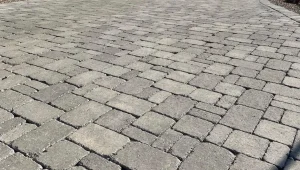
Choosing the Right Paver Pattern
Paver pattern selection has a major impact on how the extension blends with the original driveway.
Popular driveway paver patterns include:
- Herringbone
- Running bond
- Stacked bond
- Modular layouts
- Basket weave
Herringbone patterns are especially common for driveway applications because they distribute vehicle weight effectively while creating strong visual movement.
If the existing driveway already uses a specific pattern, continuing it into the extension usually creates the cleanest appearance.
In situations where an exact match is impossible, installers often use border transitions or accent bands to intentionally differentiate old and new surfaces while still maintaining cohesion.
HOA Considerations for Driveway Extensions
Many Phoenix-area and East Valley communities have HOA restrictions related to driveway modifications.
Some communities regulate:
- Paver colors
- Extension width
- Drainage changes
- Setbacks
- Street-facing hardscape percentages
- Border materials
Before starting a project, homeowners should review community guidelines and determine whether approvals are required.
This is especially common in:
- Queen Creek
- Gilbert
- Chandler
- Mesa master-planned communities
- New construction developments
Homeowners in newer neighborhoods often combine driveway upgrades with broader new construction landscape planning.
How Shade Structures Can Improve Driveway Design
Driveway extensions are not always just about parking.
In Arizona, shade and heat management are major considerations for outdoor comfort and vehicle protection.
Many homeowners integrate:
- Pergolas
- Shade sails
- Covered walkways
- Architectural shade structures
alongside driveway expansions to create a more complete front yard design.
For homes with modern architecture, coordinating the paver palette with nearby shade structures and pergolas can create a cleaner exterior aesthetic.
Drainage and Base Preparation Matter More Than Most Homeowners Realize
The visible pavers are only one part of the project.
The long-term durability of a driveway extension depends heavily on:
- Excavation depth
- Compaction
- Road base installation
- Drainage slope
- Edge restraint systems
- Joint stabilization
Arizona soil movement combined with vehicle traffic can create shifting or settling if the base preparation is inadequate.
Professional installation helps ensure the extension remains level and integrates properly with existing concrete or paver surfaces.
Additional installation concepts are discussed in this overview of modern paver installation approaches in Phoenix.
Front Yard Landscaping Features That Pair Well With Driveway Extensions
A driveway extension often becomes part of a larger curb appeal update.
Some of the most popular complementary upgrades include:
- Modern desert landscaping
- Decorative gravel replacement
- Low-voltage lighting
- Artificial turf accents
- Raised planter beds
- Steel edging
- Entry walkways
- Statement boulders
- Drought-tolerant plants
Many homeowners also use driveway projects as an opportunity to redesign the overall front yard flow through broader yard remodeling projects.
Should a Driveway Extension Match the Backyard Hardscape Too?
In many homes, yes.
Using similar paver styles across both front and backyard spaces creates continuity throughout the property.
This does not mean every hardscape surface needs identical materials, but repeating:
- border colors
- surface textures
- accent bands
- joint spacing
- stone tones
can help outdoor spaces feel connected.
For homeowners planning larger outdoor living renovations, this guide to integrated paver patio planning provides additional ideas.
Design Trends for Paver Driveway Extensions in Arizona
Some of the most popular driveway extension trends currently seen across Phoenix and the East Valley include:
- Large-format pavers
- Modern linear layouts
- Charcoal accent borders
- Mixed texture hardscapes
- Artificial turf ribbon accents
- Integrated landscape lighting
- Permeable driveway systems
- Minimalist desert landscaping
- Warm neutral color palettes
Homeowners exploring broader outdoor design trends can also review these Arizona outdoor design ideas for 2026.
Common Mistakes Homeowners Make With Driveway Paver Extensions
- Choosing pavers that clash with existing hardscape
- Ignoring HOA restrictions
- Overlooking drainage planning
- Using overly dark colors that absorb heat
- Skipping landscape integration
- Installing without proper compaction
- Forgetting lighting and nighttime visibility
- Creating extensions that feel visually disconnected
The best driveway extensions usually look subtle and intentional — not oversized or disconnected from the architecture and landscaping around them.
Frequently Asked Questions
What is the best material for a paver driveway extension in Arizona?
Interlocking concrete pavers are among the most common choices because they handle vehicle traffic well and perform reliably in Arizona heat. Travertine-inspired pavers and porcelain options are also popular in some residential applications depending on the design style and surrounding landscaping.
Should my driveway extension match my existing driveway exactly?
Not necessarily. Many homeowners use complementary colors or border accents rather than exact matches, especially when older pavers have faded over time. The goal is visual cohesion rather than perfect duplication.
Do driveway extensions require HOA approval in Arizona?
Many HOA-managed communities throughout Phoenix and the East Valley require approval before modifying driveway widths, paver colors, or front yard hardscaping. Requirements vary by neighborhood.
Can a paver driveway extension improve curb appeal?
Yes. A properly designed driveway extension can improve the visual balance of the front yard while creating cleaner transitions between landscaping, walkways, and the home’s architecture.
What landscaping works best beside paver driveways?
Drought-tolerant landscaping typically performs best in Arizona. Common options include agave, red yucca, lantana, decomposed granite, desert grasses, and low-water accent plants.
How do you keep driveway pavers from shifting?
Proper excavation, compacted base preparation, edge restraints, drainage planning, and professional installation all help prevent shifting or settling over time.
Conclusion
A thoughtfully designed Paver Driveway Extension should complement both the architecture of the home and the surrounding landscape. In Arizona, where hardscape-heavy front yards, desert landscaping, and extreme heat all influence outdoor design, matching the extension to existing materials and landscaping details creates a cleaner and more cohesive result.
From paver selection and lighting to drainage and plant integration, every detail contributes to how natural the finished project feels. When planned carefully, a driveway extension becomes more than additional parking — it becomes part of the overall outdoor design.
Homeowners researching additional hardscape and outdoor living ideas can explore the Platinum Outdoors resource center here.