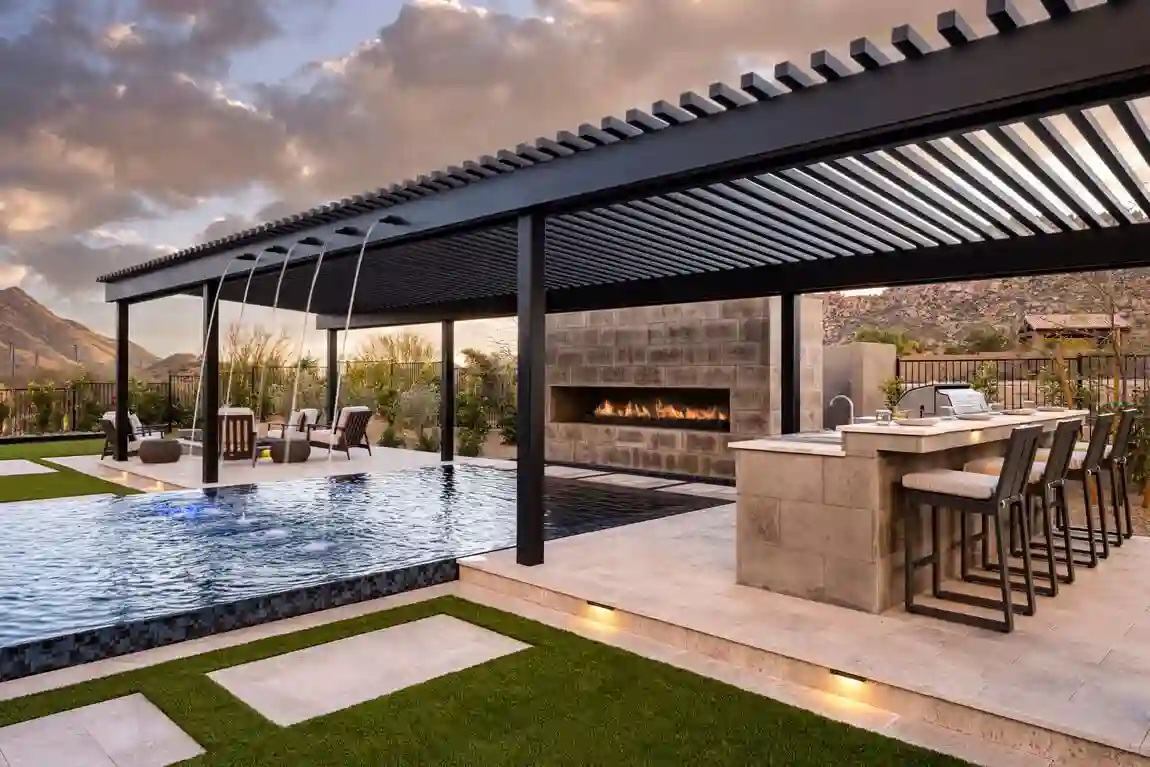
Landscaping in Arizona means working with intense sun, minimal rainfall, and soils that don’t always drain well. Traditional lawns struggle here, and even many ornamental plants require more water than is practical. Xeriscaping offers a smarter, more sustainable approach: design with drought-tolerant plants, improve water efficiency, and build a landscape that looks great year-round with far less upkeep.
Looking for professional help? Our xeriscaping services make it easy to create a water-wise landscape that thrives in Phoenix and the Valley.
Why Xeriscaping Works in Arizona
Xeriscaping isn’t “all rock and no plants.” It’s a thoughtful design method that prioritizes plant selection, efficient irrigation, and soil management so your outdoor space thrives in an arid climate. Benefits include:
- Water conservation: Lower monthly water bills by using plants adapted to low water use.
- Resilience: Native and desert-adapted plants withstand heat waves and dry spells.
- Curb appeal: Bold forms, seasonal flowers, and varied textures elevate your outdoor space.
- Lower maintenance: Less mowing, fewer replacements, and smarter watering.
Below are several standout plants for xeriscaping in Arizona, followed by practical guidance on planting seasons, soil preparation, establishment watering, and long-term care so you can apply this today.
Agave (Century Plant & Whale’s Tongue)
Why it belongs in Arizona xeriscapes: Agaves are sculptural, long-lived, and extremely low water once established. Their architectural rosettes anchor front yards, courtyards, and desert gardens.
- Best planting time: Fall (September–November) is ideal; spring (February–April) also works. Avoid midsummer installs when soil and air temps stress new roots.
- Sun & soil: Full sun; fast-draining soil. In clay, amend with mineral grit (decomposed granite/pumice) to prevent root rot.
- Watering: Deep water weekly for 4–6 weeks after planting; taper to monthly or less once established.
- Design tip: Pair with gravel bands, boulders, and low ground covers for contrast. Give space—leaf tips are sharp.

Red Yucca (Hesperaloe parviflora)
Why it belongs in Arizona xeriscapes: Heat-tolerant “strappy” leaves and tall coral flower spikes attract hummingbirds from late spring through summer.
- Best planting time: Early spring for same-season blooms, or fall to establish before winter.
- Sun & soil: Full sun; handles reflected heat near hardscapes. Provide drainage.
- Watering: 2–3x per week during the first month in warm weather, then reduce to deep, infrequent cycles.
- Maintenance: Cut spent flower stalks at the base to encourage new blooms; foliage needs little pruning.
- Design tip: Use in entry beds, along walkways, or massed for color rhythm.

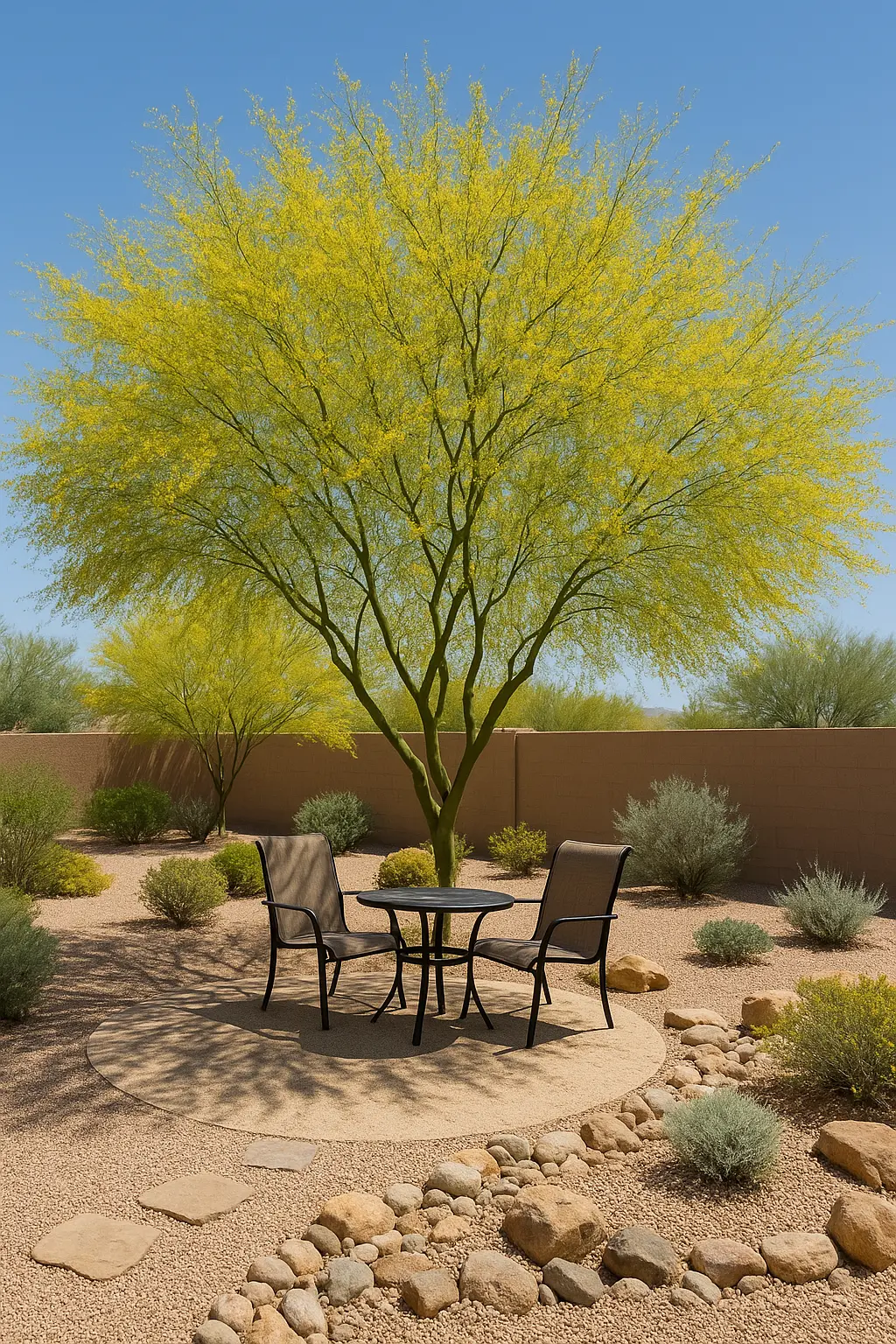
Palo Verde (Arizona’s State Tree)
Why it belongs in Arizona xeriscapes: Light, dappled shade lowers surface temperatures and reduces irrigation demand for nearby plants. Spring brings a show of yellow blossoms.
- Best planting time: Fall or early spring to avoid heat shock and promote root establishment.
- Sun & soil: Full sun; tolerates poor, alkaline soils provided drainage is adequate.
- Watering: Weekly the first growing season; gradually taper to monthly deep soaks or less once established.
- Maintenance: Light structural pruning in late winter; avoid heavy “lion-tailing.”
- Design tip: Site to shade patios, paths, or south/west windows. Underplant with desert marigold or lantana.

Desert Marigold (Baileya multiradiata)
Why it belongs in Arizona xeriscapes: A tough perennial with bright yellow flowers much of the year, great for color without raising water use.
- Best planting time: From seed or 1-gallon starts in fall or spring so roots establish before summer.
- Sun & soil: Full sun; thrives in lean, fast-draining soils.
- Watering: Light, infrequent water after establishment (every 10–14 days in heat, less in cool months).
- Maintenance: Deadhead to extend bloom; allow some heads to seed for naturalized drifts.
- Design tip: Use in swales, along decomposed-granite paths, or as a color band at the front of borders.

Prickly Pear Cactus (Opuntia spp.)
Why it belongs in Arizona xeriscapes: Iconic form, spring blossoms, edible fruit (tunas) and pads (nopales). Virtually no irrigation once established.
- Best planting time: Late spring to early summer when soils are warm—pads root quickly in heat.
- Sun & soil: Full sun; sandy or gritty soils with excellent drainage.
- Watering: Water once at planting, then keep dry until rooted (2–4 weeks). Thereafter, water only during extended drought.
- Maintenance: Minimal; wear protection when handling. Remove damaged pads to shape.
- Design tip: Combine with boulders, agave, and red yucca for a classic desert composition.
Planting Windows & Seasonal Strategy (Arizona)
Success with drought-tolerant plants hinges on timing. Here’s how to plan around Arizona’s seasons:
- Fall (best overall): September–November offers cooler air and warm soil—ideal for root growth before summer. Prioritize woody plants (trees/shrubs) and succulents like agave.
- Spring (also strong): February–April works well for perennials and bloomers (e.g., red yucca, desert marigold). Watch for late cold snaps at higher elevations.
- Summer (avoid for new installs): High heat forces frequent irrigation and increases transplant stress. If you must plant, shade cloth + daily monitoring are essential.
- Winter: In low desert areas, you can plant many xeric species, but growth will be slow. Protect tender young plants from rare frosts.
Soil Preparation & Mulch vs. Rock
Arizona soils often feature clay pockets that hold water—bad news for succulents and many xeric plants. Improve outcomes by:
- Testing drainage: Dig a 12″ hole, fill with water, and observe. If water remains after 24 hours, amend.
- Amending for drainage: Blend native soil with mineral grit (decomposed granite, coarse sand, pumice) where plants will root. Avoid heavy organic mixes around cacti/agaves.
- Mulch for moisture & soil health: Organic mulch (or small gravel where appropriate) moderates soil temps and reduces evaporation. Reserve large rock fields for accent bands or erosion control, not plant root zones.
Establishment Watering (First 6–12 Months)
Even the toughest xeric plants need regular water early on. A simple framework:
- Weeks 1–4: Deep water 1–3x weekly depending on temperature, sun, and plant size. Aim to moisten the entire root zone.
- Months 2–6: Shift to once weekly or every other week; lengthen run times to encourage deep roots.
- Months 6–12: Transition to every 2–4 weeks depending on rainfall. Always water deeply rather than shallow, frequent sips.
Long-Term Care & Irrigation Efficiency
Once established, xeriscape plants thrive with minimal supplemental irrigation. To maximize success:
- Install or retrofit a drip irrigation system to deliver water directly to the root zone.
- Incorporate rainwater harvesting (cisterns, rain barrels, or grading swales) to supplement irrigation.
- Inspect emitters seasonally for clogs or leaks.
- Adjust watering schedules seasonally—less in winter, more during extended summer droughts.
Designing with Color & Shade
Xeriscaping isn’t only practical—it’s beautiful. Combine structural succulents (agave, yucca, prickly pear) with seasonal bloomers (desert marigold, penstemon, chuparosa) to keep interest year-round. Add trees like palo verde or mesquite to cast dappled shade, reducing water loss in planting beds below.
Ready to Upgrade Your Landscape?
Arizona homeowners are finding that xeriscaping saves water, lowers costs, and creates outdoor spaces that stand out. Whether you’re refreshing a front yard or building a new desert-inspired design, working with drought-tolerant plants makes it possible to have beauty and sustainability side by side.
Request a Xeriscape Consultation Today
FAQs
What plants are best for xeriscaping in Arizona?
Popular choices include agave, red yucca, palo verde trees, desert marigold, prickly pear cactus, chuparosa, and brittlebush. These plants thrive in Arizona’s heat and require little water once established.
When is the best time to plant drought-tolerant plants in Arizona?
Fall (September–November) is ideal because the soil is still warm but the air is cooler, giving roots time to establish. Spring is also a good planting window.
How often should I water xeriscape plants?
New plants need deep watering 1–3 times per week for the first month. Once established (after 6–12 months), most drought-tolerant plants only need water every 2–4 weeks depending on rainfall.
Should I use rocks or mulch in a xeriscape yard?
Small gravel or organic mulch is best around plant root zones to hold moisture and improve soil health. Large rock fields increase heat and runoff, so use them sparingly as accents.
Do xeriscape landscapes still look attractive year-round?
Yes. By combining structural plants (like agave or yucca) with seasonal bloomers (like desert marigold or penstemon), plus shade trees for depth, xeriscapes can be colorful, textured, and low-maintenance all year.