In Queen Creek, outdoor spaces are used year-round—but the environment demands thoughtful planning. Summers are long, dry, and intensely hot, while winters are mild and short. According to U.S. climate data, average daytime highs exceed 97°F for several months, with annual rainfall totaling just over nine inches. These conditions make traditional lawn-heavy yards difficult to maintain and water-intensive.
Hardscaping offers a practical and visually cohesive solution. By incorporating non-living elements such as pavers, stone, concrete, and retaining structures, homeowners can create outdoor environments that hold up under extreme heat, require significantly less water, and remain usable throughout the year. When designed correctly, hardscaping does more than replace grass—it defines outdoor rooms, supports drainage, and integrates seamlessly with desert-adapted plantings.
This guide explores the essential considerations for planning hardscaping in Queen Creek, from climate-appropriate materials and layout strategies to sustainability, maintenance, and long-term performance. Whether you are refining a newly built home or reworking an established yard, understanding how hardscape elements function in the Arizona desert will help you make informed, durable design decisions.
Understanding Queen Creek’s Climate and Landscape Conditions
Queen Creek sits at the southeastern edge of the Phoenix metro area, where desert conditions are shaped by elevation, sun exposure, and seasonal weather patterns. Extended heat, intense solar radiation, and minimal precipitation place constant stress on outdoor materials. Surfaces that absorb heat, crack under expansion, or shift due to poor base preparation often fail prematurely.
Monsoon season adds another layer of complexity. Short but powerful rain events can overwhelm poorly graded yards, causing pooling, erosion, and runoff toward foundations. These factors make climate-responsive design essential—not optional.
Effective hardscape planning in Queen Creek accounts for:
- Thermal expansion and contraction of materials
- Surface temperatures under direct sunlight
- Water movement during monsoon storms
- Soil composition and compaction requirements
- Long-term maintenance under desert exposure
Water management is especially critical. A water-wise yard blends hardscape with efficient irrigation systems and plant groupings designed to reduce runoff and maximize infiltration. If you are evaluating irrigation layouts alongside hardscape planning, reviewing drip irrigation vs. sprinkler systems can help clarify which approach supports your overall landscape strategy.
Why Hardscaping Works So Well in Desert Environments
Hardscaping addresses many of the challenges that come with desert living. Unlike turf or high-water landscaping, hardscape elements do not rely on constant irrigation and are less susceptible to seasonal stress. When installed correctly, they provide structure, longevity, and flexibility.
In Queen Creek, homeowners often choose hardscaping to:
- Reduce outdoor water consumption
- Create defined gathering and circulation areas
- Stabilize sloped or erosion-prone yards
- Improve usability during extreme heat
- Minimize ongoing maintenance
Paver patios, walkways, and seating walls create durable surfaces for daily use while reducing the footprint of water-dependent grass. Retaining walls not only manage grade changes but can also function as seating or planter edges. Properly selected materials maintain visual consistency across the yard while supporting long-term performance.
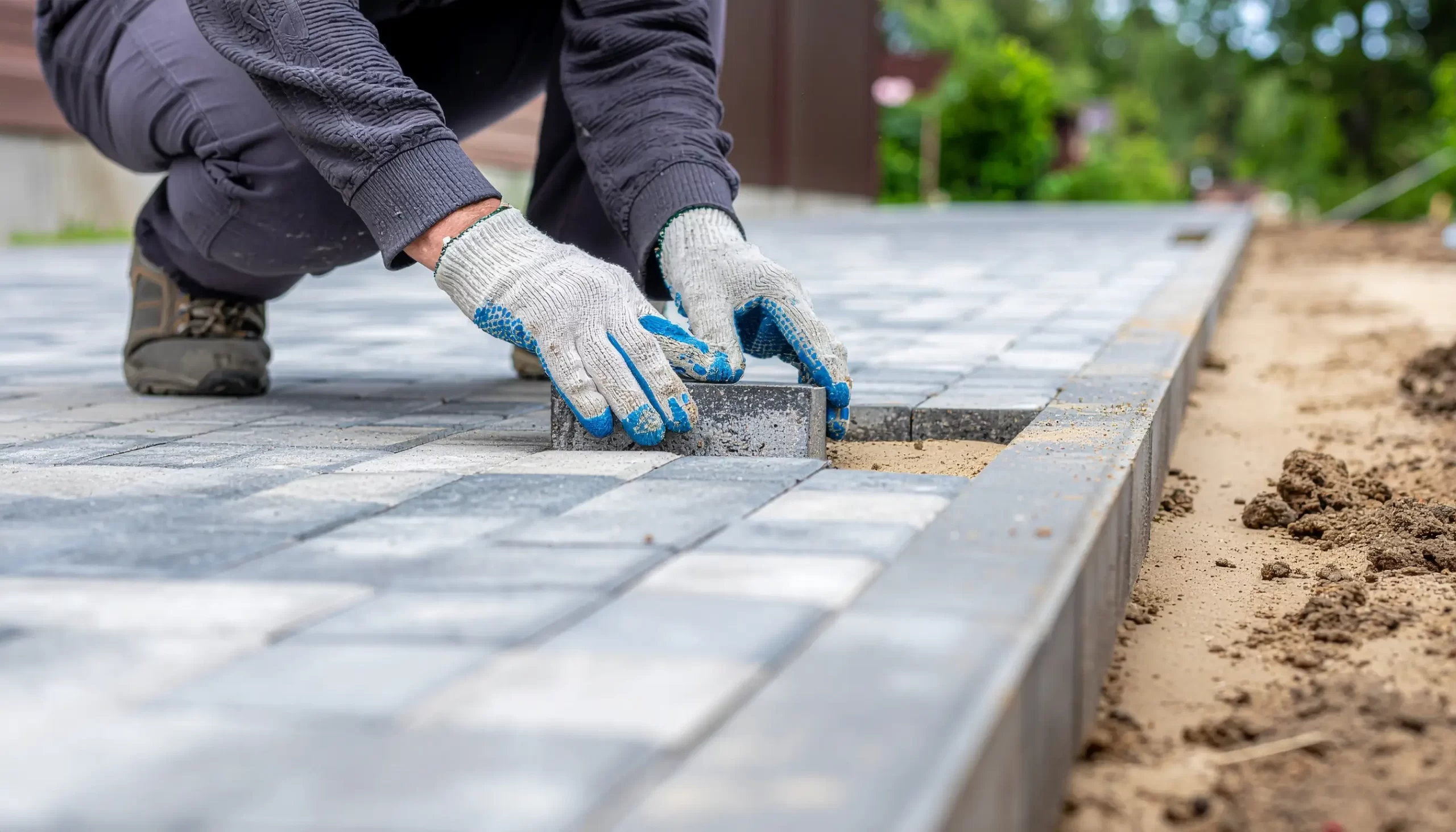
Permeable interlocking concrete pavers are especially well suited to desert conditions. Their joint systems allow rainwater to move through the surface rather than across it, reducing runoff and improving drainage during monsoon storms.
Research summarized by the Sustainable Buildings Initiative shows that permeable pavers can infiltrate rainfall at rates up to 50 inches per hour while light-colored surfaces help reduce urban heat island effects through reflectivity and evaporative cooling. These characteristics make them a strong choice for Queen Creek yards focused on sustainability and comfort.
For homeowners considering poured surfaces or structural slabs as part of a hardscape layout, understanding the benefits of concrete installation can help clarify where concrete performs best within a desert landscape.
Choosing the Right Hardscape Materials for Queen Creek
Material selection plays a major role in how a hardscape performs over time. In Queen Creek, durability and heat behavior matter just as much as appearance. The most common hardscape materials used in desert landscapes include concrete pavers, natural stone, porcelain tiles, and decomposed granite.
Concrete pavers are widely used because of their versatility. Available in numerous shapes, colors, and textures, they can be arranged in patterns that complement both modern and traditional architecture. Properly installed pavers accommodate ground movement better than monolithic slabs and are easier to repair if sections need adjustment.
Natural stone, such as travertine or limestone, is valued for its ability to stay cooler underfoot. The porous structure of travertine allows heat to dissipate, making it a popular choice for patios and pool decks. Natural variation in color and texture adds visual depth, though sealing and maintenance are important to protect against staining.
Porcelain tiles provide a consistent appearance and high resistance to moisture and staining. In outdoor applications, slip-resistant finishes are essential. Porcelain is often selected for contemporary designs where uniformity and clean lines are priorities.
Decomposed granite offers a more informal aesthetic and works well for pathways or secondary areas. While affordable and visually cohesive with desert surroundings, it requires proper stabilization and edging to prevent migration over time.
When evaluating materials, consider how each responds to:
- Direct sun exposure and surface temperature
- Foot traffic and furniture placement
- Water movement and drainage
- Maintenance requirements
For a deeper breakdown of stone and manufactured surfaces, see our detailed comparison of travertine vs. porcelain pavers.
Designing Functional Hardscape Features
Hardscaping is most effective when it supports how a space is actually used. Rather than thinking of surfaces individually, consider how patios, walkways, walls, and shade elements work together to form outdoor rooms.
Patios serve as the foundation of many Queen Creek yards. Their size and placement should reflect intended use—dining, lounging, entertaining, or a combination of all three. Orientation matters; placing patios where they receive morning sun and afternoon shade improves comfort.
Walkways guide movement through the yard and visually connect different areas. Gentle curves can soften the landscape, while straight lines emphasize modern design. Path width should accommodate foot traffic and maintenance access.
Retaining and seating walls manage elevation changes while doubling as functional seating or planter edges. In sloped yards, they are often essential for stability and usability.
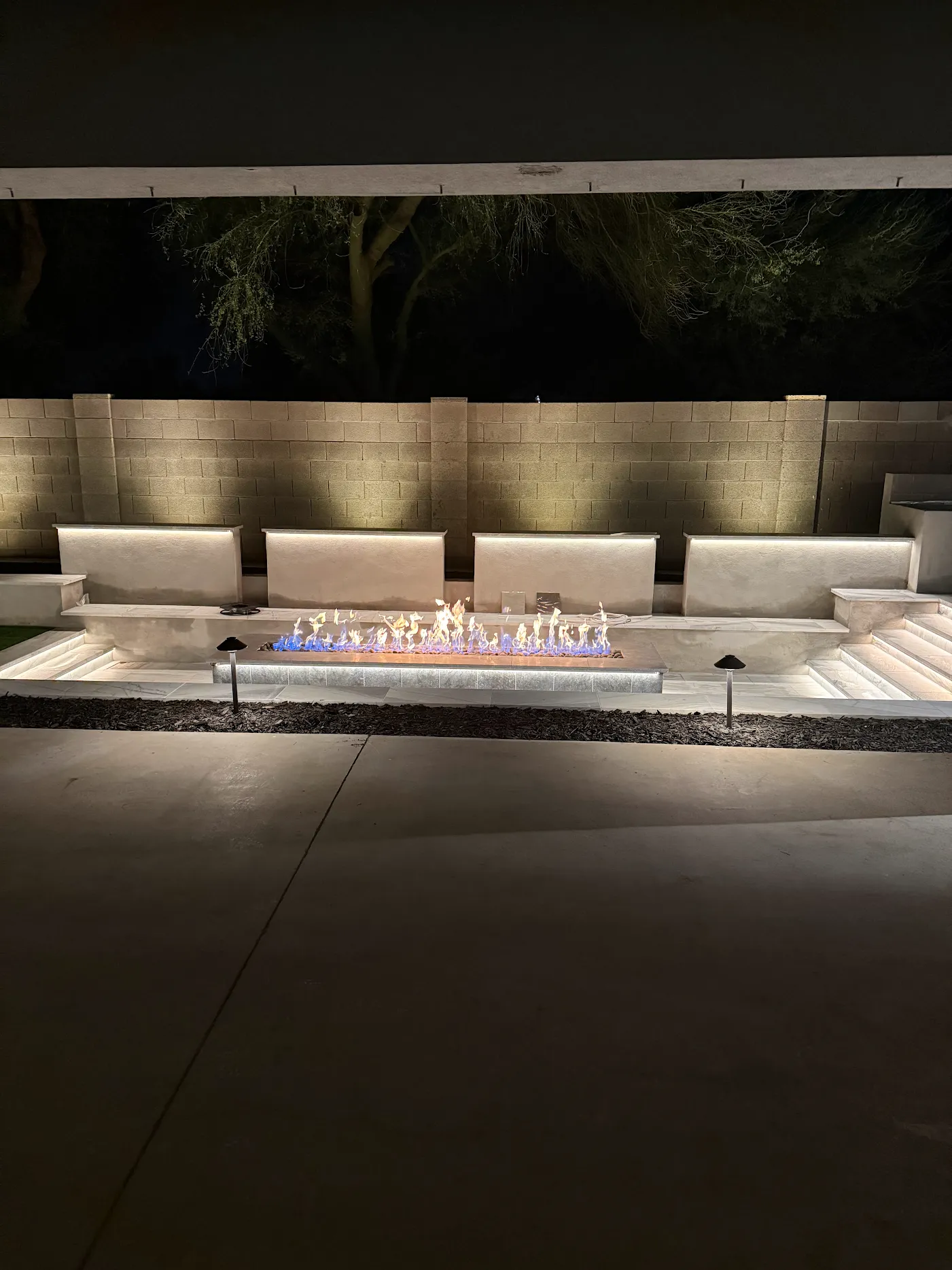
Fire features and outdoor kitchens extend usability into cooler months and evenings. Planning for utilities and clearances early prevents conflicts later.
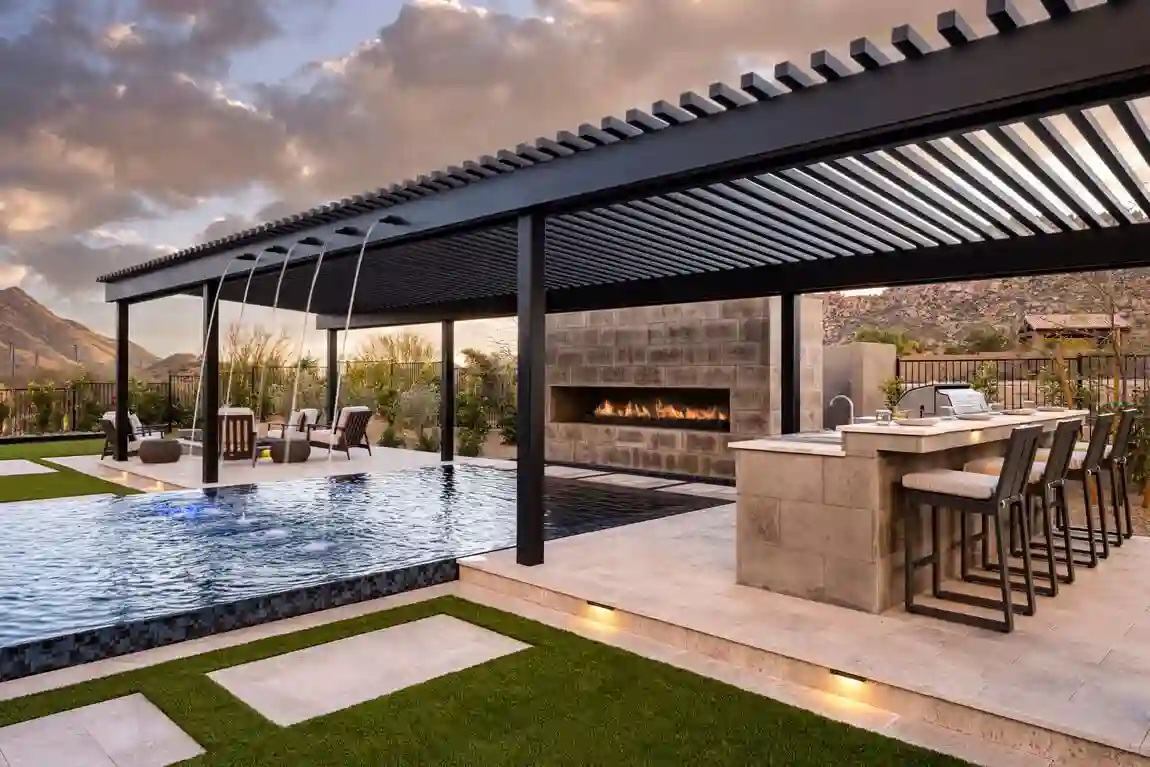
Shade is a critical design component in Queen Creek. Structures such as pergolas help reduce surface temperatures and make hardscape areas usable during peak heat. For design inspiration, explore pergola designs perfect for Arizona heat.
Drainage, Rainwater Harvesting, and Sustainability
Drainage is often overlooked until problems arise. In Queen Creek, monsoon storms can drop large volumes of water in a short time. Without proper grading, hardscaped areas may funnel water toward structures or erode surrounding soil.
Effective drainage strategies include:
- Positive grading away from foundations
- Permeable paving systems
- Swales and shallow basins
- Subsurface drainage where needed
Passive rainwater harvesting captures runoff and directs it toward plant roots instead of storm drains. Berms and basins slow water movement, allowing soil to absorb moisture while reducing erosion.
Pairing hardscape with desert-appropriate planting enhances sustainability. For guidance on selecting plants that thrive with minimal water, refer to drought-tolerant plants and xeriscaping in Arizona.
Blending Plantings with Hardscape
Hardscape and planting design should work together. Plants soften edges, provide shade, and introduce seasonal interest, while hardscape offers structure and accessibility.
In Queen Creek, selecting low-water-use plants and grouping them by similar moisture needs improves efficiency. Guidance from the Arizona Municipal Water Users Association emphasizes that grouping plants with the same water requirements conserves water and reduces maintenance.
Trees placed strategically near patios or walkways can significantly reduce surface temperatures. Raised planters integrated into walls allow for deeper soil and better drainage, supporting healthy root systems.
Shade structures further enhance comfort. Explore options in our guide to the best shade structures for Arizona backyards.
Maintaining Hardscapes in the Desert
While hardscapes are lower maintenance than lawns, routine care preserves appearance and performance. Regular sweeping prevents debris buildup and staining. Sealing porous materials protects against UV exposure and spills.
After monsoon storms, inspect joints, edges, and drainage paths. Addressing small issues early helps prevent larger repairs later.
Lighting fixtures also require periodic cleaning and inspection. If lighting is part of your design, our guide to outdoor lighting installation provides helpful planning and maintenance insights.
Planning a Hardscaping Project in Queen Creek
Successful hardscaping begins with clear goals. Identify how you want to use your outdoor space and evaluate site conditions such as slope, soil type, and sun exposure. HOA guidelines should be reviewed early to avoid conflicts.
Budgeting should account for materials, base preparation, drainage, and utilities. Planning these elements upfront reduces change orders and ensures cohesive results.
For examples of coordinated outdoor design in the area, review landscape construction in Queen Creek.
Frequently Asked Questions
What is the difference between hardscaping and landscaping?
Hardscaping includes non-living elements such as pavers, stone, concrete, and walls. Landscaping refers to plants, turf, and soil-based features. The two work together to create balanced outdoor environments.
Which hardscape materials stay cooler in summer?
Travertine and light-colored pavers typically stay cooler underfoot due to reflectivity and porosity. Proper shading further improves comfort.
How long does hardscaping last in desert conditions?
With proper installation and maintenance, quality hardscaping materials can perform well for decades in Queen Creek’s climate.
For professional guidance on material selection and layout, explore available hardscaping services.
Conclusion
Hardscaping plays a vital role in creating outdoor spaces that thrive in Queen Creek’s desert environment. By selecting climate-appropriate materials, designing for drainage and shade, and integrating low-water plantings, homeowners can create outdoor areas that are both functional and resilient.
Thoughtful planning ensures your hardscape complements your home, supports long-term use, and reduces ongoing maintenance. When you are ready to move from planning to implementation, resources like paver patio installation can help translate design concepts into durable outdoor spaces.