A Complete Planning Guide for Heat, Shade, Materials, and Low-Maintenance Design
Outdoor kitchens in Phoenix are no longer just a luxury feature—they’ve become a practical extension of how homeowners use their backyards. In a climate where outdoor living is possible most of the year, a thoughtfully designed outdoor kitchen allows cooking, dining, and gathering to move outside without sacrificing comfort or functionality. But designing an outdoor kitchen in the Phoenix metro requires a very different planning approach than in cooler or wetter climates.
Extreme heat, intense sun exposure, monsoon rain, dust, water conservation requirements, and HOA regulations all influence how an outdoor kitchen should be designed, built, and maintained. Materials that work well in other regions can struggle in Arizona. Layout decisions that seem minor on paper can significantly affect comfort once temperatures rise.
This guide is intentionally planning-focused and Phoenix-specific. It expands on the core ideas found in the Outdoor Kitchen Planning Checklist and dives deeper into layout strategy, shade planning, material performance, utility coordination, and long-term usability. Whether you are gathering ideas or preparing for a full backyard renovation, this resource is designed to help you make informed decisions before construction begins.
What is considered an outdoor kitchen in Phoenix?
In Phoenix, an outdoor kitchen is generally defined as a permanent or semi-permanent cooking and food preparation area built into the landscape. Unlike portable grills or temporary setups, an outdoor kitchen includes fixed components such as masonry or framed islands, permanent countertops, built-in appliances, and planned utility connections.
Most outdoor kitchens start with a built-in grill and a dedicated prep counter. From there, many homeowners add sinks, outdoor-rated refrigerators, trash pull-outs, storage, bar seating, side burners, or specialty appliances like pizza ovens or smokers. The more features included, the more important it becomes to plan ventilation, shade, drainage, and access around the kitchen.
Once utilities or roofed structures are involved, the outdoor kitchen should be treated as part of a broader outdoor living system rather than a standalone feature. That’s why many Phoenix homeowners plan their kitchens alongside patios, shade structures, lighting, and landscaping as part of a cohesive yard design using backyard renovation services or full yard remodels.
Why outdoor kitchens in Phoenix require a different approach
Outdoor kitchens in the Phoenix metro face environmental conditions that can shorten the lifespan of materials and appliances if not addressed during planning. Summer temperatures regularly exceed 100°F, surfaces absorb heat throughout the day, and direct sun exposure accelerates UV-related wear. Dust and wind introduce ongoing maintenance challenges, while monsoon storms require proper drainage and surface preparation.
Water conservation is another defining factor. Outdoor kitchens often sit adjacent to patios, planting beds, or turf areas. Without thoughtful design, overspray, runoff, or pooling water can quickly become an issue. That’s why many kitchens are paired with xeriscaping strategies and efficient irrigation systems rather than traditional lawns.
In Phoenix, the most successful outdoor kitchens prioritize:
Shade and airflow for comfort and material protection
Heat-resistant, low-maintenance finishes
Layouts that separate cooking, serving, and seating zones
Integration with patios, lighting, and surrounding landscape
The foundation of every good outdoor kitchen is understanding how the space will be used. Some homeowners want a simple grilling station for weeknight meals, while others envision a hosting-focused layout with seating, serving space, and multiple cooking options.
Before selecting materials or appliances, consider:
How often you plan to cook outdoors
Whether you cook alone or with others
How many guests you typically host
Whether guests will gather near the cook or separately
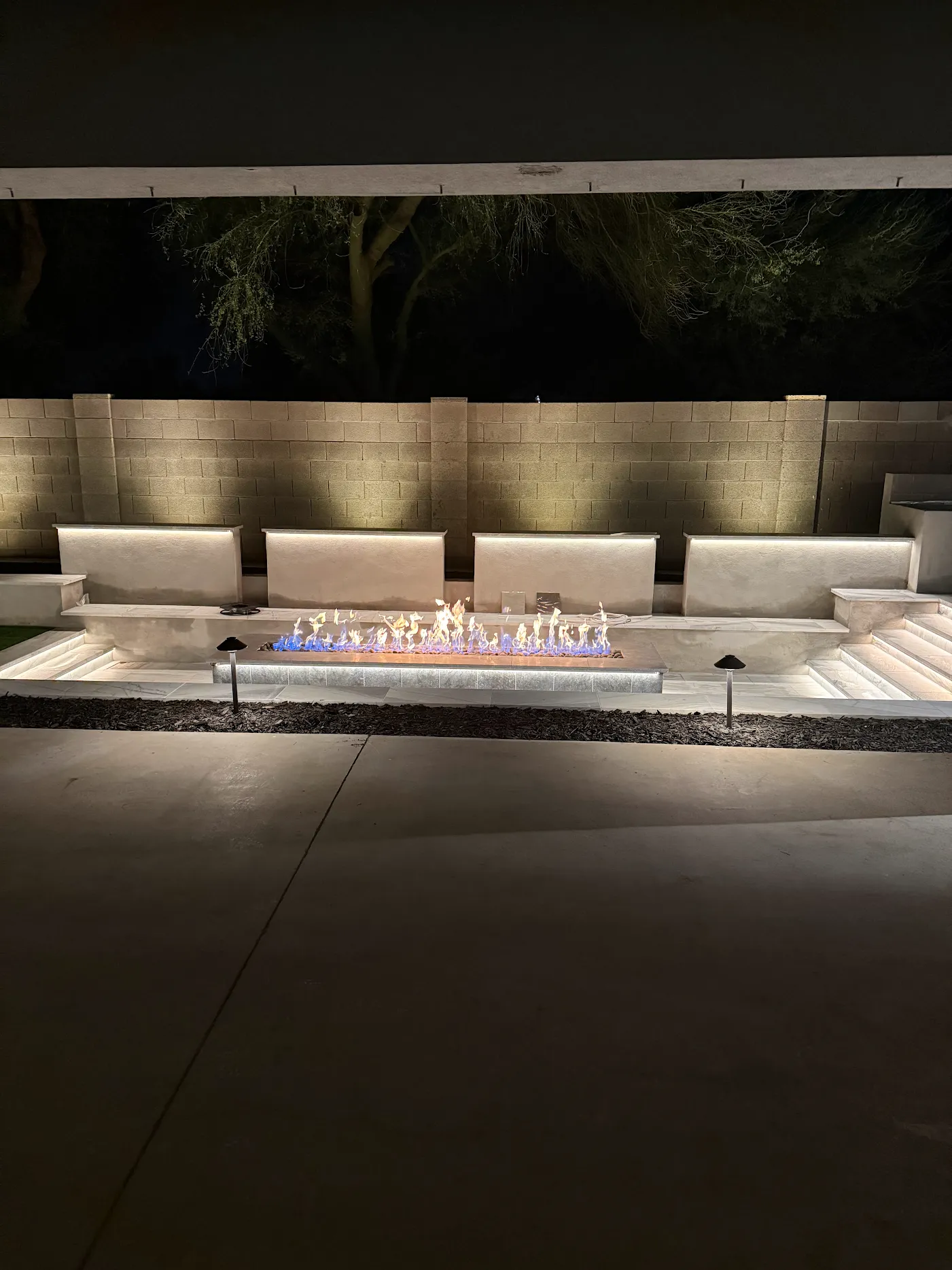
Common Phoenix outdoor kitchen styles include compact grill islands, entertainment-focused bar kitchens, and full-service outdoor kitchens paired with lounge and dining areas. If cooler-season use is important, kitchens are often coordinated with fire elements using guidance like how to choose a fire pit for an Arizona backyard.
Step 2: Choose the right location in the yard
Location is one of the most impactful decisions in outdoor kitchen planning. In Phoenix, west-facing exposure can cause counters and seating to absorb heat all afternoon, making evening cooking uncomfortable. Poor placement can also trap smoke near seating or create awkward traffic patterns.
A good location plan considers sun path, prevailing winds, walking routes, and proximity to utilities. Kitchens located closer to the home often allow easier gas, water, and electrical connections while improving access to indoor storage when needed.
For homeowners working with limited space, ideas from small backyard layouts can help maximize functionality without overcrowding the yard.
Step 3: Plan shade before choosing finishes
Shade is the single most important comfort factor in Phoenix outdoor kitchens. Without shade, even the best materials can become uncomfortable to touch, and appliances may work harder than intended. Shade also helps extend the lifespan of finishes and improves usability throughout more months of the year.
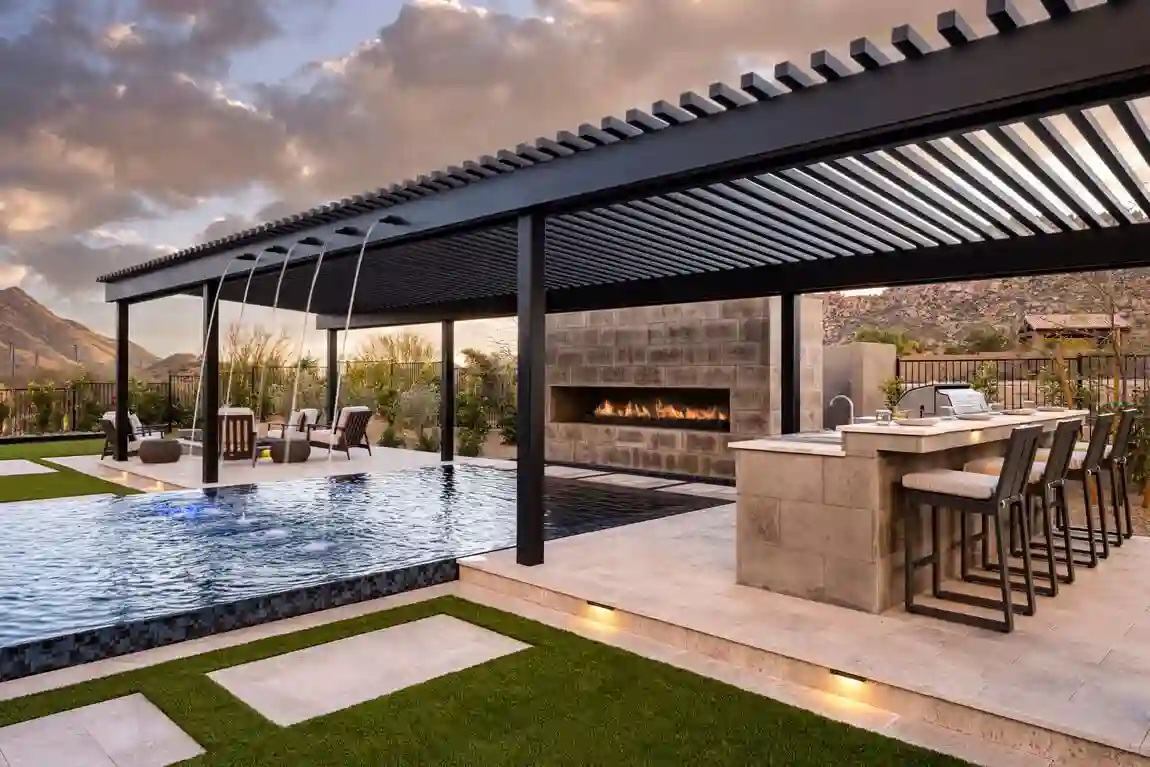
Common shade solutions include pergolas, ramadas, roof extensions, and shade sails. Each option offers different levels of coverage, airflow, and visual impact. Many kitchens combine structural shade with ceiling fans or lighting to create a more complete outdoor room.
Step 4: Select materials that perform in desert conditions
Outdoor kitchen materials in Phoenix should be chosen for heat resistance, durability, and ease of maintenance. Countertops, island bases, patio surfaces, and adjacent landscape finishes all play a role in how the space looks and functions over time. Our outdoor kitchen contractors will work with you to pick the best function, look, and material for your perfect kitchen.
Natural stone, porcelain, and concrete are commonly used materials, each with different benefits. Stainless steel remains a popular choice for cabinetry and appliances due to its ability to withstand heat and sun exposure.
When patios are part of the kitchen footprint, many homeowners compare materials using resources like travertine vs. porcelain pavers, or explore broader hardscaping services to understand long-term performance.
Step 5: Design a functional kitchen layout
Layout affects both comfort and usability. A good outdoor kitchen layout minimizes unnecessary movement and keeps hot zones away from seating. Common layouts include straight-line, L-shaped, and U-shaped designs.
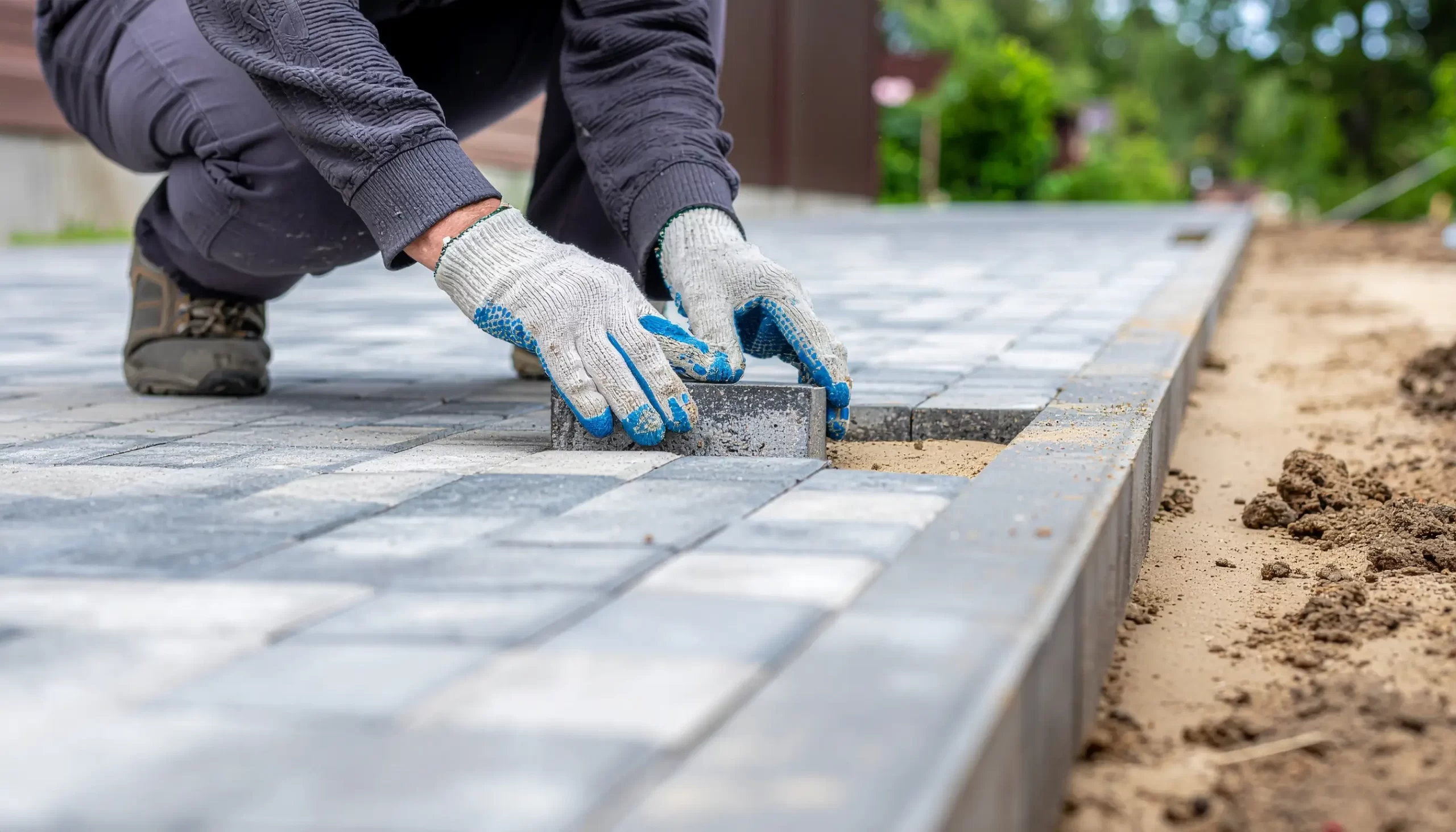
Most layouts include separate zones for cooking, prep, serving, and storage. When the kitchen is part of a larger patio, layout planning often happens alongside paver patio installation to ensure consistent elevations and flow.
Step 6: Appliances and feature planning
Appliance selection should match how you cook and how often you entertain. Built-in grills are the centerpiece, while sinks, refrigeration, and side burners add convenience. Appliances should always be outdoor-rated and positioned with shade and ventilation in mind.
When the kitchen becomes a permanent structure with utilities, many homeowners review outdoor kitchen installation
to understand how appliances integrate with the overall build.
Lighting allows outdoor kitchens to function safely during evening hours, which are often the most comfortable times to cook in Phoenix. Task lighting over prep areas, ambient lighting for seating, and pathway lighting for circulation all contribute to usability.
Step 9: Integrating the kitchen into the surrounding landscape
Outdoor kitchens feel most natural when integrated into the surrounding yard. Hardscape, turf, and planting should support cleanliness, water conservation, and ease of movement. Many Phoenix kitchens sit within patios bordered by gravel, xeriscape plants, or small turf zones.
Xeriscaping complements outdoor kitchens by reducing water use and maintenance. Desert plants, drip irrigation, and defined planting zones help keep cooking areas clean and efficient.
Outdoor kitchens in Phoenix are often used most heavily during spring, fall, and winter evenings. Features like fire pits, fireplaces, and lighting help extend usability into cooler months. With proper planning and maintenance, outdoor kitchens can remain functional and visually consistent for many years.
For homeowners planning a complete outdoor living environment, coordinating with an outdoor living contractor
helps align kitchen design with patios, shade, and landscape features.
How outdoor kitchens fit into a complete Phoenix backyard
An outdoor kitchen is rarely just a single feature. In Phoenix, it often becomes the anchor for the entire backyard—connecting patios, shade structures, lighting, irrigation, and landscaping into a unified space.
By approaching outdoor kitchen design as part of a complete system, Phoenix homeowners can create spaces that feel intentional, comfortable, and well-suited to desert living.
Check Out this Outdoor Kitchen Remodel in Gilbert, Arizona by Platinum Outdoors
An outdoor fire feature can completely change how an Arizona backyard feels once the sun goes down. Fire pits create casual gathering spaces where family […]
Travertine pavers are one of the most recognizable natural-stone choices for Arizona outdoor spaces. Their softly textured surfaces, naturally varied colors, and ability to complement […]
A louvered roof pergola in Phoenix offers something that traditional patio covers and open-roof pergolas cannot: the ability to adjust the amount of sunlight, shade […]