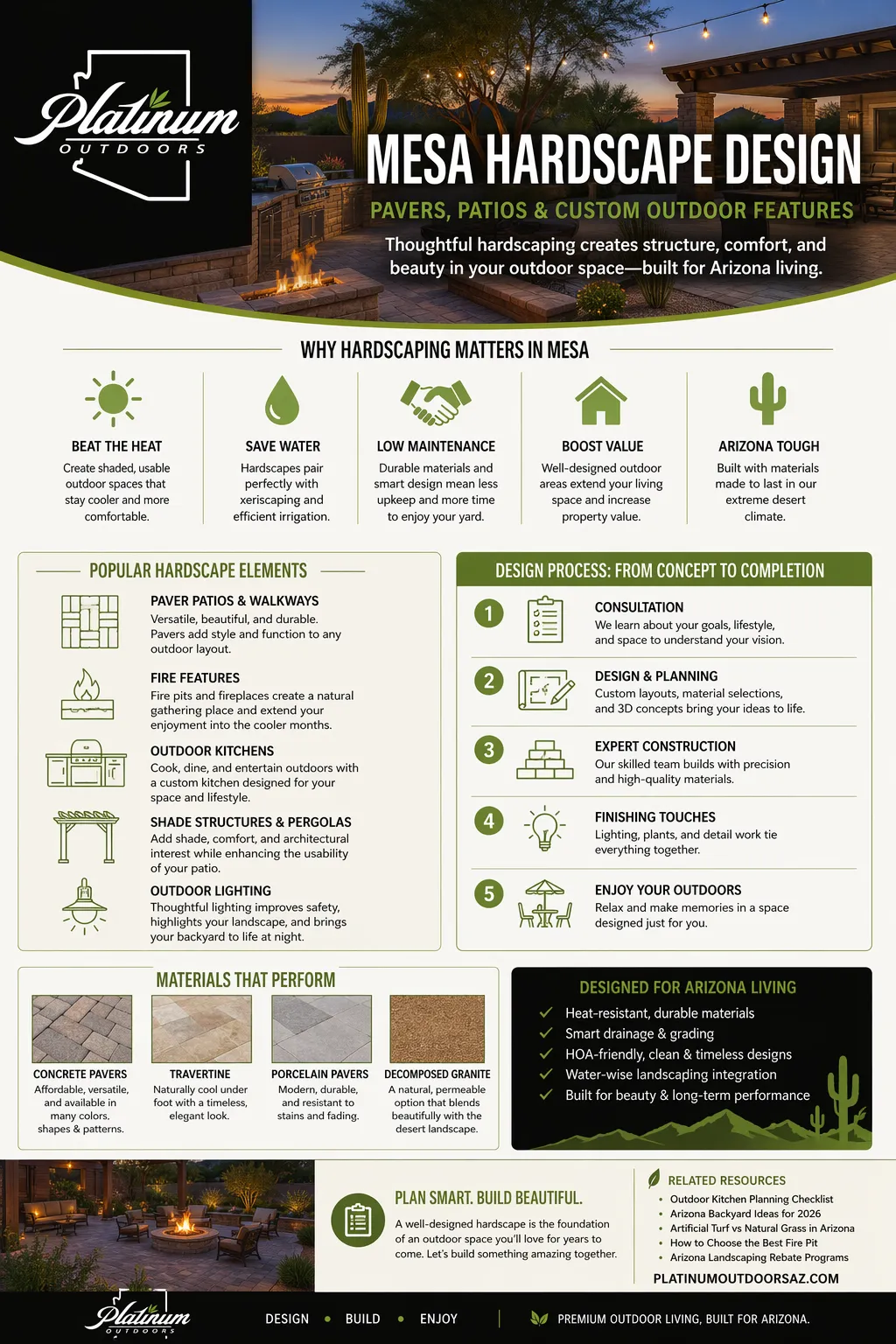
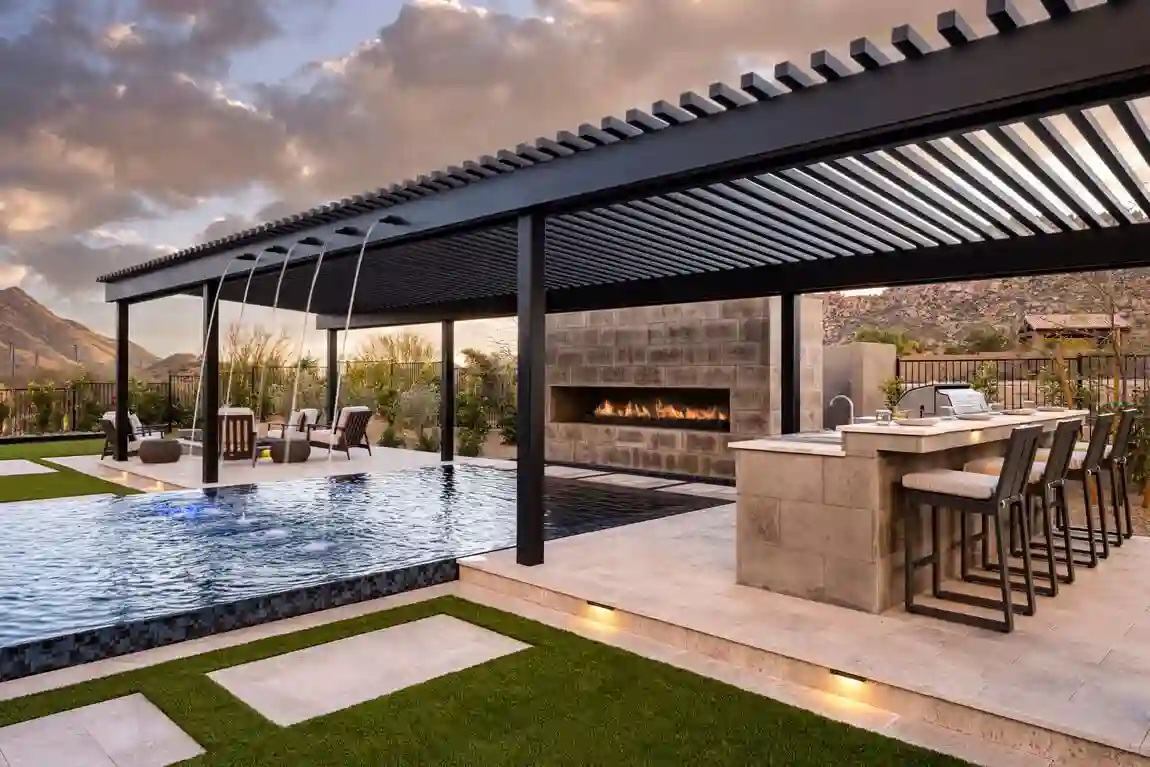
Creating a better backyard in Mesa usually starts with structure. Before plants, decor, or furniture, the layout has to make sense for how the space will actually be used. That is where hardscaping comes in. Patios, walkways, fire features, shade structures, lighting, and built-in gathering areas help shape the yard and make it more functional in Arizona’s climate.
Good landscape planning in Mesa does more than make a yard look finished. It helps homeowners deal with heat, reduce maintenance, improve flow from one zone to another, and create outdoor areas that feel comfortable for much more of the year. In many cases, the best results come from combining pavers and other hardscape materials with desert-friendly planting, efficient irrigation, and features designed around the way a family actually lives outside.
This guide breaks down what goes into thoughtful hardscape planning, how pavers and patios fit into a bigger design, what custom features are worth considering, and how to think through materials, water use, comfort, and long-term performance in Mesa.
What Hardscaping Means in a Mesa Backyard
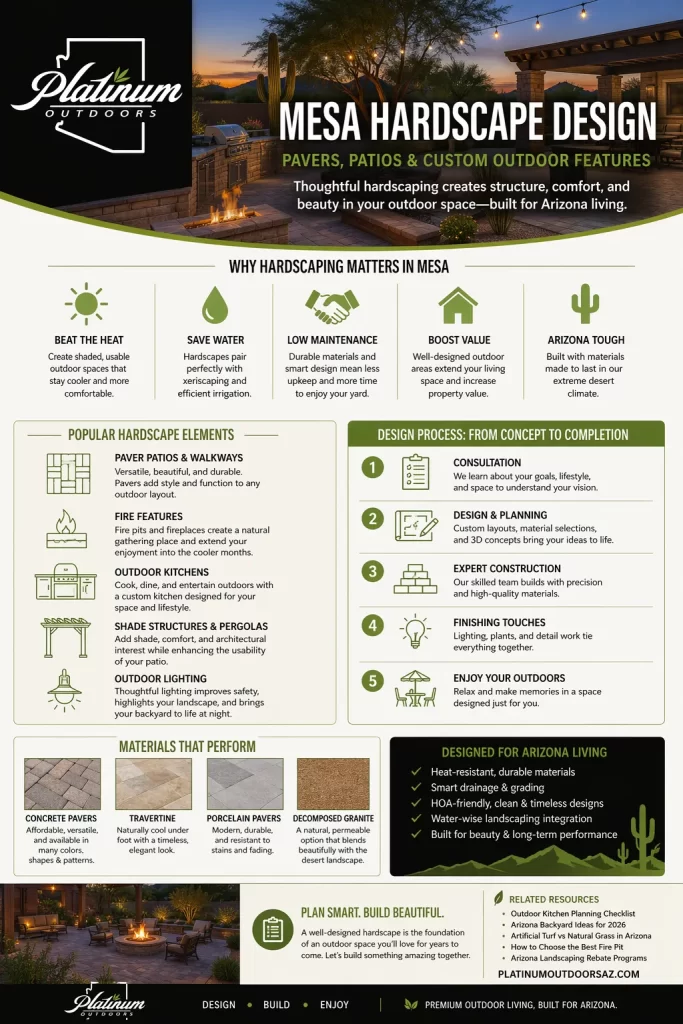
Hardscaping refers to the non-living parts of a landscape. In practical terms, that includes patios, walkways, seat walls, retaining walls, pergolas, outdoor fireplaces, fire pits, steps, borders, built-in planters, and outdoor kitchen areas. These features give the yard shape and purpose. They also help define how people move through the space and where they gather.
In Mesa, hardscaping often carries more of the design load than it might in cooler or greener climates. Lawns are less practical here, large planting beds can increase maintenance, and open dirt or gravel alone can make a yard feel unfinished. A strong hardscape layout helps solve those problems by adding usable square footage outdoors and giving the yard a more intentional look.
That is one reason so many Arizona homeowners lean toward custom hardscaping solutions instead of treating patios and walkways as afterthoughts. The hardscape becomes the foundation for the rest of the project. Once the patio placement, traffic paths, shade zones, and feature areas are mapped out, it becomes much easier to build in the right planting, lighting, turf, and irrigation.
This is also why hardscaping and planting should not be designed separately. The best yards feel connected. A paver patio should lead naturally to the grill area. A pergola should create a transition from the house to the open yard. A walkway should make sense with how someone exits the back door, walks around the pool, or moves toward a fire feature at night.
Why Mesa Homes Benefit from a Hardscape-First Design Approach
Mesa homeowners are designing around a very specific environment. Summer heat is intense, rainfall is limited, water conservation matters, and many neighborhoods have HOA expectations around cleanliness, curb appeal, and overall design consistency. A yard that looks great in another climate may not work nearly as well here.
A hardscape-first approach helps because it creates order before the softer elements are added. Instead of starting with a list of features, it starts with questions like: Where will the family actually sit in the evening? Which area gets the harshest afternoon sun? Where should drainage move during a storm? How much open patio space is needed for furniture? What parts of the yard should stay low maintenance?
Those answers shape everything else. A well-placed patio can create a cooler hangout area near the house. A path along the side yard can make access easier and keep gravel out of high-traffic areas. Built-in shade can reduce how exposed an outdoor dining area feels. A retaining wall can help organize grade changes while doubling as seating.
That kind of planning is especially useful in Mesa because so many homeowners want outdoor living without turning the yard into a project that constantly needs attention. Clean lines, durable materials, controlled planting zones, and efficient irrigation make it easier to enjoy the space instead of working on it every weekend.
For homeowners also trying to reduce water use, it can make sense to tie a hardscape remodel into a broader xeriscape-focused design plan. Hardscaping and xeriscaping work well together because both support low-maintenance, desert-appropriate outdoor living.
Pavers Often Set the Tone for the Whole Yard
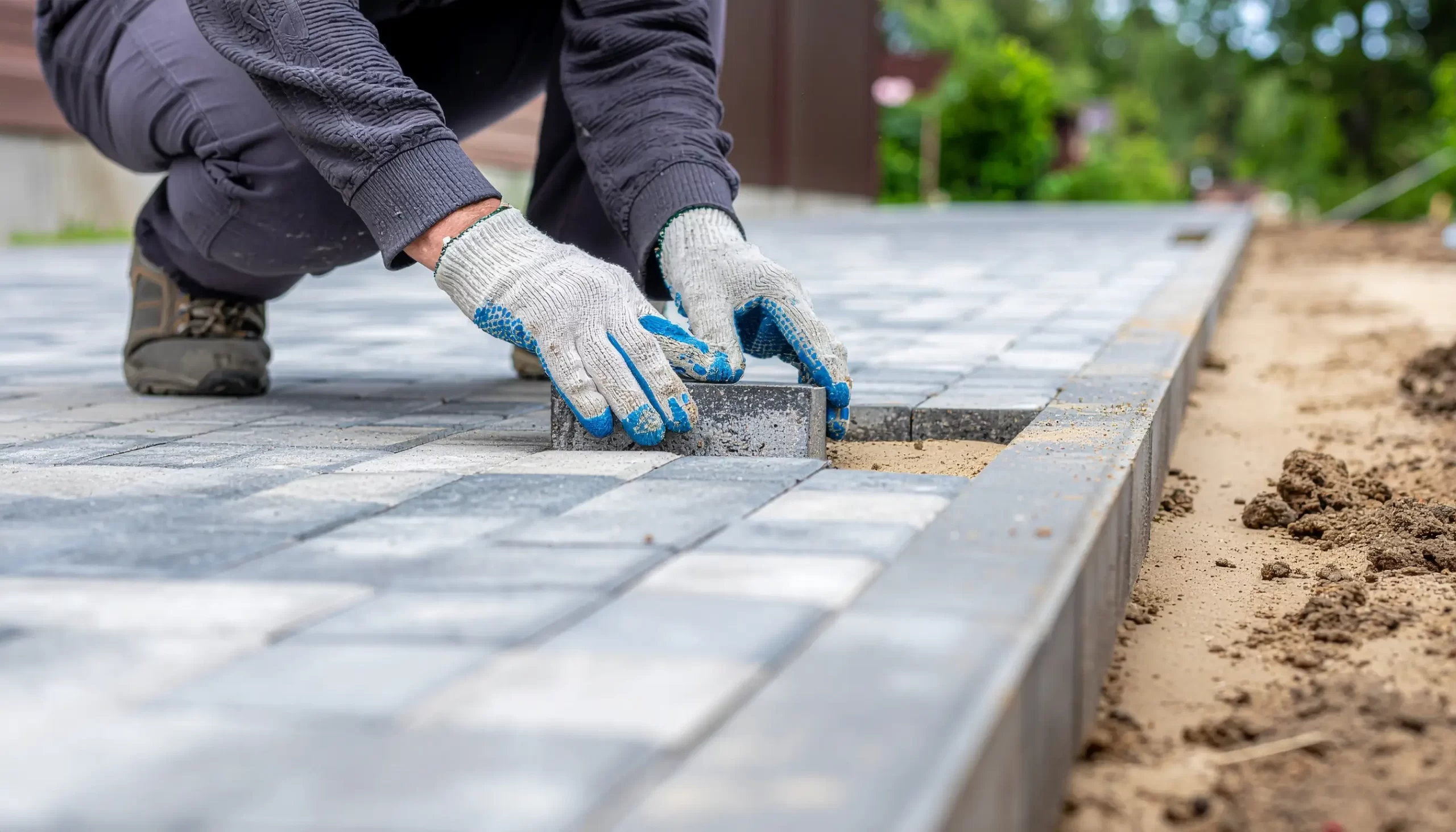
Pavers are one of the most versatile materials used in Mesa hardscape design. They can create patios, walkways, courtyards, transitions around turf, borders near planting beds, and connections between major features like pools, pergolas, and outdoor kitchens. They also offer more flexibility than a plain slab when it comes to layout, visual texture, and overall design style.
One of the biggest advantages of pavers is that they help a yard feel more custom. Pattern choice, color tone, edge details, and scale all affect the final look. A lighter paver can brighten the backyard and pair well with a modern home. A more natural stone look can soften the space and blend better with desert planting. A tighter pattern can feel more formal, while larger units can make the yard feel cleaner and more contemporary.
That is why pavers are not just a surface decision. They influence how the whole project reads. If the patio material feels too busy, the space can look cluttered. If the scale is too small for the yard, it can feel fragmented. If the color does not work with the home, trim, pool coping, or wall finish, the whole design can feel disconnected.
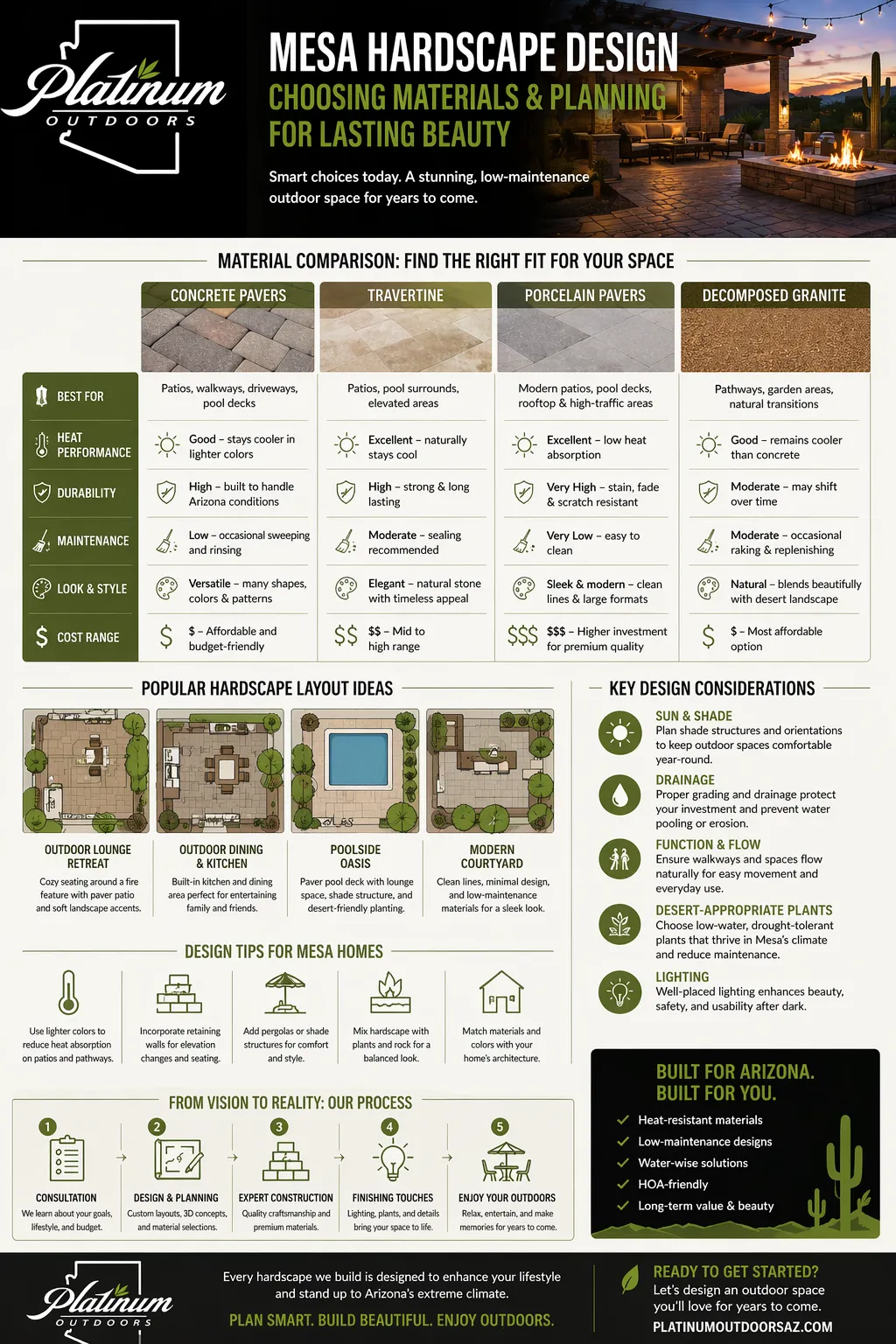
When homeowners are comparing options, it helps to review how different materials perform visually and practically. A resource like this guide comparing popular paver materials can be useful early in the planning process because it frames the conversation around heat, look, upkeep, and how each material fits different types of spaces.
Another reason pavers are so common in Mesa is durability. When installed correctly with proper base prep, edge restraint, grading, and drainage planning, they hold up well in a climate that is hard on outdoor materials. They also work well with other features. A paver field can transition into turf, frame a fire pit zone, wrap an outdoor kitchen, or lead to a shaded lounge area without the yard feeling pieced together.
For homeowners focused specifically on patios, it also helps to look at a more detailed paver patio planning guide before finalizing layout decisions.
How to Design a Patio That Feels Right for Mesa Living
A patio should do more than fill empty square footage behind the house. In Mesa, it needs to support the way the space is actually used while accounting for heat, sun exposure, and comfort. A patio that looks good in a photo can still fall short if it ends up too hot, too exposed, too small for furniture, or disconnected from the rest of the yard.
The first question is usually function. Some patios are mainly built for dining. Others are lounge spaces, transition zones near a pool, or foundations for an outdoor kitchen or pergola. The layout should reflect that. A dining patio needs enough room for chairs to slide out comfortably. A lounge patio may need more width for deeper furniture and side tables. A patio near the grill should allow circulation without people constantly crossing through the cooking zone.
Then there is orientation. In Mesa, west-facing exposure changes the entire feel of a patio. That does not mean the space cannot work, but it does mean shade becomes more important. A covered patio, pergola, nearby tree canopy, or adjacent feature wall can help make the space more usable during hotter parts of the day.
Surface temperature is another factor. Material choice matters, but so does context. A patio surrounded by reflective walls and no shade will feel different than one softened with planting, partial cover, and evening lighting. Design is rarely about one decision. It is usually about how several decisions work together.
That is part of why many homeowners pair patio projects with broader backyard updates such as full backyard renovation work. When the patio is planned as part of a complete outdoor layout instead of as a stand-alone install, the finished yard usually functions better.
If the goal is to keep the space more comfortable without overbuilding it, it can help to borrow ideas from regional guidance on shade, structure, and layout. Design references from organizations like the Arizona Municipal Water Users Association can also be useful when homeowners want to think more intentionally about desert-appropriate outdoor planning.
Walkways, Borders, and Small Hardscape Details Matter More Than Most People Expect
In many backyard projects, the larger patio or main feature gets all the attention. But smaller hardscape details often determine whether the yard feels polished or incomplete. Walkways, step transitions, paver borders, planter edging, and connectors between zones are what make the space feel organized.
A walkway can direct traffic and reduce wear in gravel or planted areas. It can also visually connect the backyard to the side yard, the driveway, or a detached feature area. In new construction neighborhoods around Mesa, this kind of continuity matters because many lots begin as blank rectangles. Without defined circulation, yards can feel flat and unresolved.
Small hardscape details also help with maintenance. Borders keep materials separated. A defined edge between pavers and decomposed granite helps both surfaces stay cleaner. Raised planter edges can make irrigation and mulch placement more controlled. Transitions around turf help prevent messy seams and reduce the chance that the whole yard looks like one large surface with no design hierarchy.
These details are especially important when designing a yard meant to stay simple over time. A low-maintenance yard is not just a yard with less grass. It is usually a yard where every material has a place, every zone has a boundary, and every transition feels deliberate.
Homeowners exploring broader design ideas can also get inspiration from articles like this roundup of Arizona backyard ideas, which helps show how hardscape pieces support the overall outdoor layout.
Custom Outdoor Features That Pair Well with Hardscaping
One of the reasons hardscaping is such a strong starting point is that it supports so many custom features. Once the patio layout, circulation, and material direction are in place, it becomes easier to decide which upgrades make the most sense for the space.
Outdoor Kitchens
Outdoor kitchens work best when they are integrated into the hardscape instead of added on later. They need a solid foundation, enough circulation space, and a layout that feels tied to the dining or lounge area. In Mesa, outdoor kitchens are often most successful when they are placed with some protection from direct late-day sun and enough lighting for evening use.
If this feature is part of the long-term plan, homeowners should review an outdoor kitchen planning checklist early and think about how the cooking zone, prep space, and seating relationship will work. For build-out options, there is also a dedicated page on custom outdoor kitchen installation.
Fire Features
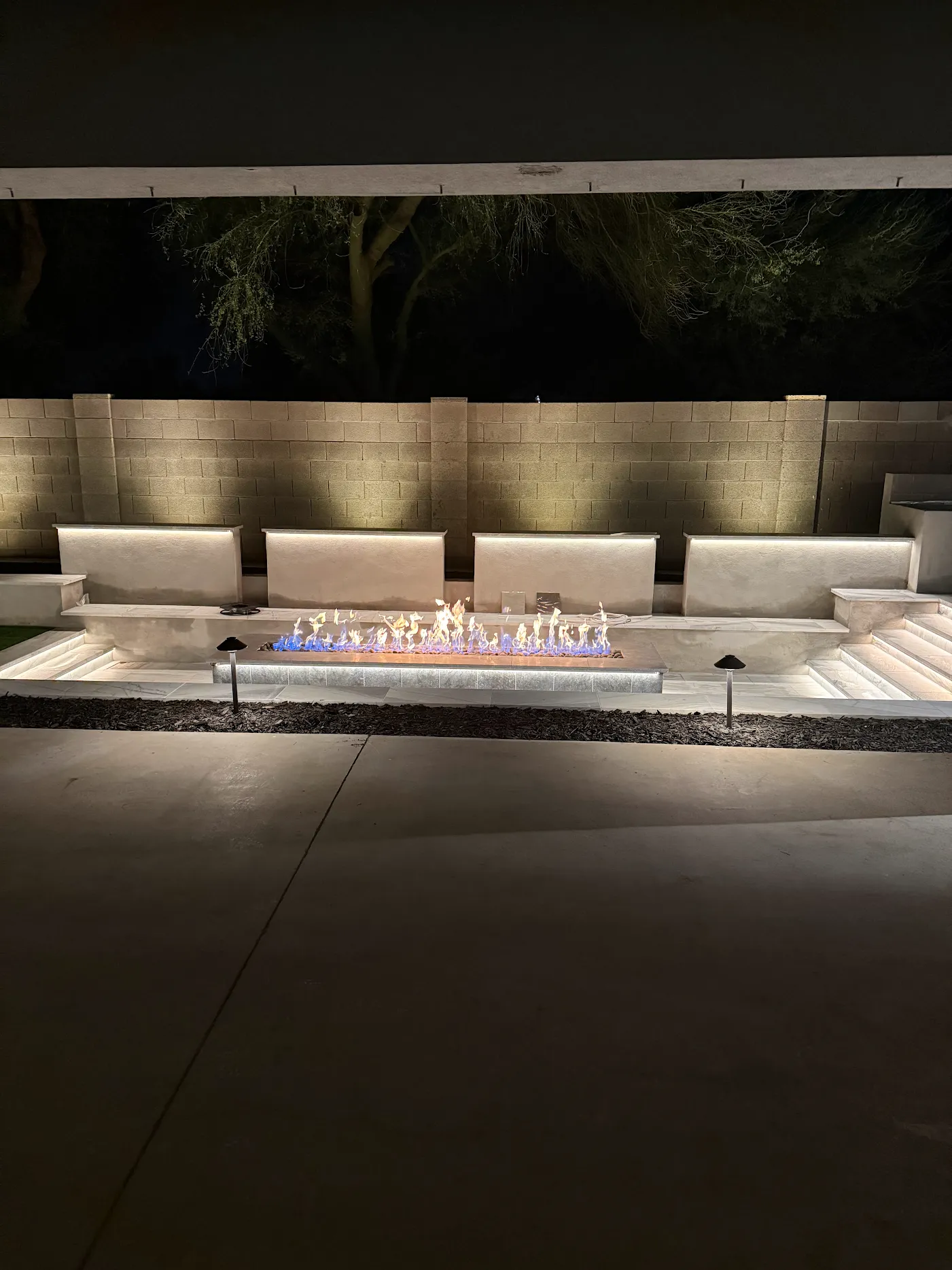
Fire pits and fireplaces add a gathering point and help extend how the yard is used through cooler evenings. In hardscape design, they also create a focal point. A fire feature can anchor the far end of a patio, define a lounge zone, or create balance across from a pergola or kitchen feature.
Because of that, fire features should usually be thought of as part of the layout, not just part of the decor. The surrounding pavers, seating clearance, and sightlines all affect whether it feels natural in the yard. Homeowners comparing styles may want to read this fire pit guide for Arizona backyards and explore fireplace and fire feature installation options.
Pergolas and Shade Structures
Shade can completely change how usable a hardscaped yard feels. A pergola over part of the patio can create a more comfortable dining area, visually break up a large open surface, and make the backyard feel more finished. In Mesa, shade structures often do as much for comfort as any surface material choice.
That is why pergolas pair naturally with patios and paver layouts. They help turn the hardscape into an outdoor room instead of just an open slab. Homeowners comparing designs can review pergola ideas for Arizona heat, learn more about shade structures for local backyards, and explore shade installation services.
Lighting
Lighting is one of the features that makes a hardscape more usable without changing the footprint. Path lights improve circulation, accent lights soften walls and planting, and overhead or task lighting helps dining and entertainment areas function after sunset.
In design terms, lighting also helps the yard feel layered. A patio with no lighting can disappear at night. A patio with the right lighting feels active, calm, and more connected to the home. Homeowners can look through Arizona lighting design ideas and learn about outdoor lighting installation as part of a bigger hardscape plan.
Hardscaping and Water Conservation Can Work Together
Some homeowners think hardscaping and water-wise landscaping are two separate directions. In Mesa, they usually work best together. A yard with well-planned patios, walkways, seating zones, and shade features often needs less high-water planting to feel complete. That makes it easier to reduce irrigation demand without making the yard feel bare.
This is one reason hardscapes fit so naturally with xeriscaping. Drought-tolerant plants, decomposed granite, mulch, boulders, accent walls, and paver areas can create a yard that looks finished and intentional without depending on thirsty lawn areas. The structure comes from the hardscape, while the softness comes from well-chosen desert planting.
For many Mesa homeowners, that balance is more realistic than either extreme. An all-hardscape yard can feel harsh if it is not softened. A yard with too much planting can feel harder to maintain and more dependent on irrigation. The best designs usually mix the two in a way that reflects local conditions.
It is also worth reviewing current Arizona landscaping rebate programs during the planning stage. Some rebate structures favor conversions that reduce grass and incorporate more desert-appropriate planting, which can influence how a homeowner phases a project.
For additional guidance beyond local contractor resources, the EPA WaterSense program is another helpful source for homeowners thinking about efficient irrigation and outdoor water use.
How Hardscape Design Supports Low-Maintenance Outdoor Living
Low maintenance does not mean plain. It usually means smart design choices made up front. That is one of the biggest strengths of hardscaping in Mesa. When a yard has enough patio space, clear circulation paths, properly defined beds, durable materials, and simple transitions, it tends to stay cleaner and easier to manage.
Pavers reduce large open dirt zones and help keep dust down. Defined borders keep rock, mulch, and turf where they belong. Built-in seating can reduce the need for oversized furniture. A well-placed pergola can make one smaller patio area more useful, which may reduce the need to build too many separate zones.
Low-maintenance design also comes from restraint. Not every yard needs every feature. Sometimes the best move is a generous paver patio, a simple planted perimeter, controlled lighting, and one focal feature like a fire pit or pergola. Other times the space calls for a kitchen, lounge zone, and path connections. Either way, the goal is to create a yard that feels easy to live with.
That principle matters even more in HOA communities and newer Mesa neighborhoods, where homeowners often want something elevated and personal but still clean, cohesive, and appropriate for the home. A well-designed hardscape can achieve that without making the yard feel overloaded.
Homeowners building from scratch on a newer lot may also benefit from reviewing design considerations for new-home landscaping, since many of the same planning decisions apply when developing a backyard from a blank starting point.
Material Selection Should Be About More Than Appearance
It is easy to choose a material based on color alone, but hardscape materials perform differently in real conditions. In Mesa, that matters. Heat, glare, traction, maintenance, scale, and how the material works with the architecture of the home should all be part of the conversation.
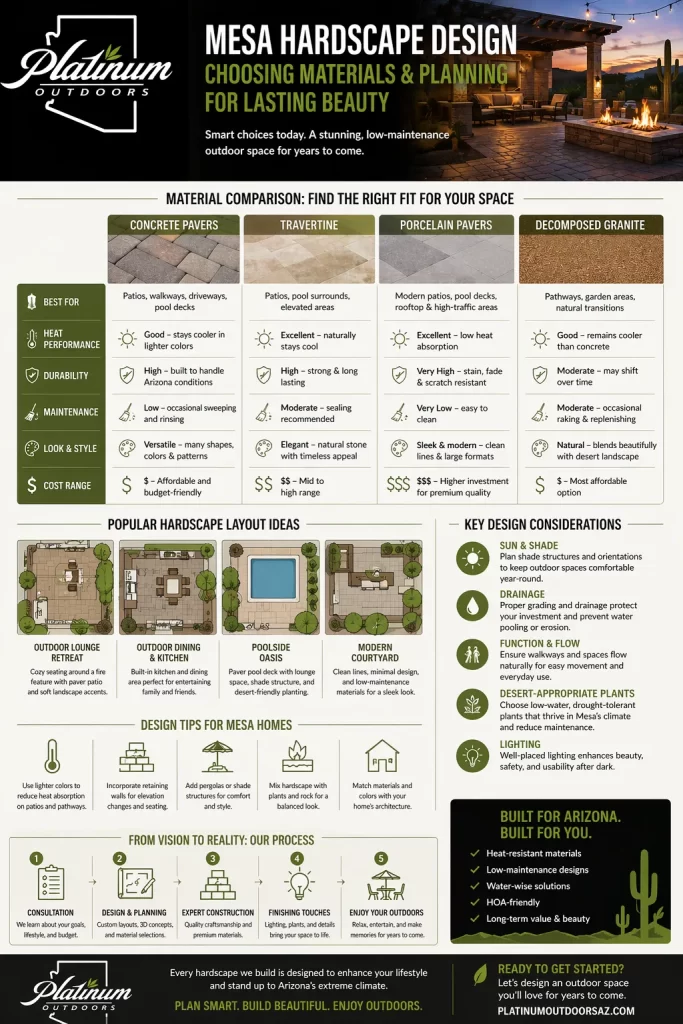
Concrete pavers are popular because they offer flexibility in color, pattern, and layout. They can work well in modern, transitional, and more traditional designs. Travertine is often chosen for a cooler, lighter, more refined look. Porcelain has become more common in certain modern styles. Decomposed granite remains useful in surrounding zones and informal transitions. Stone accents can add contrast and texture in the right places.
But the real question is not just what looks best on a sample board. It is what works in the context of the whole yard. A busy pattern might not be the right fit if the house already has a lot of texture. A very light surface might brighten the yard but also increase glare. A darker border may look sharp visually while helping define the patio edge.
That is where design guidance matters. A material should support the intended use of the space, the home style, and the surrounding features. It should also feel appropriate for Mesa rather than imported from a totally different setting.
Homeowners looking for broader inspiration can also study regional hardscape examples through publications like University of Arizona Cooperative Extension, which often shares practical information tied to Arizona outdoor conditions.
When to Blend Hardscapes with Turf, Planting, or Pool Areas
Some of the best backyard designs in Mesa do not rely on one material across the whole yard. They mix pavers with turf, gravel, planting, or pool decking so the space feels balanced. Hardscape gives the yard structure, while softer elements prevent it from feeling too rigid.
Turf works well when it is used intentionally. A framed turf zone next to a patio can soften the space and create contrast without taking over the whole design. It can also make sense for pet areas, play spaces, or visual relief between hardscape sections. Homeowners comparing surfaces can read more about turf versus natural grass in Arizona and explore artificial turf installation if that feature is part of the yard plan.
Pool areas also benefit from a balanced design approach. Hardscape is essential around the pool, but the surrounding layout matters just as much. Shade, pathways, lounge zones, and transitions to dining or kitchen areas are what keep a pool backyard from feeling isolated. Homeowners planning a more complete outdoor upgrade can also look at pool remodeling possibilities when designing connected hardscape spaces.
Planting is what often softens the final result. Desert trees, layered shrubs, agave, cactus, and low-water accent planting can help large paver areas feel more grounded. Even small planters near an edge or transition point can make a patio feel more integrated into the yard.
How to Think Through a Mesa Hardscape Project Before You Build
Before choosing a paver color or feature list, it helps to start with a few planning questions.
First, what is the main purpose of the yard? Is it mostly for hosting? Relaxing at night? Family time? Pets? A poolside retreat? A combination of those? The answer affects layout more than people expect.
Second, where does the yard need relief from sun? Shade decisions often shape the most usable part of the patio, which is why they should happen early.
Third, how much of the yard should stay open and how much should feel built-in? Some yards benefit from a larger patio field. Others feel better with smaller hardscape zones connected by paths.
Fourth, which parts of the yard should be lowest maintenance? For one homeowner, that may be the side yard and back corners. For another, it may be the whole backyard. This changes how much planting, turf, and hardscape should be included.
And finally, what should the space feel like? Modern and clean? Warm and natural? Resort-inspired? Casual and family-focused? Those emotional cues matter because they guide material and feature choices throughout the project.
If the design process feels bigger than expected, that is normal. Hardscape design touches circulation, comfort, architecture, irrigation, and daily use. That is also why many homeowners approach it as part of a full landscape design process rather than as a single isolated install.
Final Thoughts on Mesa Hardscapes, Patios, and Outdoor Features
The best hardscape design in Mesa is not just about adding pavers or building one attractive patio. It is about shaping the yard in a way that makes outdoor living feel easier, more comfortable, and more connected to the home. Pavers, patios, fire features, shade structures, lighting, and walkways all work best when they are planned together instead of one piece at a time.
That is especially true in Arizona, where climate, water use, and maintenance all matter. A thoughtful hardscape layout can help reduce irrigation demand, support cleaner transitions, improve comfort, and create a backyard that feels finished without asking for constant upkeep.
For some Mesa homes, the right answer is a simple paver patio with better lighting and planting. For others, it is a broader outdoor living design that includes a pergola, kitchen, fire feature, and more intentional circulation through the yard. Either way, strong hardscape planning gives the rest of the project direction.
When the structure is right, the rest of the landscape tends to fall into place.
FAQ: Mesa Hardscape Design, Patios, and Outdoor Features
What is included in hardscape design for a Mesa home?
Hardscape design usually includes patios, walkways, retaining walls, seat walls, pergolas, fire features, built-in planters, outdoor kitchen areas, and other non-living structural elements that shape the yard.
Are pavers a good choice for Mesa backyards?
Yes, pavers are a strong fit for Mesa because they work well in outdoor living spaces, offer design flexibility, and can be integrated with shade, turf, planting, fire features, and other custom elements.
How do I make a patio more usable in Arizona heat?
Shade is usually the biggest factor. Pergolas, covered areas, surrounding planting, evening lighting, and thoughtful patio placement can all make the space feel more comfortable and useful.
Can hardscaping work with xeriscaping?
Yes. Hardscaping and xeriscaping often work very well together because both support low-maintenance, desert-appropriate design. Patios, walkways, and seating areas can pair naturally with drought-tolerant planting and efficient irrigation.
What outdoor features pair best with a paver patio?
Some of the most common features include pergolas, fire pits, fireplaces, outdoor kitchens, lighting, turf accents, and defined planting areas around the patio edge.
Should a hardscape project be planned separately from the rest of the landscape?
Usually no. The best results tend to come from planning hardscapes as part of the full yard layout so circulation, shade, materials, irrigation, and planting all work together.