Travertine pavers are one of the most recognizable natural-stone choices for Arizona outdoor spaces. Their softly textured surfaces, naturally varied colors, and ability to complement stucco, desert planting, pools, shade structures, and modern hardscape make them a practical design material for many Phoenix-area yards. The challenge is not deciding whether travertine looks good. It is deciding which type, finish, color family, pattern, and placement make the most sense for a specific yard.
Arizona changes the way homeowners should evaluate outdoor paving. A material that looks attractive in a showroom also has to make sense under intense sunlight, around reflected heat, beside a swimming pool, through monsoon dust, and within landscapes designed to use less water. In newer master-planned communities, homeowners may also need to think about HOA design standards, existing builder finishes, driveway colors, wall tones, and the visual relationship between the front and back yard.
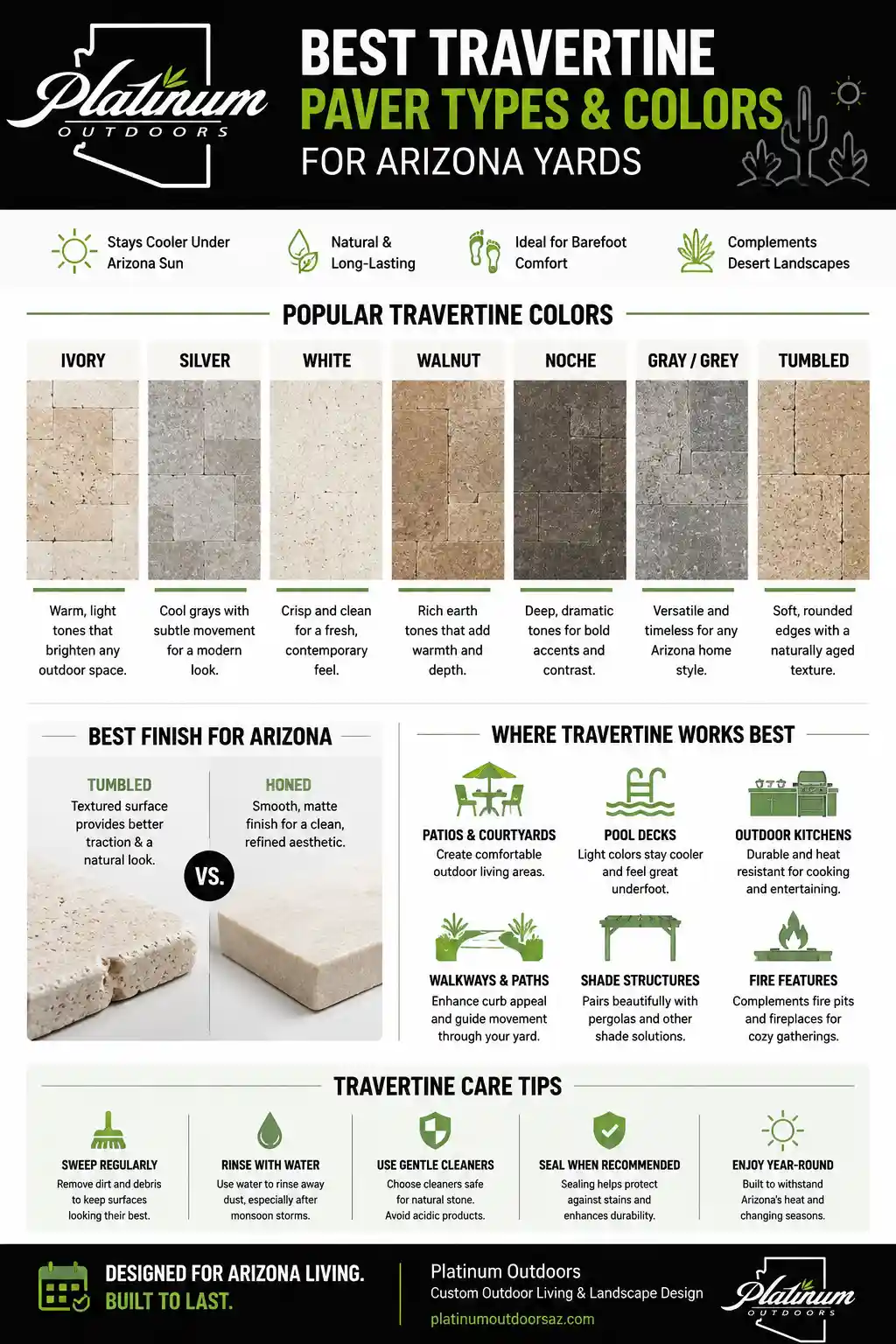
This guide explains how to choose travertine pavers for Arizona conditions, with special attention to ivory travertine pavers, silver travertine pavers, white travertine pavers, walnut travertine pavers, noche travertine pavers, gray or grey travertine pavers, and tumbled travertine pavers. It also explains why finish matters, how natural variation affects the finished installation, where travertine works best, and how to coordinate stone with other hardscape elements without turning the yard into a patchwork of unrelated materials.
Why Travertine Works So Well in Arizona Outdoor Design
Travertine is a natural limestone formed through mineral deposition around springs and other groundwater environments. The stone contains characteristic pores, small voids, bands, and tonal movement. Those features are part of its identity rather than manufacturing defects. Because it is quarried rather than cast, two pieces can share the same color classification while still showing different veining, shading, and mineral character.
For Arizona homeowners, the appeal starts with the way travertine behaves visually in bright light. Cream, ivory, silver, beige, and light gray surfaces can keep a landscape from feeling visually heavy. They also coordinate naturally with common Southwestern exterior palettes: warm stucco, sand-colored walls, taupe block, charcoal accents, desert rock, and the muted greens of drought-tolerant plants.
That makes travertine especially useful when the hardscape needs to connect several parts of a yard instead of acting as a single isolated patio. A single stone family can move from a covered outdoor room to a walkway, pool surround, stepping-stone path, or transition zone while maintaining a consistent design language.
Travertine is also frequently selected for areas where people walk barefoot. All exterior paving can become hot in direct Arizona sun, and surface temperature depends on color, exposure, time of day, finish, and weather. Still, lighter travertine is widely favored in hot climates because it generally absorbs less solar heat than many darker paving materials. Homeowners comparing multiple materials can explore additional guidance on how travertine compares with porcelain pavers before narrowing the decision to a specific stone.
Hardscape can also support water-conscious landscape planning. Replacing large areas of thirsty lawn with a balanced mix of paving, artificial turf, gravel, planting zones, and shade can reduce the amount of irrigated landscape without making the yard feel empty. The goal is not to pave everything. It is to use hardscape where people actually walk, sit, cook, gather, or move between outdoor features, then reserve planted areas for places where vegetation has the most visual and functional value.
Best Travertine Paver Colors for Arizona Yards
Travertine pavers colors are usually described with names such as ivory, cream, silver, gray, walnut, noche, gold, beige, or white. Those names are useful for narrowing the palette, but they should not be treated like paint swatches. Natural stone varies from quarry to quarry and shipment to shipment.
A sample labeled “silver” may lean cool gray in one batch and greige or taupe in another. Ivory can range from pale cream to warmer beige. Walnut can contain tan, caramel, brown, and muted gold. That variation is one reason travertine feels more organic than manufactured paving.
It is also why homeowners should evaluate several pieces together instead of approving a project from one small sample. A single paver tells you the general color. A group of pavers tells you the range.
Ivory Travertine Pavers
Ivory travertine pavers are among the easiest colors to integrate into Arizona landscapes. Their pale cream and beige tones sit comfortably between the bright white of contemporary architecture and the warmer tans common in Southwestern homes.
Ivory can make a patio feel open and bright without creating the stark contrast that sometimes comes with very white paving. From a design perspective, ivory is especially effective around pools, beneath pergolas, and beside artificial turf. The light stone creates a clean boundary against green turf while still relating to desert rock and warm exterior paint.
It can also help a smaller backyard feel visually larger because the paving reflects more light and does not create a dark block across the ground plane.
Ivory is a strong choice for new-construction yards where the homeowner is starting with a relatively blank landscape. It gives future features room to evolve. An outdoor kitchen, shade structure, fire feature, or new planting palette can be added later without forcing the entire yard to match a highly specific paver color.
Silver Travertine Pavers and Gray Travertine Pavers
Silver travertine pavers and gray travertine pavers work well with Arizona’s growing preference for cleaner, more contemporary outdoor design. Silver travertine rarely reads as a flat industrial gray. It often includes layers of gray, taupe, cream, beige, and sometimes subtle brown movement.
That complexity makes it easier to pair with both cool and warm architectural finishes. Grey travertine pavers can work particularly well around homes with charcoal window frames, modern metal shade structures, light stucco, concrete-look finishes, or cool-toned pool interiors.
They can also provide contrast against warm desert planting without looking disconnected from the natural environment.
The biggest design advantage of silver is flexibility. A homeowner can create a modern monochromatic palette with gray walls and dark accents, or soften the same stone with wood-toned furniture, tan cushions, warm lighting, and natural planting.
For homeowners still deciding between a naturally varied stone and a more uniform manufactured product, the guide to travertine versus porcelain pavers for Arizona outdoor spaces can help clarify the design differences.
White Travertine Pavers
White travertine pavers create the brightest, most contemporary look in the travertine family. In full Arizona sun, that brightness can be an advantage because pale stone reflects more light and visually cools the landscape.
White and near-white travertine can look especially refined beside blue pool water, black metal details, minimalist planting, and modern architecture.
The tradeoff is visual maintenance. Dust, leaf debris, soil, mineral residue, and organic stains may be easier to notice on very light stone. That does not automatically make white travertine a poor Arizona choice, but it does mean homeowners should be comfortable with the appearance of normal outdoor wear and routine cleaning.
In a yard exposed to frequent windblown dust, a slightly warmer ivory or light silver can sometimes provide a similar bright effect with a more forgiving day-to-day appearance.
Walnut Travertine Pavers
Walnut travertine pavers move the palette toward tan, caramel, brown, and warm earth tones. They fit naturally with Tuscan, Mediterranean, Territorial, and Southwestern architecture, and they can make an outdoor room feel more grounded than pale stone.
Walnut is also useful for borders, accent bands, steps, or transitions where a darker tone helps define edges.
Because darker paving generally absorbs more solar energy, walnut deserves more careful placement in Arizona. A covered patio, pergola zone, courtyard, or evening-focused seating area can be a better location than a large uncovered pool deck.
Homeowners who love walnut but want to keep the overall hardscape visually lighter can combine it with ivory or cream instead of using it across the entire yard.
Noche Travertine Pavers
Noche travertine pavers are typically associated with deeper brown and chocolate tones. They create strong contrast and can be striking in smaller doses.
In Arizona yards, noche often works best as a design accent rather than the default field color for every paved surface. A noche border around a lighter patio, a darker band at a step, or a transition between outdoor rooms can add definition without creating a large dark surface.
Noche can also coordinate well with dark masonry, bronze fixtures, wood-grain finishes, and fire features. The key is repetition. A dark accent looks intentional when the same tone appears elsewhere in the yard; it looks random when it appears only once.
What Does “Travertine Quartz” Mean?
The phrase travertine quartz can be confusing because travertine and quartz are different materials. Travertine is a natural limestone, while quartz-based products may refer to engineered slabs, quartzite, or trade names used by individual suppliers.
A homeowner who sees “travertine quartz” in a catalog should verify the actual material composition, intended exterior use, finish, thickness, and installation requirements rather than assuming it is a standard travertine paver.
This distinction matters outdoors. Material names used for interior countertops, tile, or decorative slabs do not automatically indicate suitability for patios, pool decks, walkways, or other exterior applications. The product specification should match the intended use.
Tumbled Travertine Pavers vs. Honed Travertine
Color gets most of the attention, but finish can have just as much influence on how travertine looks and functions. Tumbled travertine pavers have a softened, textured surface and rounded or weathered-looking edges. The finish emphasizes the stone’s natural pores and gives the installation a relaxed, established character.
Honed travertine is smoother and flatter, with a more refined matte appearance.
For exposed patios and pool environments, tumbled travertine is popular because the added surface texture can provide more traction than a smoother finish. It also tends to hide minor wear, dust, and small surface variations well. In an Arizona landscape where paving is exposed to intense sun and frequent outdoor use, that forgiving texture is often part of the appeal.
Honed travertine can work well for covered patios, outdoor kitchens, courtyards, and contemporary spaces where the homeowner wants straighter visual lines and a smoother surface. The right choice depends on exposure, drainage, surrounding materials, and how the area will be used.
Polished travertine is generally less appropriate for wet exterior walking surfaces because a glossy finish can become slick when wet and may create unwanted glare in strong sunlight.
How to Choose Travertine Pavers for a Pool Deck
Pool decks are one of the most common places to see travertine pavers in Arizona. The combination of pale color, natural texture, and stone variation works well beside water and can make the pool feel integrated into the larger landscape instead of surrounded by a separate strip of paving.
Start with color. Ivory, cream, light silver, and pale gray are common choices for exposed pool areas because they keep the visual palette bright.
Next, evaluate finish and texture. A tumbled or otherwise textured exterior finish is generally more appropriate near splash zones than a polished surface.
Finally, think about coping, waterline tile, pool interior color, and nearby walls. The pool deck should connect these elements rather than compete with them.
A pool area rarely exists by itself. It may connect to a covered patio, turf zone, outdoor kitchen, or renovated pool interior. Homeowners planning several improvements at once can review how pool remodeling can coordinate with surrounding outdoor spaces to think about the pool and hardscape as one design system rather than separate projects.
Travertine for Patios and Outdoor Living Areas
A patio is where travertine’s pattern, scale, and color variation become especially important. Large areas reveal the full range of the stone. A small sample that looks relatively uniform in the hand may become much more varied across several hundred square feet.
That is not necessarily a drawback. Natural variation is part of travertine’s appeal. The goal is to make sure the homeowner likes the range, not just the average color.
Pattern also changes the character of the stone. Rectangular running patterns can feel cleaner and more contemporary. Multi-size modular patterns can create a more traditional or Old World appearance. Large-format pieces reduce the number of joints and can make a compact yard feel calmer, while smaller pieces introduce more texture and rhythm.
Before selecting a pattern, think through furniture zones, doors, steps, drainage, grill locations, and future shade. The Platinum Outdoors guide to planning a custom paver patio around the way the yard will be used covers the broader layout decisions that should happen before the paving pattern is finalized.
Homeowners who are comparing patio construction options can also review the paver patio installation process and design considerations for additional context on how paved outdoor living areas fit into a finished landscape.
How Travertine Fits With Artificial Turf, Gravel, and Desert Planting
One of the most effective Arizona yard layouts combines several surface types instead of relying on one material everywhere. Travertine can define circulation and gathering areas, artificial turf can provide a softer visual field, and gravel or decomposed granite can support drought-tolerant planting.
This layered approach can help a low-water yard feel intentionally designed instead of simply stripped of vegetation.
The transitions deserve careful attention. Large travertine stepping stones through turf can create a clean modern path. A continuous travertine patio can terminate against a narrow gravel planting band to soften the edge. Pool decking can transition into turf where lounging or play space is more useful than additional stone.
Homeowners considering how much of the yard should be green versus paved can compare artificial turf and natural grass for Arizona landscapes before deciding where each surface belongs.
The hardscape should also leave room for irrigation zones that make sense. Drip lines can serve trees, shrubs, and accent plants without watering paved surfaces. This is particularly important in new construction, where homeowners often have the opportunity to establish a coherent irrigation and hardscape plan from the beginning instead of retrofitting around an older lawn layout.
Matching Travertine to Arizona Home Styles
A strong travertine selection responds to the architecture around it. For a contemporary home, silver, light gray, or near-white travertine can reinforce clean lines, especially with charcoal metal, smooth stucco, simple planting, and large rectangular pavers.
For a Mediterranean or Tuscan home, ivory, walnut, gold, and noche tones can echo warmer roof, stucco, and masonry colors. Southwestern homes often benefit from cream, beige, or mixed warm-neutral travertine that feels connected to desert soil and natural stone.
The surrounding hardscape should be considered at the same time. Retaining walls, seat walls, steps, fire features, pool coping, outdoor kitchen veneers, and decorative rock all contribute to the palette.
The Platinum Outdoors overview of coordinating patios and other built landscape features provides additional context for thinking about how paving relates to the rest of an outdoor environment.
Travertine Pavers in Phoenix and the East Valley
Searches for travertine pavers Phoenix and travertine pavers Arizona often reflect a practical concern: will a material that looks beautiful online actually make sense in local conditions?
In the Phoenix Metro and East Valley, sunlight intensity, reflected heat, dust, monsoon runoff, irrigation overspray, long outdoor-living seasons, and water-conscious landscaping all influence material decisions.
That is why a color should be reviewed outside whenever possible. Indoor showroom lighting can make ivory appear warmer, silver appear cooler, and walnut appear darker than the same stone will look at noon in Arizona.
Samples should be viewed in direct sun and shade, next to the home’s stucco, and beside any existing pool tile, coping, rock, or pavers that will remain.
For projects centered specifically on Phoenix-area paving, the Phoenix paver installation planning resource provides a useful bridge between material selection and the site-specific decisions that follow.
HOA Considerations for Travertine Projects
Many Arizona master-planned communities regulate visible exterior changes. Requirements vary by association, so homeowners should review current governing documents before assuming a color, front walkway, driveway modification, or hardscape change is automatically permitted.
Some HOAs focus on approved color families, some on the percentage of front-yard hardscape, and others on submittal drawings or material samples.
Travertine’s natural variation makes sample approval particularly important. An HOA may approve a named color, but the delivered stone can still show a range of tones. A submittal that includes several representative pieces or clear supplier imagery can communicate the intended appearance better than one small sample.
For a new-construction home, it can also help to coordinate HOA review with the overall landscape plan. Walkways, turf, trees, walls, irrigation, shade structures, and paving may be easier to evaluate as one cohesive design than as a series of unrelated requests.
Travertine Maintenance in Arizona
Travertine is often described as low maintenance, but low maintenance does not mean no maintenance. Outdoor stone collects dust, leaves, mineral deposits, food spills, grill residue, and other normal signs of use.
Regular sweeping and gentle rinsing help prevent debris from building up in the surface texture and joints.
Because travertine is calcium-based stone, harsh acidic cleaners are generally inappropriate. Cleaning products should be suitable for natural stone, and any stronger treatment should be tested in an inconspicuous area first.
Pressure washing also requires restraint. Excessive pressure can disturb joint material or affect a weathered stone surface. The appropriate sealing approach depends on the specific stone, finish, location, and desired appearance, so homeowners should follow the paver supplier or installer’s guidance for the product actually being used.
Arizona’s hard water can also leave mineral residue where irrigation repeatedly sprays onto paving. Thoughtful irrigation design can help prevent that problem before it starts. Adjusting emitters, keeping spray heads away from stone where practical, and correcting leaks can protect the appearance of the paving while also supporting water conservation.
How to Compare Travertine Samples Before Choosing
A thoughtful sample review is one of the best ways to reduce surprises. Instead of asking only, “Which color do I like?” evaluate each option through several lenses.
- Look at the full tonal range across several pieces rather than one paver.
- Compare the stone in direct sun, open shade, and evening light.
- Place samples against the house and any materials that will remain.
- Wet part of the stone to see how moisture changes the color.
- Think about how dust and everyday outdoor use may affect the appearance.
- Compare the sample beside turf, decorative rock, pool tile, walls, or coping planned for the same space.
For larger projects, ask to see multiple pieces from the current material lot when possible. Natural stone can shift between shipments. A group of samples gives a more realistic preview than a catalog image.
It also helps identify whether the homeowner prefers high variation, where every paver contributes distinct character, or a more controlled range with quieter movement.
Common Travertine Design Mistakes to Avoid
The first common mistake is choosing the stone independently from the rest of the yard. A beautiful paver can still be the wrong choice if it clashes with pool tile, stucco, roof color, existing paving, or planned outdoor features.
The second mistake is using too many competing colors. Travertine already contains natural variation, so the surrounding palette often benefits from restraint.
Another mistake is treating every surface as though it needs the same stone. A lighter field paver with a darker accent can be more functional and visually interesting than covering an entire yard in walnut or noche.
Likewise, a pool deck, patio, and walkway can coordinate without being identical if they share undertones, scale, border details, or a consistent pattern language.
Finally, homeowners sometimes focus on the paver and overlook layout. Drainage, elevations, door thresholds, pool edges, steps, furniture clearances, shade, and transitions determine whether the finished space feels comfortable.
A material decision should happen inside a site plan, not in isolation.
Planning Travertine as Part of a Full Backyard Renovation
Travertine has the most impact when it supports how the yard will actually be used. A patio may need to connect the back door to an outdoor kitchen. A pool deck may need to transition to turf. A walkway may need to reach a side gate without cutting awkwardly through planting.
A pergola or other shade structure may also need to be coordinated before the paving layout is finalized.
These relationships are easier to solve before construction begins. Homeowners planning several features together can review how multiple backyard renovation elements can be planned as one connected environment.
For a new home with little or no finished backyard, the guide to planning landscaping for a new Arizona home is also relevant because paving, irrigation, planting, turf, and shade can be coordinated from the start.
Travertine and Shade Structures
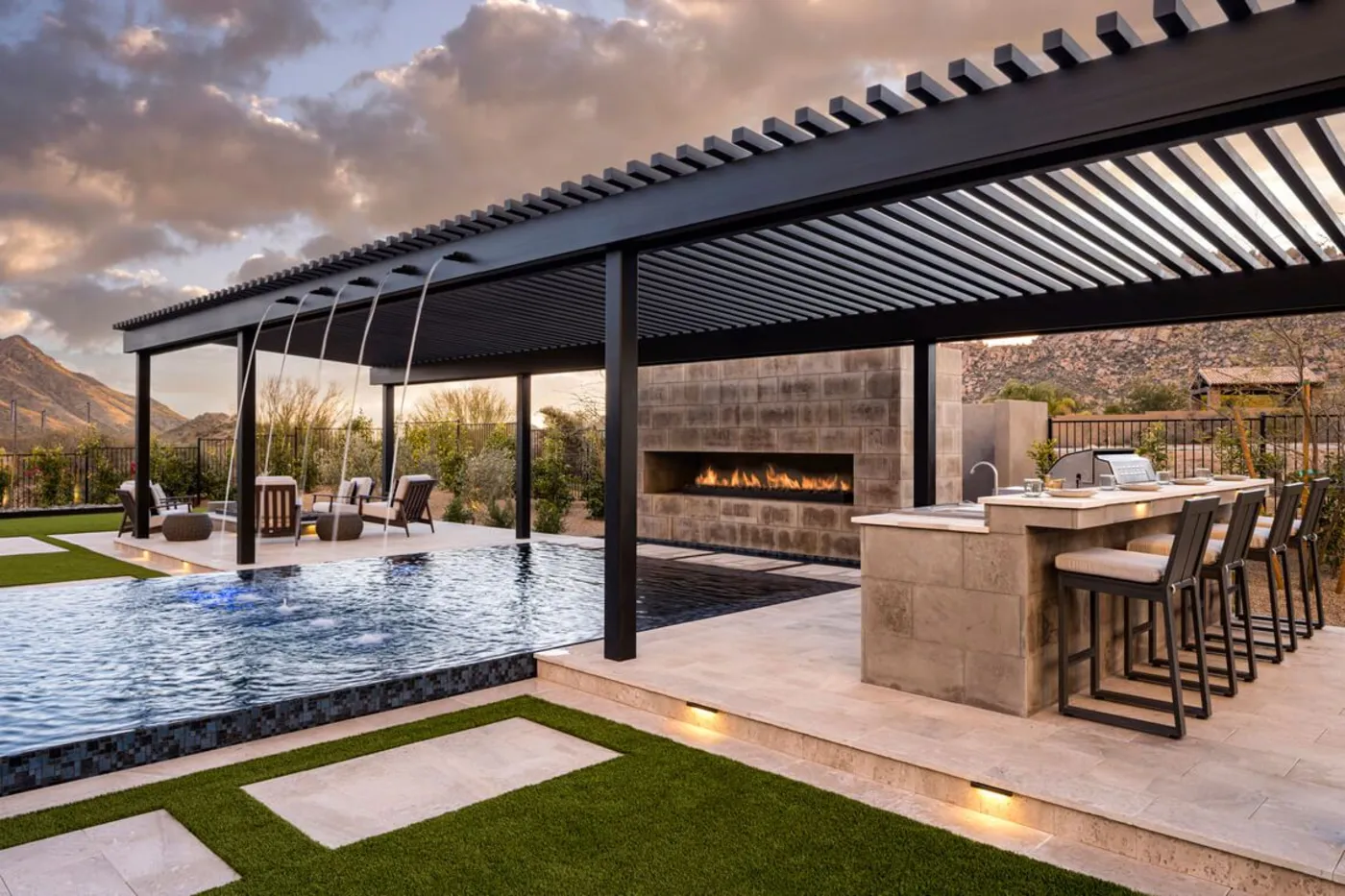
Shade changes both the comfort and appearance of a paved outdoor space. A travertine patio under a pergola experiences less direct solar exposure for part of the day, which can give homeowners more flexibility with color and finish.
Warm walnut or deeper mixed tones that may feel visually heavy across a fully exposed patio can work well beneath a shaded seating or dining zone. The shade structure itself also becomes part of the material palette.
Cool silver travertine can pair naturally with dark metal framing, while warm ivory and walnut stones can coordinate with wood-toned or earth-toned structures.
Homeowners still planning the overhead component of their yard can review ideas for choosing shade structures for Arizona backyards alongside their paving selection.
Travertine Around Outdoor Kitchens and Fire Features
Outdoor kitchens and fire features introduce additional colors and textures into the yard. Countertops, cabinet finishes, masonry veneer, appliances, tile, and metal all compete for visual attention.
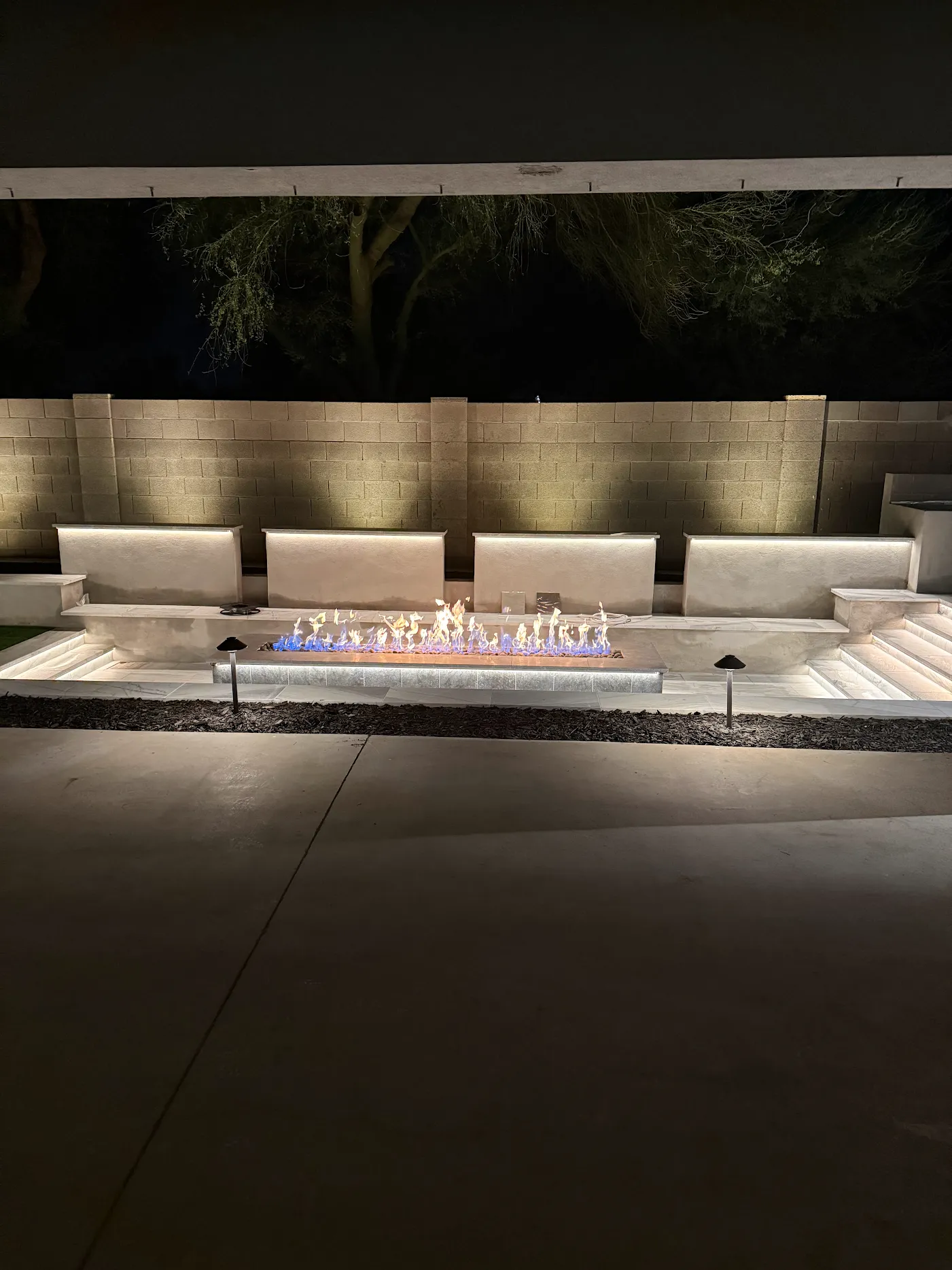
Travertine can help calm the palette because its colors are typically grounded in natural neutrals. Ivory works well with both dark and light outdoor cabinetry. Silver can support a contemporary kitchen with stainless steel or charcoal details. Walnut and noche can tie into warmer stone veneers and traditional fire features.
The goal is not necessarily to match everything. A better approach is to identify two or three repeating undertones and allow each material to contribute a slightly different texture.
Homeowners developing a cooking and entertaining zone can use the outdoor kitchen planning checklist to think through layout and function before finalizing the surrounding paving.
Which Travertine Color Is Best for Your Arizona Yard?
There is no single best color for every property, but there are reliable ways to narrow the decision.
Ivory travertine pavers are a versatile starting point for homeowners who want a bright, warm-neutral surface. Silver travertine pavers and gray travertine pavers are strong choices for contemporary homes and cooler palettes.
White travertine pavers create the brightest look but can make everyday outdoor dust more noticeable. Walnut travertine pavers add warmth and depth, especially in shaded or traditional spaces. Noche travertine pavers work well as rich accents or in designs that intentionally use deeper earth tones.
For exposed Arizona patios and pool decks, lighter colors are often the easiest starting point because they suit intense sun visually and tend to absorb less solar energy than darker surfaces.
Tumbled travertine pavers are commonly favored where outdoor texture and traction matter. Covered areas give homeowners more freedom to explore darker colors or smoother finishes because direct solar exposure is reduced.
The best final choice is the one that works at three scales at once: the individual stone looks appealing, the full paved area supports the way the space will be used, and the color palette belongs with the architecture and landscape around it.
Frequently Asked Questions About Travertine Pavers
Do travertine pavers get hot in Arizona?
All outdoor paving can heat up in direct Arizona sun, but light-colored travertine is commonly selected for hot climates because it generally absorbs less solar heat than darker paving materials. Ivory, cream, white, and light silver are typically better starting points for exposed barefoot areas than deep walnut or noche tones. Shade, time of day, finish, weather, and the specific stone still affect surface temperature.
What are the most popular travertine paver colors for Arizona yards?
Ivory, cream, silver, light gray, beige, walnut, and noche are common travertine color families. Ivory and silver are particularly versatile because they coordinate with many Arizona stucco colors while keeping outdoor spaces visually bright. Walnut and noche provide warmer, darker accents for traditional or shaded areas.
Are tumbled travertine pavers good around pools?
Tumbled travertine is widely used around pools because its textured surface and softened edges create a natural exterior finish with more texture than polished stone. Color and finish should still be evaluated together, and the pool deck should be designed with appropriate drainage, elevations, and transitions.
Is silver travertine the same as gray travertine?
The names often overlap, but supplier terminology varies. Silver travertine commonly contains gray, taupe, beige, cream, and other subtle tones rather than one uniform gray. Homeowners should evaluate actual stone samples instead of relying only on the product name.
Can travertine pavers be used in an HOA community?
They may be, but HOA requirements vary by community. Homeowners should review current association standards and approval procedures before making visible exterior changes. Front-yard paving, driveway modifications, color changes, and other hardscape additions may require drawings or material samples.
Should travertine be sealed in Arizona?
Sealing recommendations depend on the specific travertine, finish, exposure, location, and desired appearance. A suitable natural-stone sealer may help manage staining in some applications, but homeowners should follow the stone supplier or installer’s recommendations for the product actually being installed.
Final Takeaway: Choose Travertine as Part of the Whole Landscape
Travertine pavers give Arizona homeowners a broad palette of natural colors and textures without losing the character that makes stone appealing. Ivory creates a bright warm-neutral foundation. Silver and gray support modern design. White delivers a crisp contemporary appearance. Walnut adds warmth, while noche creates depth and contrast.
Tumbled finishes bring a more textured outdoor character, while honed finishes create a smoother visual effect for the right setting.
The strongest travertine projects are not based on a color name alone. They account for Arizona sun, shade, water use, pool conditions, HOA requirements, architecture, drainage, adjacent materials, and how the homeowner plans to use the yard.
By reviewing real samples outdoors and planning the stone alongside the rest of the hardscape, travertine can become a unifying material rather than simply another surface.