Paver patios are a popular way for Queen Creek homeowners to extend living space outdoors while staying true to the desert environment. Compared with poured concrete, interlocking pavers offer flexible design, better drainage and more comfort underfoot. This guide explains why permeable pavers are an ideal choice for our climate, how to plan a patio that meets HOA and water‑conservation guidelines, and what to expect during installation.
Why Choose Pavers for Your Desert Patio?
Selecting the right surface material is the first step. Traditional concrete slabs hold water and are prone to cracking in Arizona’s heat. By contrast, permeable pavers allow rainwater to infiltrate the ground naturally. This reduces puddles and flooding, replenishes groundwater and eases pressure on storm‑water systems. Because individual units are flexible, damaged stones can be replaced without tearing out the entire patio and they resist temperature extremes better than concrete.
Pavers also improve comfort and safety. Solid concrete absorbs and stores heat, becoming uncomfortably hot under the summer sun. Light‑coloured or textured pavers reflect more sunlight and have small gaps that help heat dissipate. Permeable systems further promote evaporative cooling and provide better traction when wet.
From an environmental perspective, permeable pavers help mitigate urban heat islands and filter pollutants out of storm‑water runoff. Many products incorporate recycled materials, supporting sustainable construction. For homeowners seeking drought‑friendly landscapes, these benefits align with Queen Creek’s commitment to water conservation and low‑impact development.

Click to Enlarge
Planning and Design Considerations
Define your space and function
Begin by outlining how you intend to use the patio. Will it host outdoor dining, a fire feature, seating areas or a kitchen? Measure and stake the area, and ensure there is enough clearance for furniture and traffic flow. Choosing shapes such as rectangles, circles or free‑form layouts affects cutting and waste. Popular patterns include herringbone for high interlock and running bond for a relaxed feel; border stones help keep edges straight.
Account for drainage and slope
A lasting paver patio follows a reliable sequence: assess the site, plan drainage, excavate and build a compacted sub‑base, install edge restraints, screed bedding sand, lay and cut pavers, fill joints with polymeric sand and then compact and seal. Proper drainage begins with slope. Experts recommend a finished slope of roughly 1/4 inch per foot away from structures to encourage runoff. Queen Creek’s seasonal monsoons can dump 1–2 inches of rain in under 30 minutes, so designing for storm‑water flow is critical.
Work within HOA guidelines
Many master‑planned communities in the East Valley regulate exterior modifications. Design committees typically require homeowners to submit plans before starting work, and approval is needed even when similar projects exist. Preferred materials often include neutral‑tone pavers, and there may be limits on width, setbacks or extension beyond existing hardscapes. Always review your association’s rules and obtain written approval before scheduling installation.
Prioritize water‑wise design
Queen Creek offers resources for creating attractive, water‑efficient landscapes, including xeriscape guides and watering schedules. Incorporate permeable pavers or joint patterns that allow water to soak into the soil, and use drought‑tolerant plants around the patio. Drip irrigation is encouraged for planting beds while spray irrigation should be limited to turf areas. These strategies reduce consumption and may qualify for local rebates listed in the town’s landscaping rebate programs.

Click to Enlarge
Key Steps in Paver Patio Installation
Understanding the installation process helps you plan realistically and appreciate the value of professional work. While handy homeowners can tackle small projects, large patios and permeable systems benefit from experienced crews and specialized equipment.
1. Planning, layout and materials
Sketch your desired layout on graph paper and mark it on the ground using stakes or a hose. Calculate the area and add 5–10 percent for cuts and waste. Determine the amount of crushed gravel, bedding sand and pavers needed. Common materials include 3/4‑minus gravel for the base, coarse bedding sand and polymeric joint sand. Tools like a plate compactor, level, string line, screed board and paver saw ensure precision.
2. Excavation and base preparation
Excavate the site to accommodate the paver thickness, a 1‑inch bedding sand layer and a compacted base—usually 4–6 inches for patios, or up to 12 inches for heavier loads or permeable systems. The Oregon State Extension guide recommends digging to the calculated depth and compacting the soil to a stable, graded surface. Lay crushed stone in several thin layers, compacting each lift to create a strong base. A solid base prevents settling and manages subsurface drainage.
3. Install edge restraints and bedding sand
Edge restraints keep pavers from creeping outward. They may be made of plastic, metal or concrete and should be anchored into the compacted base. Spread a 1‑inch layer of bedding sand over the base; use screed pipes and a straight board to achieve a uniform thickness. Do not walk on screeded sand—work from the edge as you lay pavers.
4. Laying and cutting pavers
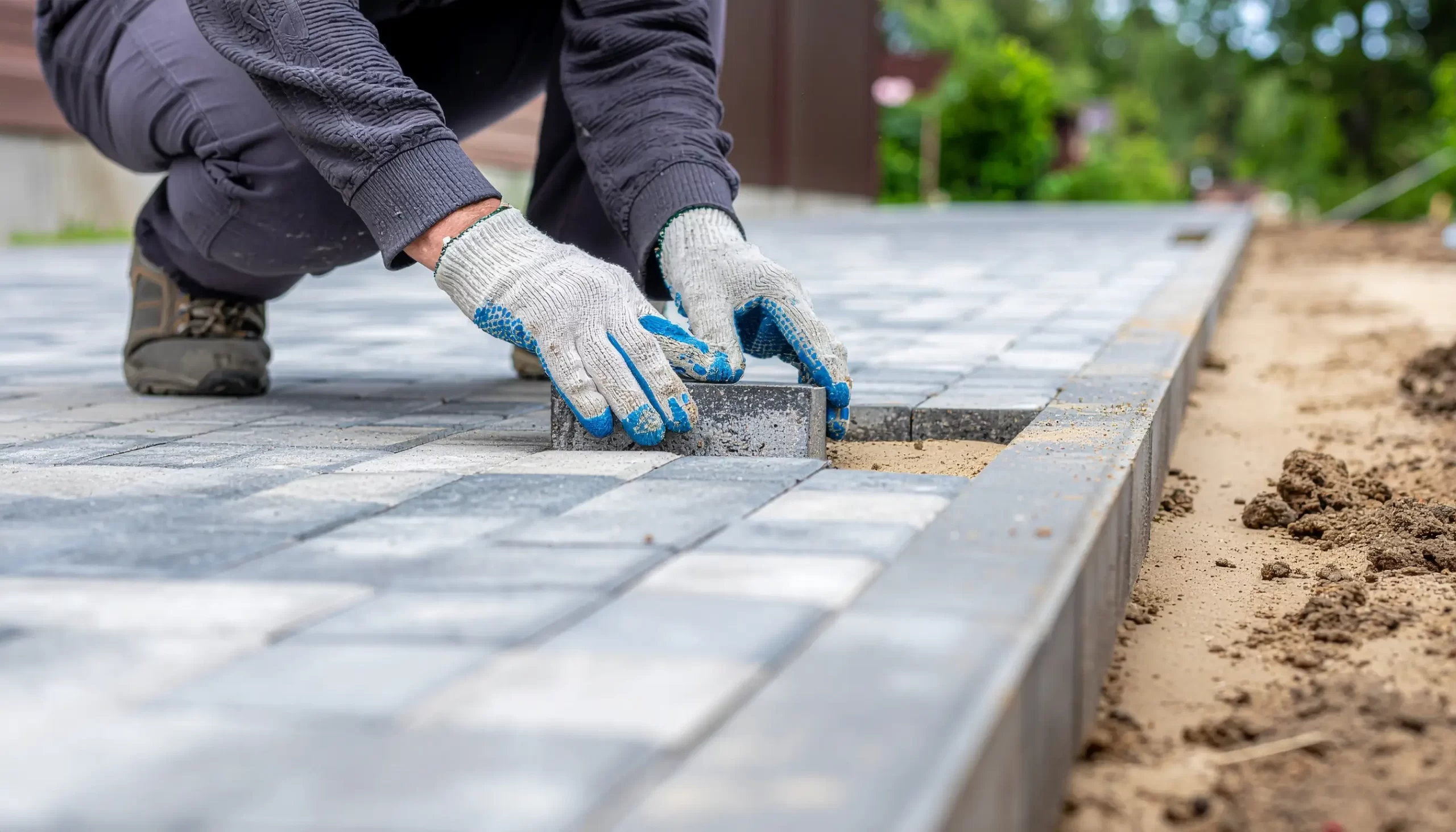
Place pavers according to your chosen pattern, pressing them straight down rather than sliding them into place. Maintain tight joints and use spacers if provided. Cut perimeter pieces with a masonry saw or splitter. Once all pavers are set, run a plate compactor over the surface to seat them into the sand.
5. Jointing and finishing
Sweep fine or polymeric sand into the joints to lock the pavers together. Polymeric sand hardens when moistened, resisting erosion and weed growth. After jointing, lightly spray the surface to activate the polymer binder and run the compactor again. Sealing is optional but helps protect against staining and makes cleaning easier.
6. Drainage enhancements and maintenance
In areas with heavy monsoon rains or expansive clay soils, additional drainage may be necessary. Install channel drains at low points and direct runoff to dry wells or landscaped swales. Use polymeric sand and proper slope to minimize pooling. Plan for periodic maintenance—refilling joints every few years, re‑leveling settled stones and cleaning debris from drains keeps your patio performing.
Selecting Materials for Arizona Performance
Paver materials differ in cost, durability and aesthetics. Concrete pavers are versatile and cost‑effective, brick offers a classic look, natural stone provides unique character, porcelain suits modern designs and permeable interlocking pavers support storm‑water control. Each type requires the same core installation steps—solid base, edge restraint and proper jointing—for long‑term stability.
For the East Valley’s intense sun, choose lighter colors and textured surfaces to minimize heat absorption. Permeable pavers or permeable joint designs improve water infiltration, helping landscapes survive drought and reducing runoff.
Integrating Turf, Shade and Other Features
Pairing a paver patio with low‑maintenance turf alternatives creates a balanced space that softens hardscape and reduces irrigation needs. Clean transitions between pavers and artificial turf start with proper edge details—metal or plastic restraints or recessed channels for turf infill. Turf lowers water use and maintenance while adding visual contrast. Our article on xeriscaping and drought‑tolerant planting provides ideas for surrounding beds.
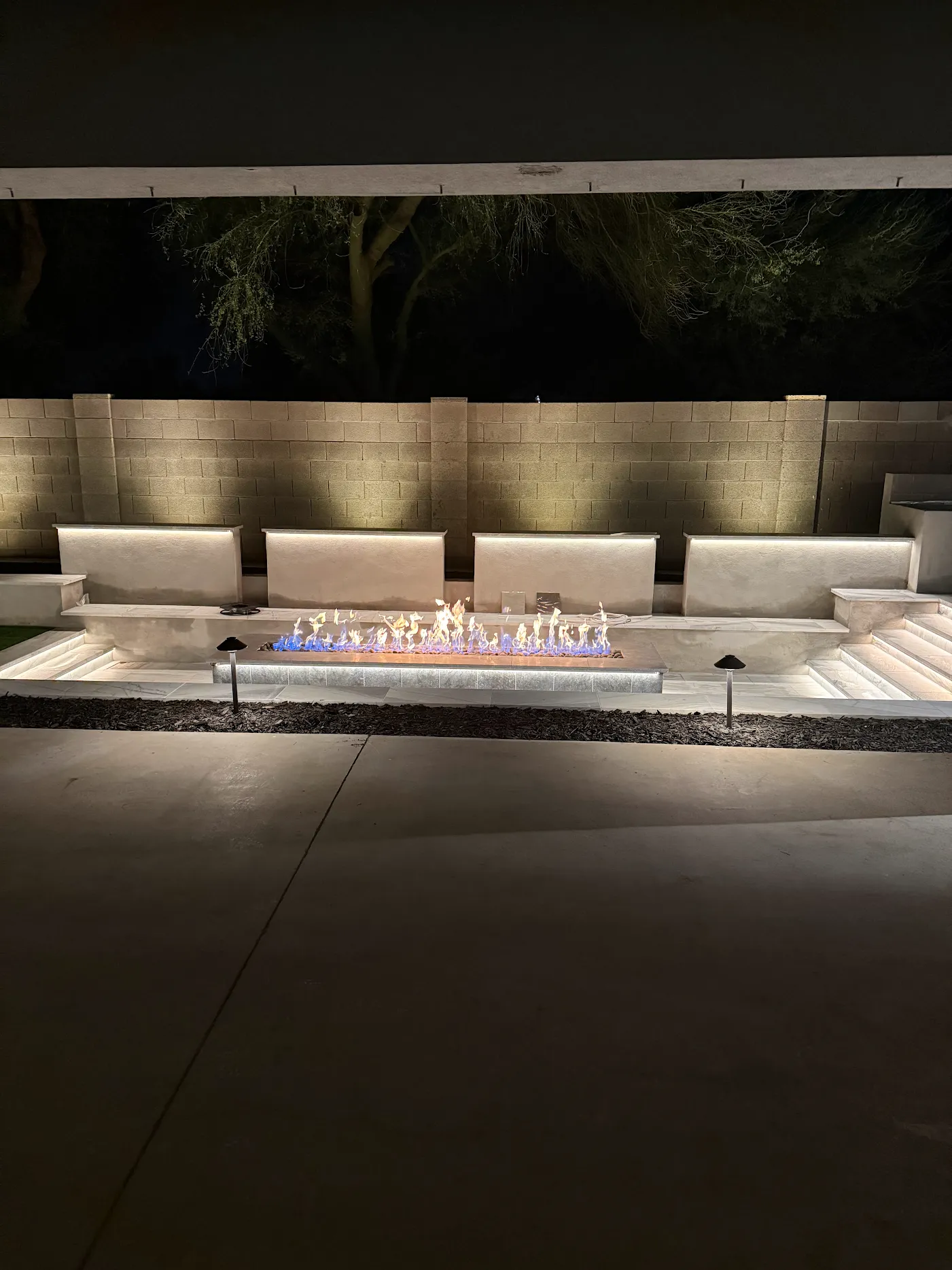
A pergola or shade sail can make your patio usable during midday heat and protect furniture. Explore our shade structure ideas for design inspiration. For evening ambience and safety, incorporate pathway and accent lighting—our outdoor lighting guide outlines fixture options and placement. For homeowners dreaming of an outdoor kitchen or fire feature, refer to our outdoor kitchen planning checklist and fire pit selection guide.

Click to Enlarge
Keeping Your Patio Beautiful
Paver patios are durable but benefit from routine care. Sweep regularly to remove debris, rinse lightly and avoid harsh pressure washing that can erode joints. Inspect for settling or rocking stones after storms and reset as needed. Refill polymeric sand every few years to maintain interlock and prevent weed growth. Inspect drainage channels and clean out leaves or sediment so water keeps moving.
Ready to Build?
By understanding the planning, materials and installation steps, you can make informed decisions about your outdoor living space. For complex projects or permeable systems, professional installation ensures proper excavation, compaction and drainage for decades of use. Our paver patio installation team serves Queen Creek and the greater Phoenix area, integrating patios with comprehensive hardscaping services, new home landscaping, modern irrigation and custom pergolas. Contact us for a consultation and explore more ideas in our Arizona backyard ideas for 2026.
Frequently Asked Questions
-
How do I determine the right depth and slope for a paver patio in Queen Creek?
- A finished slope of about 1/4 inch per foot away from structures helps water run off. For most patios, excavate deep enough to allow for the paver thickness, roughly 1 inch of bedding sand and a compacted base of 4–6 inches; heavier loads or permeable systems may need up to 12 inches.
-
What makes permeable pavers a smart choice for our desert climate?
- Permeable pavers let rainwater pass through joints into a gravel reservoir, reducing puddles and runoff while replenishing groundwater. They also dissipate heat more effectively than solid concrete and can use recycled materials.
-
Do I need HOA approval to build a paver patio?
- In many East Valley communities, any exterior modification requires submission to a design review committee. Even if similar projects exist, homeowners must submit plans and follow guidelines on materials, setbacks and aesthetics.
-
How can I keep my paver patio cool and comfortable during summer?
- Choose light‑coloured or textured pavers to reflect sunlight and consider permeable designs that promote evaporative cooling. Adding a pergola or shade sail provides additional protection, and integrating desert‑friendly plants softens heat around hardscapes.
-
What maintenance does a paver patio require?
- Sweep debris regularly, refill polymeric joint sand every few years, relevel any settled stones and clean drainage channels. Avoid high‑pressure washing that can erode joints.