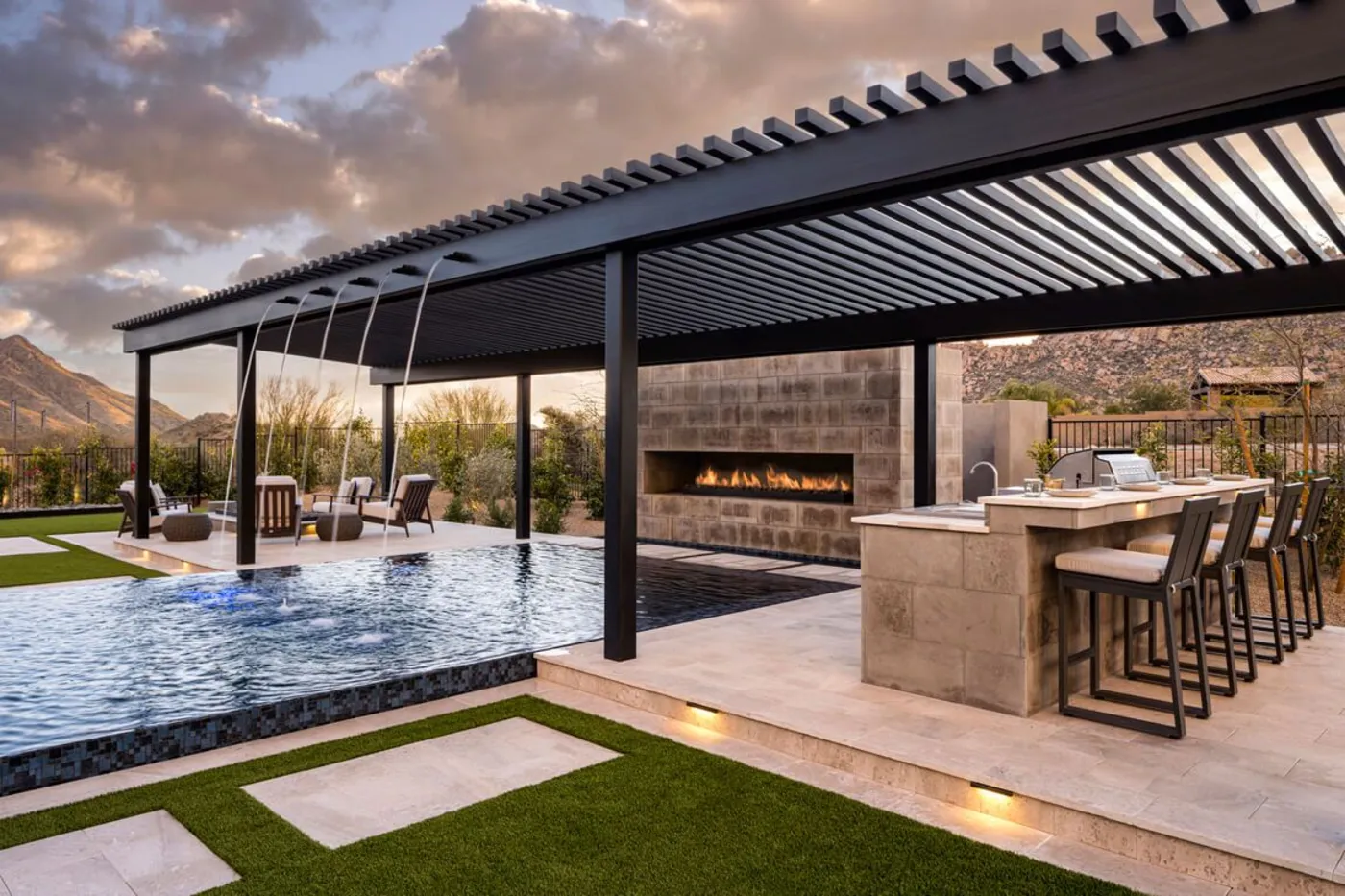
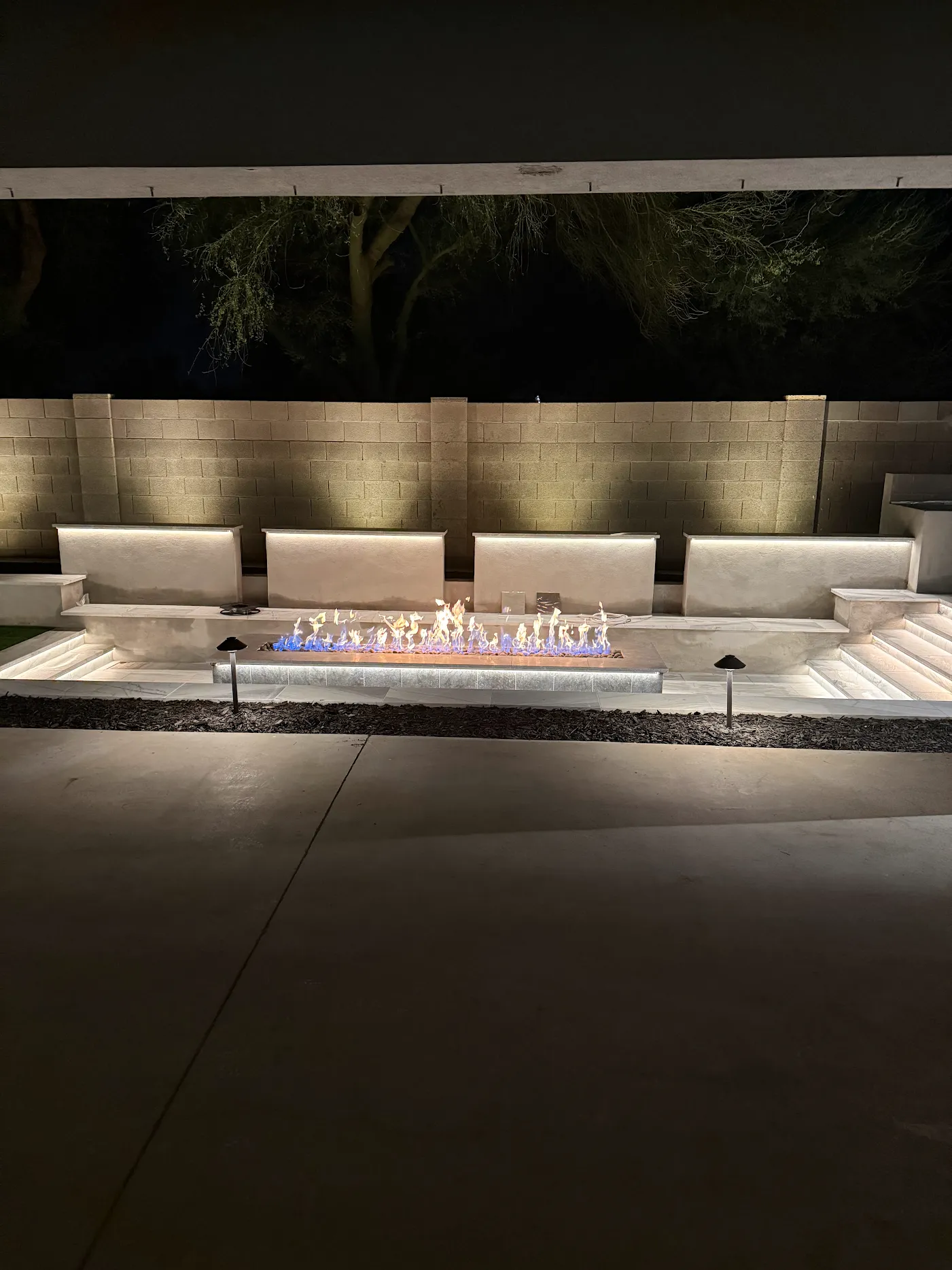
12 Modern Desert Backyard Designs for Phoenix and the East Valley
The best Arizona backyards don’t need to include a swimming pool, an enormous patio, or an expensive outdoor kitchen. A thoughtfully designed yard can combine comfortable seating, attractive landscaping, durable materials, and shade to create an outdoor space that fits the way you live.
For Phoenix-area homeowners, the challenge is deciding which features actually make sense for the property.
An impressive outdoor kitchen may offer little value to someone who rarely cooks outside. A large artificial turf lawn might look low-maintenance but become uncomfortable during summer afternoons. A pergola can create an attractive gathering space, but its location and roof design determine how much useful shade it provides.
Successful Arizona backyard design begins with a plan, not a collection of individual upgrades.
This updated guide explores 12 Arizona backyard ideas for 2026, including modern backyards without pools, compact layouts, desert landscaping, outdoor kitchens, shaded patios, and luxury outdoor living spaces.
Each idea explains what works, what homeowners may need to compromise on, and which decision to make first. You’ll also find sample backyard layouts, real Platinum Outdoors project examples, practical maintenance comparisons, and important construction considerations for Phoenix, Scottsdale, Mesa, Chandler, Gilbert, Queen Creek, and surrounding East Valley communities.
Regional focus: These ideas primarily address Phoenix-area and East Valley properties. Plant choices, seasonal conditions, and construction requirements may differ in higher-elevation Arizona communities.
Find Your Arizona Backyard Design in 30 Seconds
Not sure which style is right for your yard? Start with the single biggest priority for your outdoor space.
- Want a modern backyard without a pool? Start with Idea #1: Modern No-Pool Backyard.
- Want less yard maintenance? Explore Idea #2: Low-Maintenance Desert Retreat.
- Have a compact or narrow backyard? See Idea #3: Small Multi-Zone Backyard.
- Love cooking and entertaining? Consider Idea #4: Outdoor Kitchen and Dining.
- Need a better backyard for dogs? See Idea #6: Pet-Friendly Backyard.
- Struggling with afternoon heat? Begin with shade and summer comfort planning before selecting patio materials.
- Starting with a dirt backyard? Explore Idea #11: New-Construction Backyard.
Many homeowners will combine more than one concept. A small backyard might feature a shaded patio, a compact pet area, and low-water planting without becoming overcrowded.
Which Arizona Backyard Design Is Right for You?
Before choosing materials or planning construction, consider how often you’ll use the space, how much maintenance you’re comfortable with, and which activities deserve the most room.
| Backyard Idea | Choose This If… | Reconsider If… | First Decision |
|---|---|---|---|
| 1. Modern No-Pool Backyard | You want flexible entertaining and relaxation space | You’re trying to include every possible feature | Which two activities matter most? |
| 2. Low-Maintenance Desert Retreat | You prefer desert planting and limited routine upkeep | You expect a completely maintenance-free landscape | How much upkeep is acceptable? |
| 3. Small Multi-Zone Backyard | You need multiple functions in limited space | Large structures would dominate the yard | What can serve multiple purposes? |
| 4. Outdoor Kitchen and Dining | You frequently cook and entertain outdoors | You rarely grill or host outside | Compact grill station or full kitchen? |
| 5. Family-Friendly Backyard | Daily play and supervision are priorities | Play areas would be exposed or difficult to supervise | Where should the play area go? |
| 6. Pet-Friendly Backyard | Pets use the yard every day | Surfaces and plants create avoidable hazards | Where will pets play and relieve themselves? |
| 7. Mediterranean Patio | You prefer warm stone and timeless design | Specialized finishes don’t suit your maintenance preferences | Which patio material fits your needs? |
| 8. Fire Pit Courtyard | Evening conversation is a priority | You need the space for more flexible recreation | Can seating fit comfortably? |
| 9. Luxury Poolside Backyard | You want coordinated resort-style living | The pool leaves insufficient space for other uses | How will the pool connect to seating? |
| 10. Shaded Garden Retreat | Relaxation and planting are your priorities | You want a large open recreation area | Where is shade most useful? |
| 11. New-Construction Backyard | You’re starting with an unfinished dirt yard | You haven’t planned future improvements | Which infrastructure comes first? |
| 12. Evening Entertainment Backyard | You use your backyard after sunset | Lighting replaces more essential improvements | Which areas need illumination? |
Before You Design: Five Arizona Backyard Planning Essentials
1. Observe Sun Exposure Before Choosing a Patio Location
Where the sun falls during the afternoon affects the usefulness of seating, turf, planting beds, and shade structures.
West-facing patios and block walls can receive intense late-day sunlight. South-facing areas often experience substantial year-round exposure, while areas shaded by the house may be more comfortable during certain hours.
Observe the yard at different times of day before deciding where the main gathering space should go.
2. Identify Your Three Highest-Priority Activities
A backyard doesn’t have to accommodate every possible activity.
Choose the three functions that matter most, such as outdoor dining, relaxing, pets, gardening, or entertaining.
Give those activities enough room before adding secondary features.
Professional landscape design services can help coordinate patio sizes, planting, shade, access, and other improvements before construction begins.
3. Plan Shade and Drainage Early
Shade affects how comfortably homeowners can use outdoor spaces during Arizona summers.
Grading and drainage influence how patios, artificial turf, landscape beds, and structures perform during heavy rainfall.
Evaluate both before finalizing the backyard design. Retrofitting drainage or structure foundations after installation can require disturbing completed work.
4. Evaluate Existing Features Worth Keeping
Not every renovation requires removing the entire backyard.
Existing trees, pavers, irrigation, patios, retaining walls, and lighting may be reusable depending on their condition and compatibility with the proposed design.
A site evaluation can help determine which improvements are worth preserving.
5. Confirm HOA, Permit, and Utility Requirements
Many East Valley communities require homeowners to obtain HOA approval before making certain exterior improvements.
Pergolas, ramadas, outdoor kitchens, gas lines, electrical systems, and other structures may also require permits or inspections.
Requirements depend on the city, neighborhood, and project scope.
Addressing these questions before construction helps prevent unnecessary design changes and project delays.
12 Arizona Backyard Ideas for 2026
These backyard concepts are intended to help homeowners choose complete designs rather than disconnected features.
Each includes practical features, an important tradeoff, and the first decision to make.
1. Modern Arizona Backyard Without a Pool
Best for: Homeowners who want flexible outdoor space for entertaining, dining, and relaxing without a swimming pool.
Modern Arizona backyards without pools can be especially attractive when the available space is organized around several activities.
Rather than creating one enormous paved area, consider two or three connected outdoor environments.
Recommended Design Features
- Large-format paver patio.
- Aluminum pergola or solid-roof ramada.
- Comfortable lounge seating.
- Low-water flowering shrubs and shade trees.
- Optional compact artificial turf area.
- Integrated landscape lighting.
A limited color palette and clean patio borders help create a modern appearance. Defined planting beds can soften walls and hardscaping without requiring extensive lawn maintenance.
The Main Compromise
Too much patio coverage leaves less room for greenery, recreation, and future features. Dividing a small backyard into too many zones can also make it feel crowded.
Where to Start
Decide whether dining, lounging, or recreation will receive the most space.
Position the primary activity area according to sun exposure, house access, and circulation.
A successful no-pool backyard prioritizes everyday comfort rather than trying to incorporate every outdoor living feature.
2. Low-Maintenance Arizona Desert Retreat
Best for: Homeowners who want drought-tolerant planting, attractive outdoor seating, and less routine lawn maintenance.
A low-maintenance backyard doesn’t have to consist entirely of gravel.
Modern xeriscaping combines carefully selected desert plants, decorative stone, appropriate mulch, and efficient irrigation to create a landscape with multiple colors and textures.
Recommended Design Features
- Native or desert-adapted shade trees.
- Red yucca, Texas sage, and flowering desert perennials.
- Decorative boulders and gravel.
- Drip irrigation.
- Small seating patio.
- Simple walkways.
Plant groupings should account for mature dimensions, water requirements, and maintenance needs.
For help choosing suitable plants, read our updated guide to drought-tolerant plants for Arizona xeriscaping.
The Main Compromise
Desert landscaping still requires maintenance.
Newly planted trees and shrubs need establishment irrigation. Mature plants may require pruning, occasional replacement, and irrigation adjustments.
Where to Start
Decide whether your main priority is reducing water use, minimizing physical maintenance, or achieving a natural desert appearance.
Those goals are related but may lead to different design choices.
Explore our xeriscaping services for larger landscape conversions.
3. Small Arizona Backyard With Multiple Living Zones
Best for: Compact lots, narrow yards, and newer residential communities.
Many homes throughout Gilbert, Chandler, Queen Creek, and other East Valley neighborhoods have relatively compact outdoor spaces.
Small backyards can still accommodate multiple activities when the design avoids oversized features.
Recommended Design Features
- Compact paver patio.
- Built-in seating or appropriately sized furniture.
- Narrow planting borders.
- Small flexible recreation area.
- Efficient shade structure.
- Clear walkways and access.
Place the main seating area near the house to create a direct connection between indoor and outdoor living.
A compact turf area or garden zone can provide a secondary function without dominating the property.
The Main Compromise
Every permanent improvement reduces flexibility.
A full kitchen, large fire pit, separate lounge, and recreation area may not all fit comfortably.
Where to Start
Measure the usable area and identify obstructions, access routes, utilities, and the space needed for furniture.
Choose one primary use and one flexible secondary function.
For smaller lots, thoughtful proportions often matter more than adding expensive features.
4. Outdoor Kitchen and Covered Dining Backyard
Best for: Homeowners who frequently cook, host guests, or serve meals outdoors.
An outdoor kitchen can extend the functionality of a backyard, especially when the cooking and dining areas are planned together.
Recommended Design Features
- Built-in grill or cooking station.
- Food preparation countertops.
- Weather-resistant outdoor storage.
- Covered dining area.
- Task and ambient lighting.
- Clear circulation between cooking and seating.
- Optional beverage refrigerator or other appliances.
Keep the cooking station accessible from the house without interrupting the primary route through the backyard.
Real Platinum Outdoors Project: Gilbert Outdoor Kitchen
A Platinum Outdoors project in Gilbert features a 4K cantilever pergola, marble countertops, porcelain tile along the back wall, black stacked-stone finishes, and Kokomo appliances.
The project illustrates how overhead shade, cooking equipment, and architectural finishes can be coordinated into one outdoor living environment.
View more completed outdoor living work in the Platinum Outdoors project gallery.
The Main Compromise
A full outdoor kitchen uses permanent space and can require gas, electrical, water, or drainage connections.
It also introduces appliance maintenance and cleaning.
Where to Start
List the cooking equipment and preparation space you actually need.
Compare a compact grill island with a full outdoor kitchen before committing to appliances or utility connections.
Review our outdoor kitchen planning checklist for additional considerations.
5. Family-Friendly Arizona Backyard
Best for: Families who want flexible recreation space with comfortable seating for adults.
A family-focused backyard should balance play areas with shade, supervision, practical circulation, and long-term flexibility.
Recommended Design Features
- Defined play area.
- Shaded adult seating.
- Durable pathways.
- Optional artificial turf or other suitable play surface.
- Convenient outdoor storage.
- Appropriate planting away from active recreation.
- Clear sightlines.
Position the recreation area where adults can observe children from the main patio.
Keep cooking stations and fire features appropriately separated from play zones.
The Main Compromise
Play areas occupy space that could otherwise be used for dining, planting, or entertaining.
Artificial turf can also become extremely hot in direct sunlight, so shade and surface-temperature considerations are important.
Where to Start
Determine how much open recreation space the household needs now and how that may change over time.
A flexible layout may be more useful than a permanent specialized feature that children eventually outgrow.
6. Pet-Friendly, Low-Maintenance Arizona Backyard
Best for: Homeowners who want practical landscaping designed around dogs or other household pets.
Pet-friendly backyard design should consider cleaning, drainage, shade, safe planting, and durable surfaces.
Recommended Design Features
- Dedicated pet relief area.
- Suitable artificial turf or other durable material.
- Proper subsurface drainage.
- Shaded resting area.
- Easy-to-clean hardscaping.
- Accessible hose or cleaning water.
- Plants selected with pet use in mind.
Separate the primary pet relief area from outdoor dining or lounge zones when the property allows.
Plan for access and cleaning before deciding on the final surface.
The Main Compromise
Artificial turf eliminates mowing but still requires cleaning and maintenance.
Its surface temperature can become uncomfortable in direct sun, and some ornamental plants can create ingestion or puncture hazards.
Where to Start
Observe how pets already use the yard.
Identify their preferred routes, resting locations, and relief areas, then plan shade, cleaning access, and drainage around those behaviors.
For further information, see our guide to artificial turf for pets in Arizona.
7. Mediterranean-Inspired Arizona Patio
Best for: Homeowners who prefer warm, natural materials and timeless outdoor styling.
Mediterranean-inspired backyard design complements many Arizona home styles through natural stone, warm colors, and comfortable shaded seating.
Recommended Design Features
- Travertine or complementary paver surfaces.
- Warm cream, tan, and earth-tone finishes.
- Decorative planters.
- Pergola or shaded courtyard.
- Coordinated wall finishes.
- Low-water plants.
- Soft landscape lighting.
Choose a primary hardscape material and coordinate the surrounding features around it.
A limited selection of finishes often creates a more cohesive look than mixing numerous competing stone colors and patterns.
The Main Compromise
Natural stone and specialty finishes can require different levels of cleaning, maintenance, and surface care.
Color, texture, slip resistance, and sunlight exposure should influence the final material choice.
Where to Start
Choose the patio surface before selecting borders, steps, planters, and decorative wall finishes.
Compare the practical differences in our travertine vs. porcelain pavers guide.
8. Modern Fire Pit Courtyard
Best for: Homeowners who enjoy evening conversation and outdoor gatherings.
A built-in fire pit can create a focal point without requiring a large kitchen or swimming pool.
Recommended Design Features
- Round, square, or rectangular fire pit.
- Comfortable seating arrangement.
- Paver or stone patio.
- Optional built-in seating wall.
- Decorative planting beds.
- Subtle landscape lighting.
Rectangular fire features can complement modern linear seating, while round designs may work well for conversation-oriented arrangements.
The Main Compromise
A permanent fire feature occupies usable space even when it isn’t in operation.
Fuel requirements and applicable clearances may also affect where it can be installed.
Where to Start
Arrange the seating and walking routes before choosing the size or shape of the fire pit.
Then evaluate fuel type, installation requirements, and clearances.
Our Arizona fire pit selection guide covers additional options.
9. Luxury Arizona Backyard With Poolside Outdoor Living
Best for: Homeowners planning a coordinated resort-style outdoor environment.
A luxury backyard with a pool works best when the pool, decking, landscaping, shade, and seating areas are designed as connected features.
Recommended Design Features
- Coordinated pool decking and coping.
- Covered lounge or dining patio.
- Appropriate desert landscaping.
- Integrated landscape lighting.
- Clear circulation around the pool.
- Optional outdoor kitchen or fire feature.
Use a consistent material palette to connect the pool area with the rest of the landscape.
Choose planting locations that provide visual interest without creating unnecessary litter directly over pool water.
The Main Compromise
Poolside renovations may be limited by existing plumbing, drainage, deck elevations, equipment, and access.
Where to Start
Determine where people will sit, dine, enter the pool, and move between outdoor areas.
Then select materials and landscaping that support that circulation.
Explore pool remodeling services for coordinated poolside improvements.
10. Shaded Garden Retreat Without a Pool
Best for: Homeowners who want a peaceful setting for reading, relaxing, or spending time outdoors.
A shaded garden retreat can be attractive without a large patio, kitchen, or turf lawn.
Recommended Design Features
- Compact seating patio.
- Filtered shade from a suitable tree.
- Flowering desert shrubs.
- Decorative stone or gravel.
- Simple garden pathway.
- Comfortable furniture.
- Subtle evening lighting.
Position the seating area according to the time of day it will be used.
A morning coffee patio may belong in a different location than an afternoon reading retreat.
The Main Compromise
Shade trees take time to mature and may produce seasonal litter.
Flowering shrubs also require establishment irrigation and occasional care.
Where to Start
Identify the most comfortable location for the primary seating area.
Then select trees and plants based on available space, irrigation, and desired seasonal appearance.
11. New-Construction Arizona Backyard From Dirt to Finished Design
Best for: Homeowners moving into new homes with unfinished backyards.
Many East Valley homes are delivered with minimal backyard landscaping.
Starting with bare dirt allows homeowners to plan the complete space before individual features are installed.
Recommended Design Features
- Grading and drainage.
- Main patio and walkways.
- Irrigation system.
- Low-water planting.
- Optional artificial turf.
- Shade structure planning.
- Landscape lighting.
- Future utility provisions.
Real Platinum Outdoors Project: Queen Creek Backyard Transformation
The Platinum Outdoors project gallery includes a Queen Creek backyard that was transformed from a dirt-and-rock space into a finished landscape incorporating artificial turf, concrete pavers, and perimeter landscape rock.
The project illustrates how a straightforward combination of hardscape, functional groundcover, and decorative finishing materials can turn an unfinished yard into a usable outdoor space.
Not every completed backyard needs a pool, outdoor kitchen, or several structures.
See additional examples in the Platinum Outdoors project gallery.
The Main Compromise
Installing features without an overall plan can create additional expense if completed work must later be removed to accommodate utilities or structures.
Where to Start
Develop the full layout before deciding which features to install first.
Identify drainage, access, utility routes, structural foundations, and potential future improvements.
Explore our landscape installation services for complete new-yard projects.
12. Modern Arizona Backyard Designed for Nighttime Use
Best for: Homeowners who frequently relax or entertain outside after sunset.
Thoughtful landscape lighting can make a backyard more welcoming while improving circulation and visual comfort.
Recommended Design Features
- Tree uplighting.
- Moonlighting from suitable elevated locations.
- Pathway lighting.
- Step lighting.
- Pergola lighting.
- Outdoor kitchen task lighting.
- Accent lighting for walls and planting beds.
What Is Backyard Moonlighting?
Moonlighting uses elevated lighting fixtures to cast soft downward light, often through a tree canopy.
The effect can create natural-looking patterns of light and shadow across patios, walkways, and planting beds.
Fixture placement must account for tree condition, installation suitability, future maintenance, and electrical requirements.
The Main Compromise
Excessive lighting can create glare and disturb neighboring properties.
Lighting systems also require occasional fixture and electrical maintenance.
Where to Start
Identify where people need to walk, cook, dine, and sit after sunset.
Prioritize useful lighting before adding decorative effects.
Explore our outdoor lighting design ideas for Arizona.
Three Sample Arizona Backyard Layouts
The following concepts show how individual backyard features can fit together.
These are illustrative arrangements, not construction plans. Actual layouts must account for dimensions, drainage, setbacks, utilities, circulation, and approvals.
Layout A: Compact Modern Backyard Without a Pool
Goal: Combine dining, flexible recreation, and low-maintenance greenery.
| Backyard Area | Recommended Use |
|---|---|
| Near the house | Shaded dining or lounge patio |
| Center or side | Flexible recreation space or compact turf area |
| Perimeter | Low-water planting and screening |
| Along one edge | Clear walking and maintenance access |
What we intentionally leave out: An oversized kitchen, second dining area, and separate fire pit courtyard.
Why it works: The design gives the main patio priority while preserving a flexible open area.
Layout B: Entertaining-Focused Arizona Backyard
Goal: Connect cooking, dining, and relaxing without blocking circulation.
| Backyard Area | Recommended Use |
|---|---|
| Near the house and utility connections | Grill island or outdoor kitchen |
| Beside the kitchen | Shaded dining area |
| Separate gathering zone | Lounge seating |
| Perimeter | Planting, privacy, and lighting |
What we intentionally leave out: Large recreational features unless sufficient space remains after the primary activities are accommodated.
Why it works: Cooking and dining remain conveniently connected, while lounge seating can function independently.
Layout C: Low-Maintenance Desert Garden Backyard
Goal: Create an attractive landscape with a smaller patio and more planting.
| Backyard Area | Recommended Use |
|---|---|
| Near the back door | Compact seating patio |
| Sunny planting areas | Desert shrubs and flowering perennials |
| Suitable open planting area | Desert-adapted shade tree |
| Between planting areas | Simple walkways |
| Planting zones | Irrigation grouped according to plant needs |
What we intentionally leave out: Extensive turf, oversized patios, and large specialty cooking features.
Why it works: The design prioritizes planting, filtered shade, and relaxation instead of maximum hardscape coverage.
Which Backyard Materials Handle Arizona Summer Heat Best?
Surface temperature is an important consideration when selecting patios, pool decks, artificial turf, or landscape rock.
However, no single material is always the coolest option.
Color, texture, direct sunlight, shade, airflow, and the surrounding environment can substantially change surface temperatures.
During extremely hot summer afternoons, even lighter-colored outdoor materials can become uncomfortable under bare feet.
| Material | Summer Heat Consideration | Maintenance | Best Application |
|---|---|---|---|
| Light-Colored Travertine | May absorb less solar energy than darker surfaces; actual temperature varies | Cleaning and finish-specific care | Patios and pool decking |
| Porcelain Pavers | Color, finish, and exposure influence surface heat | Generally straightforward cleaning | Modern patios and outdoor kitchens |
| Concrete Pavers | Color and direct sunlight strongly influence heat | Cleaning and joint maintenance | Walkways, patios, and seating areas |
| Artificial Turf | Can become extremely hot in direct sun | Debris removal and cleaning | Selective recreation and pet areas with shade planning |
| Dark Decorative Rock | Dark surfaces can absorb substantial solar energy | Debris removal and occasional replenishment | Accent and perimeter planting beds |
Important: No outdoor surface should automatically be considered safe for barefoot use during extreme Arizona summer heat. Evaluate the specific material, finish, location, and intended use.
Wet slip resistance must also be assessed using product-specific information rather than assumptions based only on the material category.
How to Match Your Arizona Backyard Ideas to Your Project Scope
Backyard renovation costs depend on more than the visible features.
Grading, drainage, demolition, utility connections, structural requirements, access, and material selection can significantly affect the overall project.
The following project levels provide a useful framework without assuming that every backyard renovation has the same price.
| Project Level | Example Improvements | Possible Deferred Features | Plan Early |
|---|---|---|---|
| Essential Refresh | Planting, mulch, decorative rock, smaller hardscape improvements, irrigation updates | Outdoor kitchens and major structures | Drainage, irrigation, and planting layout |
| Outdoor Living Renovation | Expanded patio, shade structure, lighting, selected recreation or entertaining features | Additional specialty features | Foundations, utilities, approvals |
| Luxury Custom Transformation | Custom outdoor kitchen, premium hardscaping, major shade structures, integrated outdoor living areas | Project-specific | Complete master plan and coordination |
Actual project pricing requires a defined scope and site evaluation. Similar-looking backyards can involve substantially different construction requirements.
Can You Remodel an Arizona Backyard in Phases?
Yes. A phased renovation can begin with grading, drainage, core hardscaping, and irrigation before adding more expensive outdoor living features.
However, future electrical, gas, water, and structural needs should be considered during the original plan.
That helps reduce the likelihood of removing recently installed pavers or disturbing completed landscaping during later phases.
What Should You Compare Between Contractor Quotes?
Before choosing between proposals, confirm which of the following items are included when relevant:
- Demolition and disposal.
- Grading and drainage.
- Hardscape base preparation.
- Material specifications and installation methods.
- Planting and irrigation.
- Electrical, plumbing, and gas work.
- Structural foundations and approvals.
- Cleanup and site restoration.
- Warranty terms and exclusions.
A lower initial price isn’t necessarily more economical if important site preparation or coordination has been excluded.
Low-Maintenance Arizona Backyard Materials: What Ownership Really Involves
Low-maintenance means different things to different homeowners.
Some want less irrigation. Others want fewer weeds, less cleaning, or reduced physical yardwork.
Understanding the ongoing responsibilities of each feature helps identify the most practical design.
| Feature | Routine Care | Occasional Care | Question to Ask |
|---|---|---|---|
| Paver Patio | Cleaning and debris removal | Joint or edge maintenance | What does this installation require? |
| Artificial Turf | Cleaning and debris removal | Product-specific upkeep and repair | How will pets affect maintenance? |
| Desert Planting | Irrigation checks and cleanup | Pruning, emitter changes, replacement | How large will plants become? |
| Outdoor Kitchen | Surface and appliance cleaning | Equipment servicing | Can appliances be accessed for repair? |
| Pergola or Ramada | Cleaning and inspections | Material- and product-specific maintenance | What care does the warranty require? |
| Landscape Lighting | Cleaning lenses and checking operation | Fixture or wiring repairs | Will fixtures remain accessible? |
Remember: Drought-tolerant plants still need establishment irrigation, and artificial turf still requires cleaning and temperature management.
The best low-maintenance backyard is the one designed around the level of care your household can realistically provide.
Shade and Summer Comfort: What Matters Most in Arizona
An Arizona backyard may look beautiful yet receive little use during summer if its primary seating areas lack shade.
Rather than choosing a pergola or patio cover based only on appearance, consider the intended use, orientation, coverage, and structure design.
Solid-Roof Ramadas
A ramada can provide continuous overhead shade for dining and lounge areas.
It may be particularly useful when homeowners want a more permanent covered outdoor space.
Aluminum and Alumawood Pergolas
Pergolas can provide varying degrees of shade depending on their roof design.
Solid-roof and louvered systems offer different levels of sunlight control and weather protection.
Cantilever Pergolas
Cantilever designs can position posts away from parts of the covered area, opening circulation and sightlines.
Structural design, foundations, and site requirements are especially important for these systems.
Shade Trees
Trees can provide natural filtered shade while adding greenery and seasonal interest.
Species selection should account for mature size, roots, litter, irrigation, and proximity to structures.
Compare additional options in our guide to the best shade structures for Arizona backyards.
Practical goal: Prioritize shade over the areas your household will use most frequently, rather than covering portions of the yard that rarely receive activity.
Phoenix and East Valley Backyard Construction Issues to Check Before Building
Backyard design decisions in Arizona can involve more than selecting attractive materials or structures.
Existing foundations, utility easements, drainage systems, and underground infrastructure may limit where certain improvements can be installed.
1. Post-Tensioned Concrete Foundations
Some Arizona homes have post-tensioned concrete foundations containing high-tension steel tendons.
Cutting, drilling, or otherwise modifying a post-tensioned slab without appropriate investigation can be dangerous.
Shade structure attachments, slab modifications, and related work should be evaluated by qualified professionals when post-tensioned construction may be present.
Methods such as ground-penetrating radar may help locate embedded components before approved work proceeds.
There is no universal distance from a home that automatically makes drilling or excavation safe. The relevant foundation design and proposed work determine the precautions needed.
2. SRP and APS Utility Easements
Utility easements may affect where permanent backyard structures, masonry features, trees, walls, and other improvements can be placed.
Some easements must remain accessible for utility inspection, maintenance, or replacement.
Before building near an easement, review recorded property information and consult the relevant utility provider when necessary.
SRP provides guidance through its easements and land-use resources.
3. Monsoon Drainage and Retention Areas
Some properties include designated drainage paths, swales, or retention areas intended to manage stormwater.
Filling low areas or changing grades without understanding the drainage design may redirect runoff toward homes, neighboring properties, or structures.
Grading and drainage conditions should be reviewed before installing patios, turf, retaining walls, or other improvements.
Requirements vary by jurisdiction and development.
4. Underground Utility Locating
Excavation for trees, utility trenches, structural footings, and other backyard improvements requires appropriate underground utility precautions.
Arizona 811 provides a starting point for arranging utility markings before excavation.
Some privately owned underground lines may not be covered by standard utility locating and may require separate investigation.
Homeowners should coordinate this work with qualified contractors rather than assuming that an apparently empty yard is free of underground infrastructure.
Related reading: See our Arizona backyard remodeling permit guide for additional HOA, municipal, and construction planning considerations.
Arizona Backyard Pre-Construction Checklist
Before construction begins, review the decisions that can affect the long-term usefulness of the backyard.
- Layout: Do the primary features fit comfortably at their actual dimensions?
- Sun exposure: Are the main seating and recreation areas appropriately shaded?
- Drainage: Will stormwater move away from the home and structures?
- Planting: Are mature plant dimensions and irrigation needs accounted for?
- Utilities: Have existing and future electrical, gas, and water needs been considered?
- Structures: Are foundations, clearances, and applicable approvals addressed?
- Easements: Have property restrictions and utility access requirements been checked?
- HOA: Have required exterior changes been submitted for approval?
- Phasing: Will future upgrades require disturbing completed work?
- Maintenance: Does the design fit your household’s long-term upkeep preferences?
Use this checklist alongside project-specific design documents and professional recommendations.
Frequently Asked Questions About Arizona Backyard Designs
What are the best Arizona backyard ideas without a pool?
Popular no-pool backyard ideas include shaded paver patios, pergolas, outdoor kitchens, fire pits, drought-tolerant landscaping, and flexible turf or recreation areas. The best arrangement depends on the available space and how the household wants to use it.
How can I make my Arizona backyard look modern?
Use a coordinated material palette, clean patio lines, appropriate plant groupings, modern shade structures, and well-planned lighting. Avoid including too many competing finishes or permanent features in a limited space.
Should I improve my existing covered patio before installing another shade structure?
That depends on the patio’s condition, size, orientation, and how much useful shade it already provides. Improving or expanding an existing covered area may be more practical than adding a second structure, particularly in compact yards.
What should I plan now if I might want a swimming pool later?
Consider the potential pool location, access for excavation equipment, drainage, utility routes, and how surrounding patios or structures could affect future construction. Avoid installing permanent features where they may eventually need to be removed.
Is a compact grill station better than a full outdoor kitchen?
A compact grill station may be sufficient for homeowners who primarily grill outdoors. A larger kitchen may be appropriate for households that frequently prepare and serve complete meals outside and need more preparation space, storage, or appliances.
What are the best low-maintenance backyard ideas for Arizona?
Xeriscaping, efficient irrigation, appropriate desert plants, durable paver patios, and thoughtfully selected materials can reduce routine maintenance. Artificial turf eliminates mowing but still requires cleaning, drainage maintenance, and heat considerations.
Can existing trees, pavers, or irrigation remain during a backyard remodel?
Potentially. Existing features should be evaluated for their condition, location, and compatibility with the proposed layout. Some may be reused, while others could interfere with grading, construction, or new utilities.
How much does an Arizona backyard remodel cost?
Costs vary significantly according to yard size, existing conditions, demolition, materials, grading, utilities, structures, and construction complexity. A defined scope and site evaluation are needed to develop a meaningful project estimate.
Do Arizona backyard remodels require permits or HOA approval?
Requirements depend on the city, neighborhood, and project scope. Certain structures, electrical installations, plumbing, gas connections, and exterior changes may require municipal permits or HOA review.
What should I check when comparing backyard renovation proposals?
Compare the included scope, materials, grading, drainage, base preparation, utilities, applicable approvals, exclusions, cleanup, and warranty terms. Make sure the proposals cover comparable work rather than comparing total prices alone.
Before You Request a Backyard Design Consultation
Preparing a few details can make an initial backyard planning discussion more productive.
Gather the following information when available:
- Photos of your existing backyard: Include views from the home and opposite corners of the yard.
- Approximate dimensions or plot plan: Helpful for identifying usable space and potential constraints.
- Your three highest-priority activities: Examples include outdoor dining, shade, entertaining, pets, or low-maintenance landscaping.
- Features you want to keep: Existing patios, trees, irrigation, walls, or lighting.
- Your preferred investment range: Helps align design discussions with the intended project scope.
- Desired timeline: Identify whether you want to complete the work at once or in phases.
- HOA documents: Include relevant landscape guidelines or approval requirements.
- Known property concerns: Drainage, limited access, excessive afternoon heat, utility easements, or existing infrastructure.
You don’t need to have every design detail finalized before discussing your project.
The goal is to identify options that make sense for the property and how you want to use it.
Build an Arizona Backyard That Fits Your Home and Lifestyle
The best Arizona backyard design isn’t necessarily the one with the most expensive features.
It’s the design that provides comfortable shade, practical circulation, appropriate materials, manageable maintenance, and space for the activities that matter most.
A modern no-pool backyard might prioritize dining and relaxation. A family-focused space may need flexible recreation. A luxury entertaining area might combine a covered kitchen, lounge seating, and coordinated hardscaping.
Each approach can be successful when the layout is planned around the property and the homeowner’s priorities.
Platinum Outdoors designs and builds outdoor spaces throughout Phoenix and the East Valley, including Scottsdale, Mesa, Chandler, Gilbert, Queen Creek, Tempe, and San Tan Valley.
Our work includes backyard renovations, landscape design, paver patios, pergolas, irrigation, artificial turf, outdoor kitchens, and custom outdoor living features.
Explore our backyard renovation services or browse the Platinum Outdoors project gallery to see completed outdoor spaces.
Ready to Explore Ideas for Your Arizona Backyard?
Contact Platinum Outdoors or call (480) 856-5252 to discuss your backyard renovation project.