An outdoor living contractor specializes in designing and building complete outdoor environments—patios, shade structures, kitchens, lighting, and landscapes—specifically for exterior conditions. In Phoenix, where extreme heat, water restrictions, and HOA rules shape every project, choosing the right approach matters. This guide compares outdoor living contractors, general contractors, and DIY projects so homeowners can make informed planning decisions.
What Is an Outdoor Living Contractor?
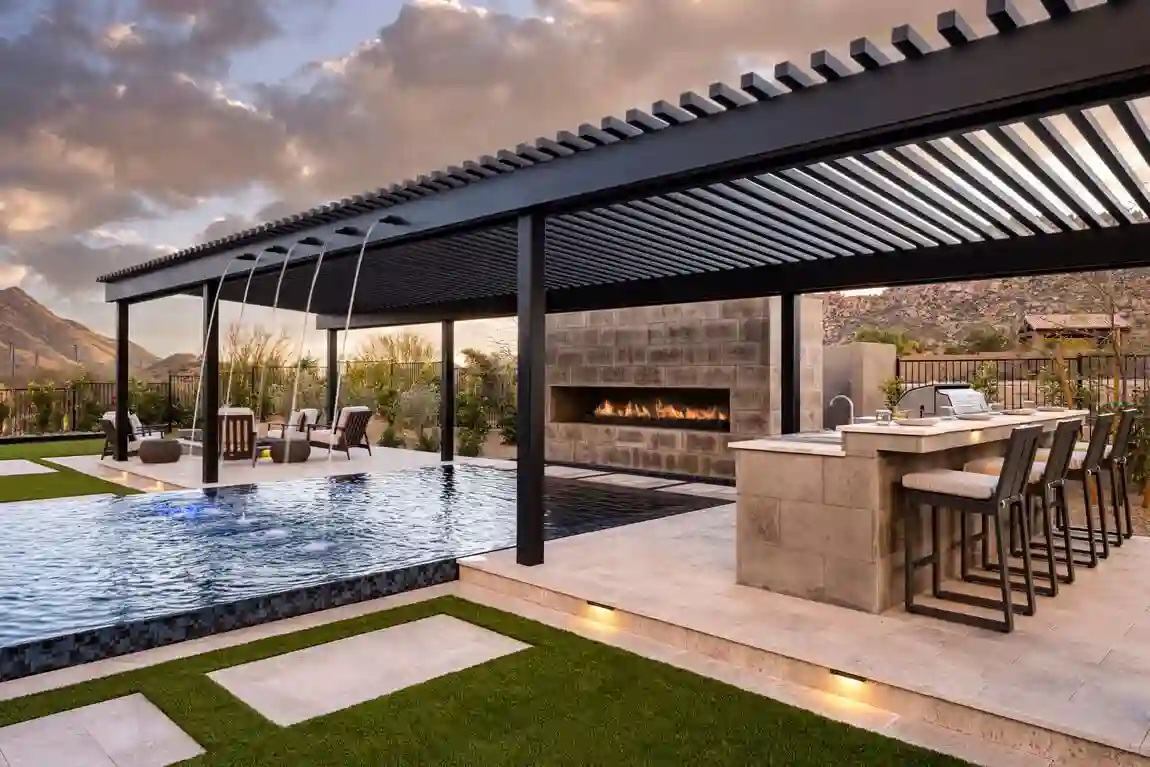
An outdoor living contractor plans, coordinates, and builds integrated outdoor spaces as a single system. Rather than treating patios, shade, lighting, and landscaping as separate tasks, they design these elements to function together under Arizona’s climate conditions.
Unlike general contractors, outdoor living contractors focus exclusively on exterior environments. Their work accounts for sun exposure, drainage, heat-resistant materials, water efficiency, and long-term durability.
Design Coordination
Outdoor living contractors translate homeowner goals into buildable designs. They evaluate sun paths, wind exposure, drainage flow, and existing structures to ensure outdoor areas remain usable throughout the year.
Material Selection for Arizona Conditions
Material choice is critical in Phoenix. Outdoor living contractors guide selections toward surfaces and finishes that resist UV damage, heat expansion, and fading while remaining HOA-compliant.
Project Sequencing and Oversight
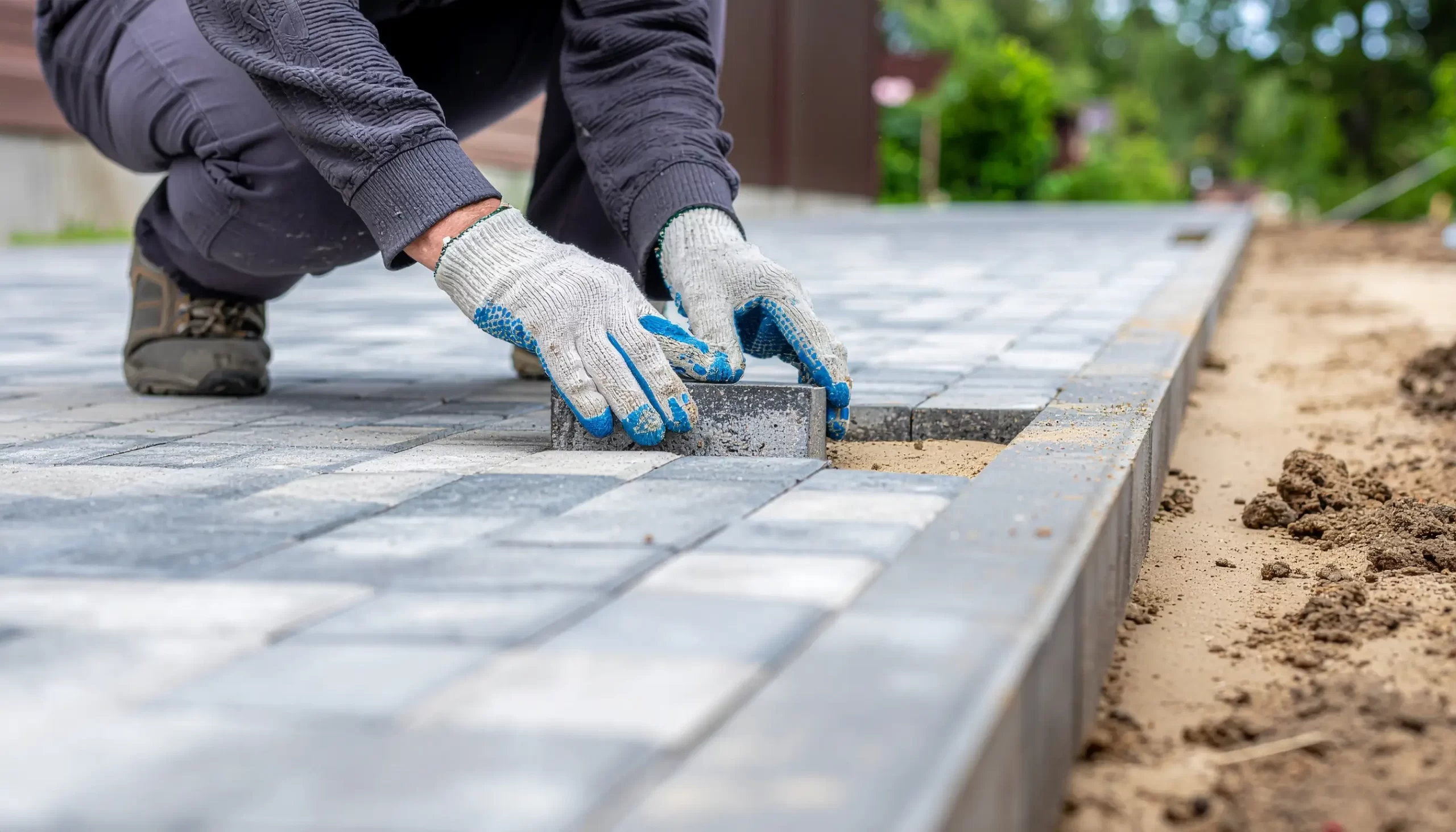
Proper sequencing prevents rework. Excavation, irrigation, electrical, hardscape, shade structures, and planting are scheduled in a logical order to protect finished elements and reduce delays.
Outdoor Living Contractor vs General Contractor vs DIY
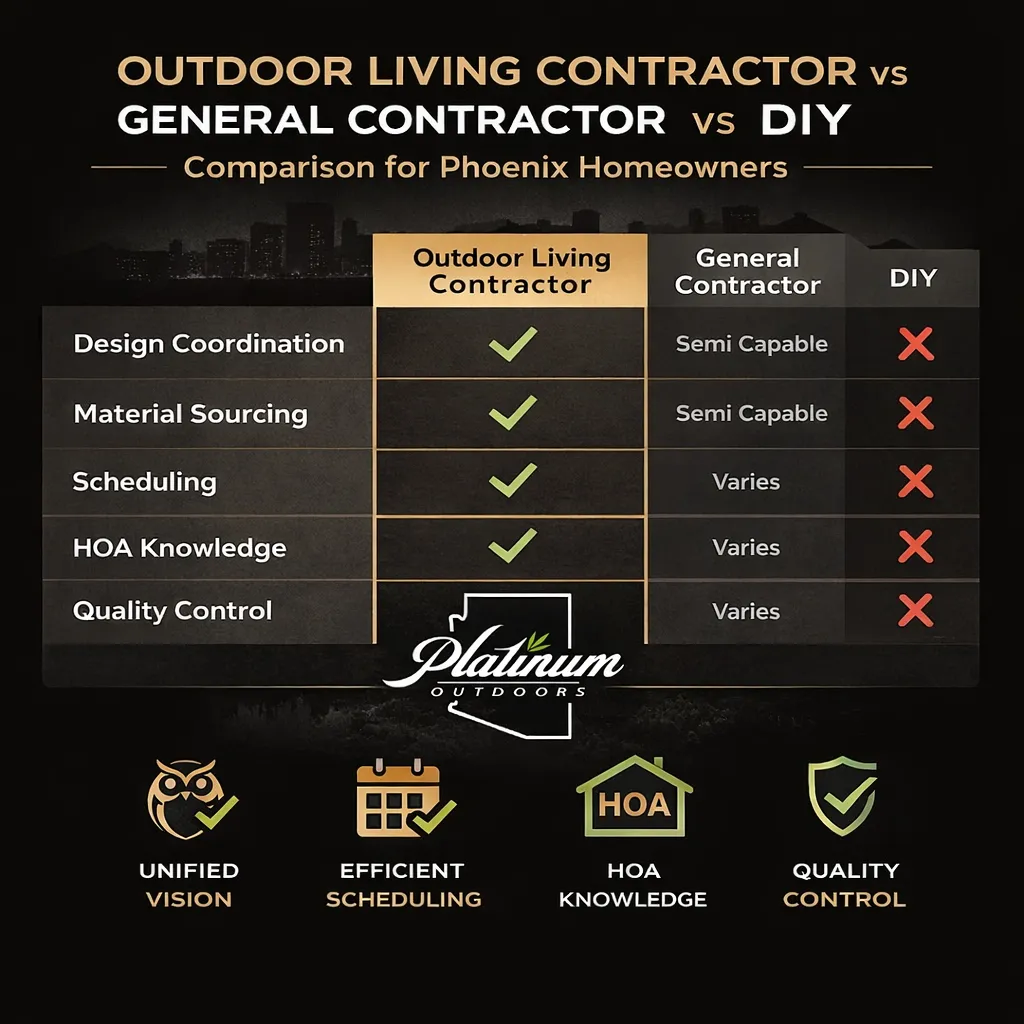
While all three approaches can improve a backyard, they differ significantly in scope, expertise, and long-term outcomes—especially in Arizona.
Outdoor Living Contractors
Outdoor living contractors specialize in exterior systems. They integrate hardscape, softscape, shade, lighting, and amenities into a single cohesive plan.
This specialization allows them to anticipate climate-related issues, reduce water use, and design spaces that remain comfortable despite extreme heat.
General Contractors
General contractors manage a wide range of construction projects and often subcontract outdoor work. While effective for structural builds, they may lack the outdoor-specific design depth required for desert environments.
Outdoor projects managed this way can suffer from fragmented execution, inconsistent materials, and less attention to heat and water management.
DIY Outdoor Projects
DIY projects can work for small upgrades such as planting or minor hardscape repairs. However, complex outdoor living builds introduce challenges related to drainage, electrical safety, material performance, and HOA compliance.
Errors often appear months later—after monsoon storms or peak summer heat—making corrections more costly than professional installation.
Why Hiring One Contractor Matters in Phoenix
Using multiple contractors often leads to scheduling conflicts, design inconsistencies, and unclear responsibility. In Phoenix, prolonged exposure to sun or rain during delays can damage unfinished work.
- One unified design vision
- Clear accountability
- Efficient sequencing
- Consistent materials and finishes
- Simplified HOA coordination
A single outdoor living contractor reduces risk while improving long-term performance.
Shade Structures
Shade is foundational in Arizona design. Pergolas, pavilions, and sail shades reduce surface temperatures and improve daily usability.
Design options are outlined in the best shade structures for Arizona backyards guide.
Drought-Tolerant Landscaping
Xeriscaping uses native plants and efficient irrigation to reduce water use while maintaining visual interest.
Low-Maintenance Turf
Artificial turf and hybrid lawn systems provide green space without constant watering. Proper base preparation ensures drainage during monsoon storms.
Outdoor Kitchens
Outdoor kitchens extend usable living space. Successful layouts consider heat exposure, ventilation, utilities, and adjacency to shade.
Planning details are covered in the outdoor kitchen planning checklist.
Outdoor Lighting
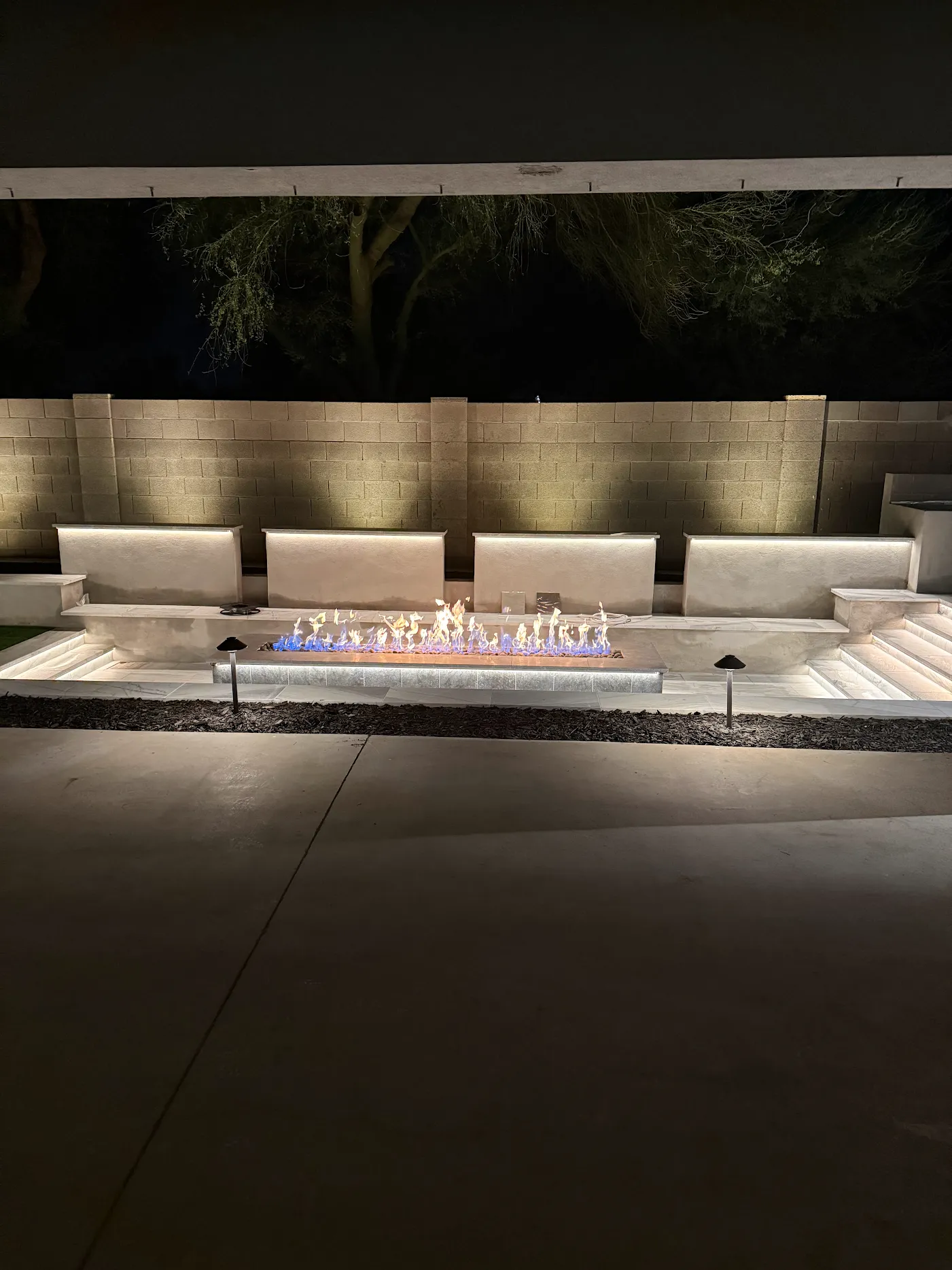
Lighting improves safety and extends evening use. Low-voltage LED systems balance efficiency with design flexibility. A custom fire pit built by our fire pit contractors can bring a elegant natural light to your outdoor living space as well.
Examples can be found in Arizona outdoor lighting design ideas.
Planning an Outdoor Living Project
Define How the Space Will Be Used
Cooking, entertaining, relaxing, and play areas each influence layout decisions. Prioritizing uses early prevents redesign later.
Set a Realistic Budget
Budgets should include materials, labor, permits, and contingency planning. Integrated design reduces cost overruns.
Evaluate Contractors Carefully
Review portfolios, ask about Arizona-specific experience, and understand how design revisions, scheduling, and maintenance are handled.
Environmental Factors That Shape Phoenix Outdoor Design
Heat Management
Light-colored surfaces, shade orientation, airflow, and cooling features reduce heat retention.
Water Conservation
Drip irrigation, smart controllers, native plants, and rainwater management reduce consumption.
Drainage and Soil Conditions
Proper grading protects structures during monsoon storms. Soil amendments improve plant health in alkaline desert soil.
Maintenance and Long-Term Performance
- Pavers may require periodic cleaning or sealing
- Turf systems benefit from brushing and debris removal
- Lighting and electrical systems should be inspected annually
- Shade structures require routine hardware and finish checks
Frequently Asked Questions
What does an outdoor living contractor do?
An outdoor living contractor designs and builds integrated outdoor environments, coordinating materials, sequencing, and construction under Arizona climate conditions.
How is an outdoor living contractor different from a general contractor?
Outdoor living contractors specialize in exterior environments, while general contractors manage broad construction projects with less outdoor-specific focus.
Why hire one contractor instead of multiple contractors?
One contractor ensures design consistency, scheduling efficiency, and clear accountability—critical in extreme heat and monsoon conditions.
What outdoor features are most important in Arizona?
Shade structures, drought-tolerant landscaping, low-maintenance turf, outdoor kitchens, and efficient lighting.
How does Phoenix’s climate affect outdoor design?
Extreme heat and seasonal storms influence material choice, drainage planning, irrigation efficiency, and shade orientation.
How should homeowners prepare for an outdoor living project?
Define goals, establish a budget, review design inspiration, evaluate contractors carefully, and plan for long-term maintenance.