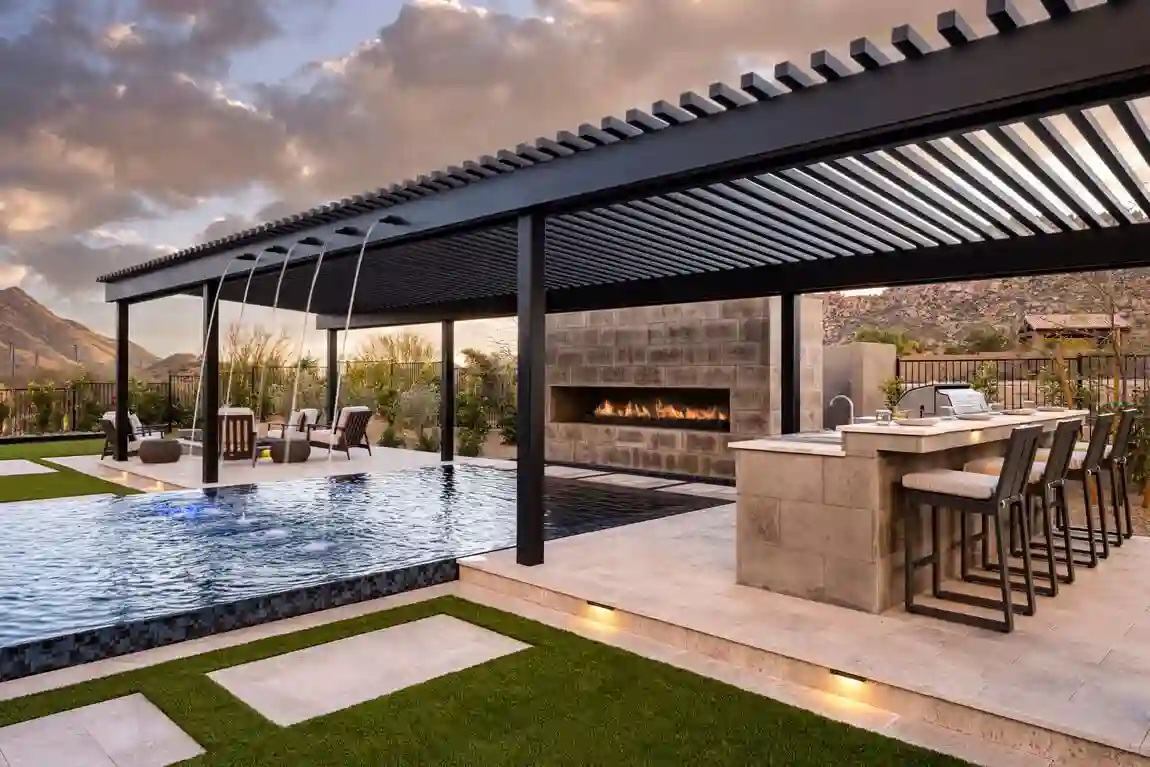
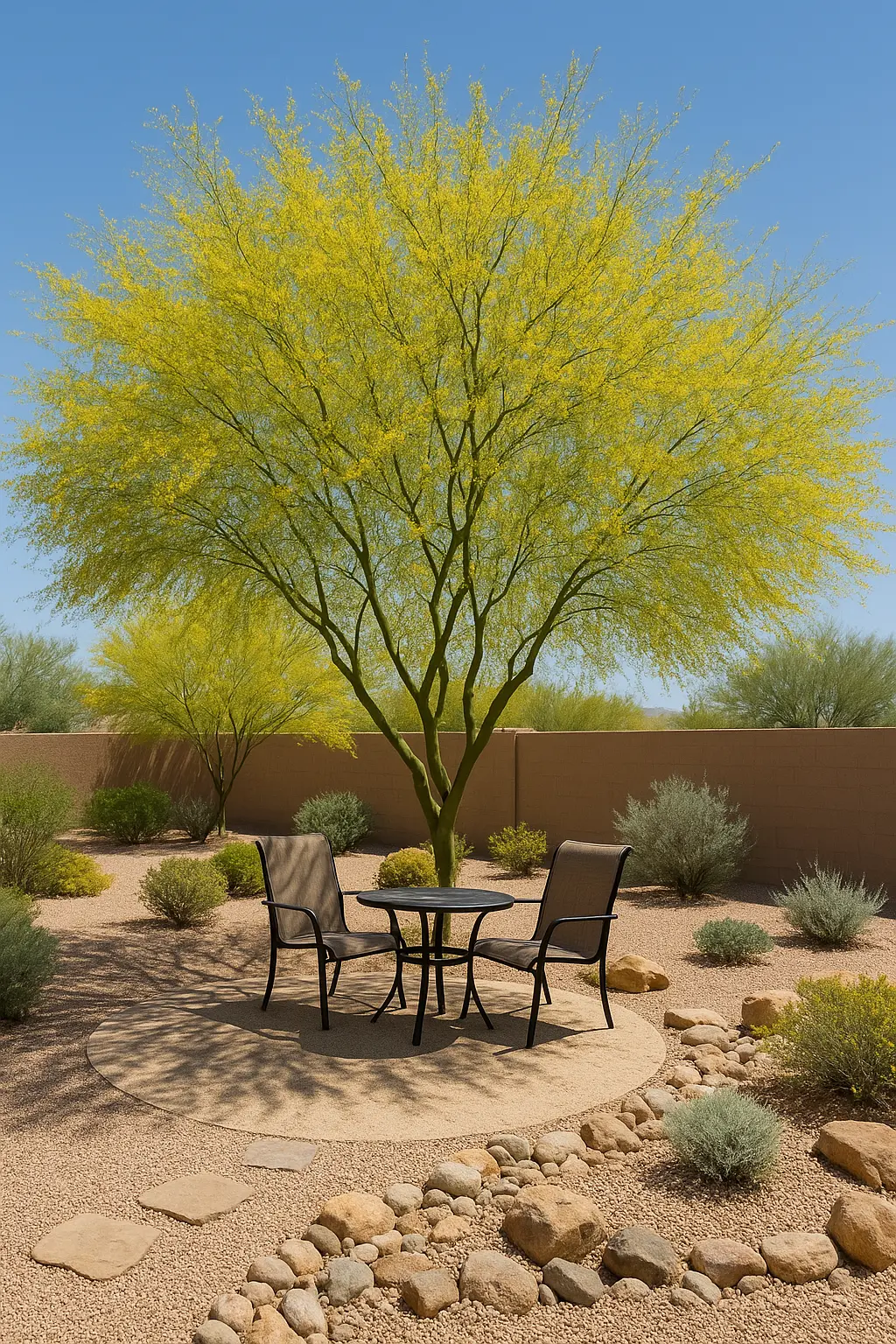
If you live in the Phoenix metro area, shade is not just a nice backyard feature. It is part of how an outdoor space becomes usable for more of the year. Arizona homeowners often compare pergolas, patio covers, gazebos, pavilions, and ramadas when planning a backyard upgrade, but those terms are not always used consistently. That can make it difficult to decide which structure actually fits your yard, your HOA rules, your home’s architecture, and the way you want to use the space.
A ramada is one of the most practical shade structures for Arizona backyards because it uses a solid roof instead of an open slatted roof. That difference matters in extreme heat. A ramada can create a shaded outdoor room for dining, cooking, relaxing, watching TV, gathering near a fireplace, or connecting different parts of a larger backyard renovation. It can also be designed around pavers, artificial turf, desert planting, outdoor lighting, irrigation, and other low-maintenance features that make sense in Phoenix-area neighborhoods.
This guide explains what a ramada is, how a ramada compares to a pergola, gazebo, pavilion, and patio cover, and what Arizona homeowners should think through before adding one to a backyard.
What Is a Ramada?
A ramada is an outdoor shade structure with a solid roof supported by posts or columns. Most backyard ramadas are open on the sides, which allows airflow while still providing strong overhead shade. The roof is the defining feature. Unlike a pergola, which usually has open slats or a louvered roof, a ramada is designed to block direct overhead sun more completely.
In Arizona backyards, ramadas are commonly built over patios, outdoor kitchens, outdoor dining areas, lounge spaces, poolside seating, and fireplace areas. A ramada may be freestanding in the yard, or it may be designed near the home as part of a larger outdoor living layout. The structure can be simple and modern, or it can be finished with columns, masonry, roofing, and materials that match the home.
Think of a ramada as a covered outdoor room without full walls. It gives the backyard a defined destination. Instead of placing furniture in an exposed corner of the yard, a homeowner can use a ramada to create a clear gathering zone. That makes the space feel more intentional and more comfortable, especially during hot afternoons when unshaded patios can become difficult to use.
A typical ramada may include:
- A solid roof for full overhead shade
- Posts, columns, or masonry supports
- An open-sided layout for airflow
- A paver, concrete, or stone patio surface underneath
- Optional ceiling fans, lighting, outlets, or low-voltage lighting nearby
- Optional integration with an outdoor kitchen, fireplace, seating area, or pool deck
For Arizona homeowners, the main appeal is simple: a ramada creates reliable shade where it is needed most. It can also support the kind of outdoor living features that many uncovered shade options cannot support as naturally.
Why Ramadas Are Especially Useful in Arizona Backyards
Arizona’s climate changes the way outdoor spaces need to be planned. A structure that looks attractive in another region may not perform the same way in Phoenix, Chandler, Gilbert, Mesa, Queen Creek, Scottsdale, or other East Valley communities. The combination of intense sun, long summer heat, dry conditions, monsoon storms, and HOA-controlled neighborhoods makes shade planning more important.
The City of Phoenix has made shade a major planning priority through its Shade Phoenix Plan, which focuses on expanding trees and built shade across the city. While that plan is focused on public spaces, it reflects the same reality homeowners face in private yards: shade has a direct impact on comfort, usability, and how people move through outdoor spaces.
A ramada works well in Arizona because it offers consistent overhead coverage. Open shade structures can be beautiful, but they may still allow too much direct sunlight through the roof during peak hours. A solid roof gives homeowners more dependable shade for seating, cooking, dining, or lounging.
Ramadas also pair well with low-maintenance Arizona landscape design. Many homeowners are moving away from high-water lawns and toward a mix of hardscape, artificial turf, desert plants, pavers, and efficient irrigation. A ramada can anchor that kind of design by creating the main outdoor living zone while the surrounding yard stays practical and water-conscious.
For homeowners planning a full yard update, a ramada can be part of a broader backyard renovation plan that includes shade, hardscaping, turf, lighting, irrigation, and outdoor gathering areas.
Ramada vs Pergola: What Is the Difference?
The biggest difference between a ramada and a pergola is the roof. A ramada has a solid roof. A pergola usually has an open roof made from slats, beams, louvers, or lattice. That single difference changes how each structure performs in an Arizona backyard.
A pergola creates filtered shade. It can soften direct sunlight, add architectural interest, and make a patio or walkway feel more complete. Pergolas are often chosen when homeowners want an open, airy structure that still feels connected to the sky. They are especially useful when the goal is design definition, partial shade, or a lighter overhead look.
A ramada creates stronger shade. Because the roof is solid, it blocks more direct sun and can make the space underneath feel more like an outdoor room. A ramada is usually the better fit when homeowners want to cover an outdoor kitchen, protect dining furniture, add ceiling fans, mount lighting, or create a more structured gathering area.
Neither option is automatically better. The right choice depends on the yard and the use case. A pergola may be a better fit for a side patio, garden walkway, poolside lounge, or decorative sitting area. A ramada may be a better fit for a primary entertaining space, built-in grill area, outdoor dining area, or central backyard seating zone.
For homeowners comparing shade styles, Platinum Outdoors’ guide to pergola designs for Arizona heat can help show how pergola roof patterns affect shade and airflow. If the goal is full overhead coverage, however, a ramada usually provides a stronger shade experience than a traditional pergola.
Ramada vs Gazebo, Pavilion, and Patio Cover
A ramada is often compared to gazebos, pavilions, and patio covers because all four provide overhead shade. The difference is usually found in shape, attachment, roof style, and how the structure is used within the yard.
Ramada vs Gazebo
A gazebo is usually a freestanding structure with a solid roof and a more defined shape, often round, hexagonal, or octagonal. Gazebos are commonly used as decorative focal points in gardens or open lawn areas. They can feel more traditional and ornamental.
A ramada is usually more rectangular or square, which makes it easier to place over a patio, outdoor kitchen, dining table, or built-in seating area. In Arizona backyards, the cleaner rectangular footprint often fits better with pavers, turf lines, pool decking, and modern home architecture.
Ramada vs Pavilion
A pavilion is also a freestanding structure with a solid roof and open sides. In everyday use, the words pavilion and ramada can overlap. A pavilion may describe a larger open-air roof structure, while ramada is a common term in the Southwest for a shaded outdoor structure built for sun protection.
For homeowners, the practical takeaway is that both can provide full overhead shade. The final design should be based on scale, roof style, material, and how the structure connects with the rest of the yard.
Ramada vs Patio Cover
A patio cover is usually attached to the home. It extends shade from the house over an existing patio or outdoor seating area. A ramada is more often freestanding, which gives homeowners more flexibility in where it can be placed.
A patio cover may be the better choice when the goal is to shade a space directly outside the back door. A ramada may be better when the main gathering area is away from the house, near a pool, over a grill station, beside a fireplace, or at the center of a larger yard layout.
Homeowners who are still deciding between multiple options may also benefit from reviewing Platinum Outdoors’ guide to the best shade structures for Arizona backyards.
Common Ramada Uses in Phoenix-Area Backyards
A ramada can serve many purposes depending on the size and layout of the yard. In some homes, it becomes the main outdoor living room. In others, it creates shade for a specific function such as cooking, dining, or lounging near the pool.
Outdoor Kitchen Coverage
One of the most common uses for a ramada is covering an outdoor kitchen. A solid roof can help protect cooking areas from direct sun and create a more comfortable space for preparing food. It can also support lighting, fans, and other utility planning that may be harder to integrate with an open shade structure.
If an outdoor kitchen is part of the plan, layout matters. Homeowners need to think about grill placement, ventilation, countertop space, traffic flow, seating, shade direction, and where the kitchen sits in relation to the house. Platinum Outdoors’ outdoor kitchen planning checklist is a helpful companion resource when thinking through those details.
For homeowners exploring a more complete cooking and entertaining space, a ramada may also be planned alongside outdoor kitchen installation so the roof structure, appliances, seating, and patio surfaces all work together.
Dining and Lounge Areas
A ramada can make an outdoor dining area feel more finished and more usable. Instead of placing a dining table under direct sun, the structure creates a covered zone where meals, conversations, and relaxed evenings feel more comfortable.
For lounge areas, a ramada can help define the space visually. Sofas, chairs, rugs, side tables, and lighting all feel more intentional when placed under a structure. This is especially useful in newer Phoenix-area homes where the backyard may begin as a blank dirt lot or basic builder-grade patio.
Poolside Shade
Pool areas often need shade, but the placement must be planned carefully. A ramada can provide a shaded seating area beside the pool without fully enclosing the space. It can also create a transition between the pool deck, patio, and outdoor kitchen.
When a pool is already part of the yard, the ramada should be designed around circulation. Homeowners should consider where people will walk, where towels and furniture will sit, and how wet surfaces connect to the covered area. If the pool area itself needs updating, ramada planning may be coordinated with pool remodeling so the finished space feels cohesive.
Fireplace and Gathering Areas
A ramada can also work well near an outdoor fireplace or fire feature, as long as spacing, materials, and safety requirements are properly considered. In the cooler parts of the year, a fireplace area can make a covered patio feel more inviting in the evening.
For homeowners comparing fire features, Platinum Outdoors has a guide on how to choose the best fire pit for an Arizona backyard. If the goal is a larger masonry feature, an outdoor fireplace may be considered as part of the overall layout.
Where Should a Ramada Go in the Backyard?
Placement is one of the most important parts of ramada planning. A well-placed ramada can make the yard feel balanced. A poorly placed one can block views, create awkward walking paths, or fail to shade the areas that need shade most.
Start by thinking about how the backyard is already used. Is the main patio directly outside the back door? Is the pool the center of the yard? Is there a future outdoor kitchen planned? Are there views to preserve? Are there side yards, easements, setbacks, or HOA restrictions that limit placement?
In many Phoenix-area yards, a ramada works best in one of these locations:
- Over a central paver patio
- Beside a pool or spa
- Over an outdoor kitchen or grill island
- Near the rear property line with appropriate setbacks
- As a destination point in a large backyard
- Between artificial turf and hardscape zones
- Connected visually to the home without being attached to it
The best location also depends on sun exposure. Afternoon sun from the west is often the most intense, so a ramada should be positioned to provide shade when the yard is most likely to be used. Roof pitch, overhangs, column placement, and nearby walls can all influence how the shade performs.
For homeowners starting with a blank yard after buying a new home, a ramada can be planned as part of a larger new-home landscape strategy. Platinum Outdoors’ landscaping for new homes in Phoenix page is a useful service reference for thinking through early-stage layout decisions.
Ramada Materials and Design Options
Ramada design should fit both the home and the climate. In Arizona, the structure needs to handle sun exposure, heat, dust, wind, and seasonal storms. It also needs to look intentional with the home’s exterior materials and the surrounding landscape.
Roof Style
The roof may be flat, pitched, gabled, hipped, or designed to coordinate with the home’s roofline. A flat roof can create a modern look, while a pitched or tiled roof may better match Spanish, Mediterranean, or desert contemporary architecture. The roof style should also be evaluated for drainage, scale, and HOA requirements.
Columns and Supports
Columns can dramatically change the look of a ramada. Slim posts can create a cleaner modern feel. Larger masonry columns can make the structure feel more permanent and architectural. Stone veneer, stucco, concrete, metal, and wood are all possible design directions depending on the home and budget.
Patio Surface
The space underneath a ramada needs a durable surface. Pavers are often a strong fit because they create a finished patio zone and can connect with walkways, pool decking, and outdoor kitchens. If you are comparing surface materials, this guide to travertine vs porcelain pavers can help evaluate heat, appearance, and maintenance considerations.
For homeowners building a new patio zone under the ramada, paver patio installation can be planned at the same time as the structure so the columns, footings, furniture zones, and walkways align correctly.
Lighting and Electrical
Because a ramada has a solid roof, it can often support integrated lighting more naturally than an open pergola. Lighting can be subtle and functional: recessed fixtures, ceiling fans with lights, sconces on columns, low-voltage path lighting, or accent lighting around nearby plants and walls.
Lighting should be planned before construction begins. That allows conduit, switches, outlets, and fixture locations to be considered as part of the full design rather than added after the fact. Platinum Outdoors’ guide to outdoor lighting installation and outdoor lighting design ideas in Arizona can help homeowners think through practical options.
How Ramadas Fit Into Low-Maintenance Arizona Landscape Design
A ramada is only one part of the backyard. The surrounding materials determine how the space performs day to day. In Arizona, many homeowners want outdoor areas that look clean without requiring constant watering, mowing, or high-maintenance planting.
The U.S. Department of Energy’s resource on landscaping for water conservation explains that xeriscaping uses planning, appropriate plant selection, efficient irrigation, mulch, soil improvement, turf limitation, and maintenance to reduce outdoor water use. Those ideas apply directly to ramada planning because the structure often becomes the center of a water-wise outdoor layout.
A low-maintenance ramada area may include:
- Pavers under the structure for a durable seating surface
- Artificial turf in nearby play or pet areas
- Drought-tolerant plants around the perimeter
- Gravel or decomposed granite between planting zones
- Drip irrigation for shrubs and trees
- Outdoor lighting for evening use
- Minimal lawn areas to reduce irrigation demand
When the yard is planned this way, the ramada does not feel like a standalone object. It becomes part of a complete outdoor living system. The patio, shade, plants, turf, lighting, and irrigation all support the same goal: a comfortable, usable backyard that suits Arizona living.
For plant and water-use planning, homeowners can review Platinum Outdoors’ guide to drought-tolerant plants and xeriscaping in Arizona. If turf is part of the layout, artificial turf installation may be considered for areas where green space is desired without the same water demand as natural grass.
HOA and New Construction Considerations
Many Phoenix-area neighborhoods are HOA-controlled, especially in master-planned communities and newer subdivisions. That makes ramada planning slightly different than a purely design-driven decision. Homeowners may need to submit plans showing height, placement, materials, colors, roof style, setbacks, and how the structure relates to the home.
Before choosing a final ramada design, homeowners should review their community guidelines. Some HOAs may require that the ramada roof match the home’s roof tile. Others may limit structure height, visibility above the block wall, exterior colors, or how close the structure can sit to a property line. Requirements vary by community, so the design process should begin with the specific rules for that neighborhood.
New construction homes create another common scenario. Many homeowners receive a mostly unfinished backyard and need to decide how much to build at once. In those cases, it is useful to plan the full yard first, even if the project is completed in stages. That prevents the ramada from being placed in a way that later conflicts with a pool, turf area, irrigation layout, or outdoor kitchen.
A comprehensive Phoenix landscape design plan can help organize the major pieces before construction begins. This includes the ramada location, hardscape footprint, plant zones, irrigation lines, shade direction, lighting placement, and any future outdoor living features.
Is a Ramada Better Than a Pergola for Shade in Phoenix?
If the main goal is maximum shade, a ramada is usually stronger than a traditional pergola. The solid roof blocks more sun and makes the area underneath more dependable during hot parts of the day. That is especially important for outdoor kitchens, dining spaces, and seating areas that homeowners want to use often.
If the goal is filtered light, visual structure, airflow, and a lighter architectural look, a pergola may be the better fit. Pergolas can be excellent in Arizona when placed thoughtfully, especially over walkways, smaller patios, garden zones, or pool-adjacent lounge spaces. They can also be combined with other shade elements to create layered coverage throughout the yard.
Some homeowners use both. A ramada may cover the main outdoor kitchen and dining space, while a pergola defines a smaller lounge area or side patio. This layered approach works well in larger backyards because each structure can serve a different purpose.
For homeowners comparing structure types, our outdoor shade installation services can support a broader plan that includes multiple shade strategies, and our pergola installations in Phoenix are custom to fit your structural needs.
Ramada Planning Checklist
Before adding a ramada to your backyard, it helps to think through the project in a structured way. A ramada is not just a roof. It affects the patio layout, furniture placement, electrical planning, drainage, landscape design, views, and how people move through the yard.
- Purpose: Decide whether the ramada will cover dining, lounging, cooking, a fireplace area, or a combination of uses.
- Placement: Study sun exposure, walking paths, pool placement, existing patios, and views from inside the home.
- Size: Make sure the structure is large enough for furniture, circulation, and future features without overwhelming the yard.
- Roof style: Choose a roofline that fits the home and handles drainage correctly.
- Materials: Select columns, roofing, trim, and surfaces that can hold up in Arizona heat.
- HOA rules: Review required approvals before committing to the final design.
- Patio surface: Plan pavers, concrete, stone, or tile before finalizing support locations.
- Utilities: Decide whether the ramada needs lighting, outlets, fans, TV wiring, or kitchen connections.
- Landscape integration: Coordinate turf, gravel, planting, irrigation, and lighting around the structure.
- Future phases: Account for possible pool upgrades, outdoor kitchens, fireplaces, or expanded patios.
If the ramada is part of a larger yard transformation, it may be planned alongside hardscaping services, irrigation, turf, lighting, and planting. This helps the final backyard feel connected rather than assembled piece by piece.
Frequently Asked Questions About Ramadas
What is a ramada used for in an Arizona backyard?
A ramada is used to create a shaded outdoor living space. In Arizona, homeowners often use ramadas over outdoor kitchens, dining areas, lounge seating, poolside patios, and fireplace areas. The solid roof provides more complete shade than open-roof structures, which makes the space more usable during hot parts of the year.
What is the difference between a ramada and a pergola?
A ramada has a solid roof. A pergola usually has an open slatted, louvered, or lattice-style roof. That means a ramada provides stronger overhead shade, while a pergola provides filtered shade and a more open feel. Both can be useful in Arizona, but they serve different purposes.
Is a ramada the same as a pavilion?
The terms can overlap. Both ramadas and pavilions are often freestanding structures with solid roofs and open sides. In the Southwest, “ramada” is commonly used to describe a solid-roof shade structure built for sun protection in outdoor spaces. A pavilion may refer to a similar structure, often at a larger scale.
Is a ramada better than a gazebo?
It depends on the yard. A gazebo is often more decorative and may have a round, hexagonal, or octagonal shape. A ramada is usually more rectangular, which can make it easier to place over patios, outdoor kitchens, and dining areas. For many Phoenix-area backyards, a ramada’s shape is more practical for outdoor living layouts.
Can a ramada be attached to a house?
A ramada is often freestanding, but it can be designed near or connected visually to the home. If the structure is physically attached, it may function more like a patio cover depending on the design. Homeowners should review HOA and permit requirements before deciding on an attached or freestanding structure.
Do ramadas need HOA approval?
In many Phoenix-area communities, yes. HOA rules may control roof material, color, structure height, placement, setbacks, and visibility. Requirements vary by community, so homeowners should review their guidelines before finalizing a ramada design.
What materials are best for a ramada in Arizona?
Common ramada materials include masonry columns, stucco, stone veneer, steel, wood, tile roofing, metal roofing, and concrete or paver patio surfaces. The best materials depend on the home’s architecture, HOA requirements, sun exposure, and maintenance preferences.
Can a ramada cover an outdoor kitchen?
Yes. A ramada is often a strong choice for covering an outdoor kitchen because the solid roof can provide shade and support lighting, fans, or other electrical planning. The kitchen layout should still account for ventilation, appliance clearances, seating, and safe circulation.
Can a ramada be built over pavers?
Yes, but the structure needs proper support. Many ramadas are designed with pavers, concrete, or other patio surfaces underneath. The footings and support posts should be planned with the patio surface so the finished area looks clean and functions properly.
How do I make a ramada area low-maintenance?
Use durable hardscape materials, drought-tolerant plants, efficient irrigation, artificial turf where appropriate, and outdoor lighting that is planned before construction. A low-maintenance ramada area should reduce unnecessary watering while still creating shade, comfort, and visual structure.
Final Thoughts: Is a Ramada Right for Your Backyard?
A ramada can be one of the most useful shade structures for Arizona homeowners who want a more comfortable backyard. It offers stronger overhead shade than a traditional pergola, a more practical footprint than many gazebos, and more placement flexibility than a patio cover attached to the home.
The best ramada designs are not planned in isolation. They are coordinated with the patio surface, furniture layout, outdoor kitchen, pool area, lighting, turf, plants, irrigation, HOA requirements, and the home’s architecture. When all of those elements work together, the ramada feels like a natural part of the backyard instead of an add-on.
For Phoenix and East Valley homes, a ramada is especially helpful when the goal is year-round usability, low-maintenance design, water-conscious landscaping, and a more intentional outdoor living space.