What matters most in Arizona heat
In Phoenix and the East Valley, pavers are exposed to intense afternoon sun for long stretches of the year. That changes the decision in a few important ways.
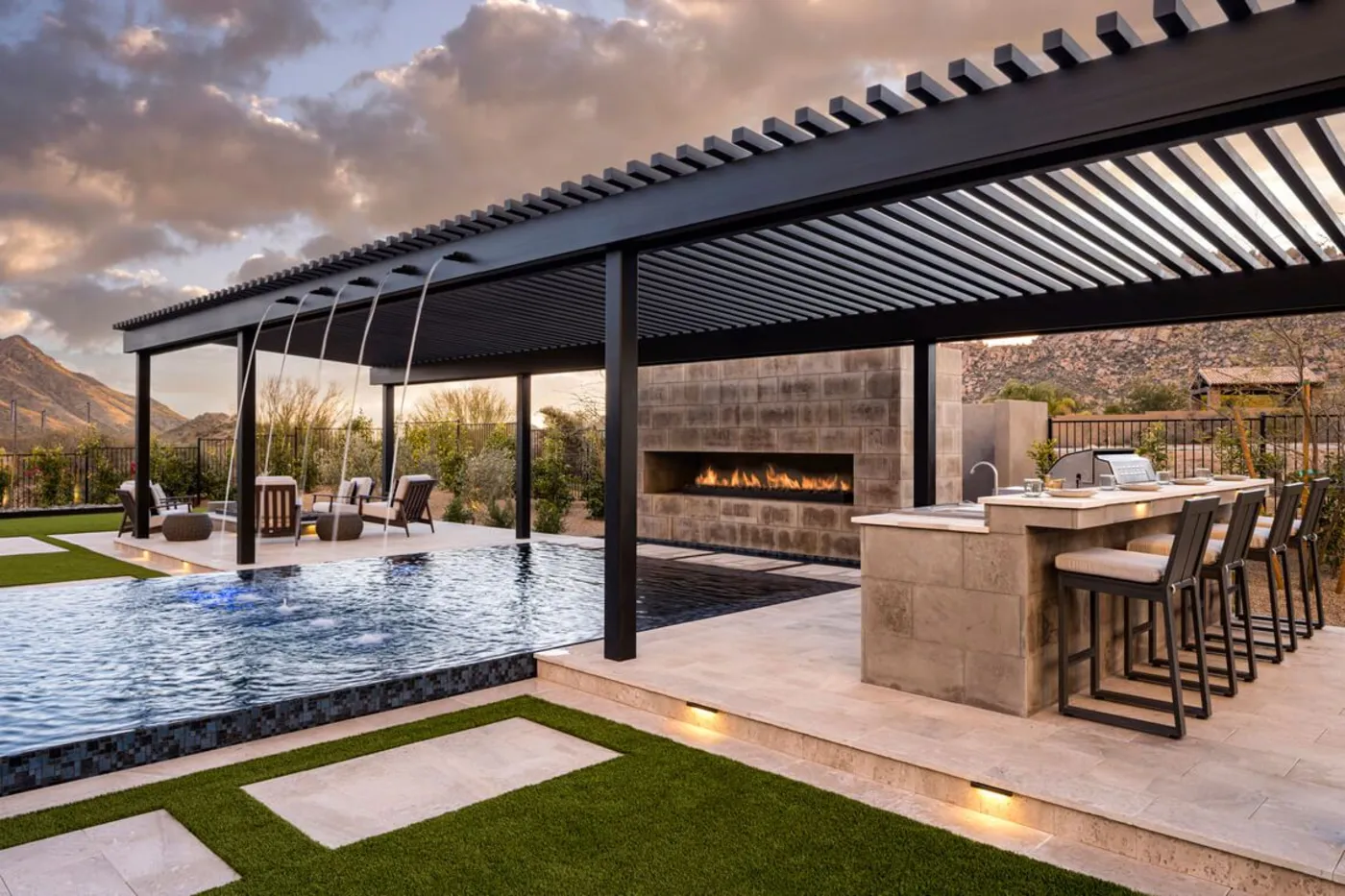
First, surface temperature and comfort are not exactly the same thing. A lighter, more reflective surface can lower measured surface temperature, but direct sun can still feel harsh without shade. That is why pool decks, patios, and walkways should be planned around both material and sun exposure. In many yards, adding filtered or solid shade over the highest-use zone changes comfort more than switching between two good light-toned materials. If shade is part of the larger plan, start with a guide to backyard shade strategies in Arizona and then review custom shade solutions in the areas you expect to use during the hottest months.
Second, Arizona projects usually work best when hardscape and water use are planned together. Expanding pavers can reduce irrigated square footage, but it should not leave the yard feeling flat or overbuilt. The most balanced designs usually pair pavers with planting beds, selective turf, or low-water groundcover rather than treating hardscape as the whole answer. For plant combinations that suit a desert yard, browse desert-adapted planting ideas. For homeowners moving toward a more water-efficient overall layout, low-water landscape planning can help place hardscape where it adds the most value.
Third, drainage still matters even in a dry climate. Patios, pool decks, and driveways need to work during monsoon storms, and water should move away from the house and through the property the right way. This is especially important in new-construction neighborhoods where grading can be tight. If pavers are being added alongside new planting zones, a breakdown of drip and sprinkler layouts can help you think through where water belongs and where it does not.
How the main paver materials compare
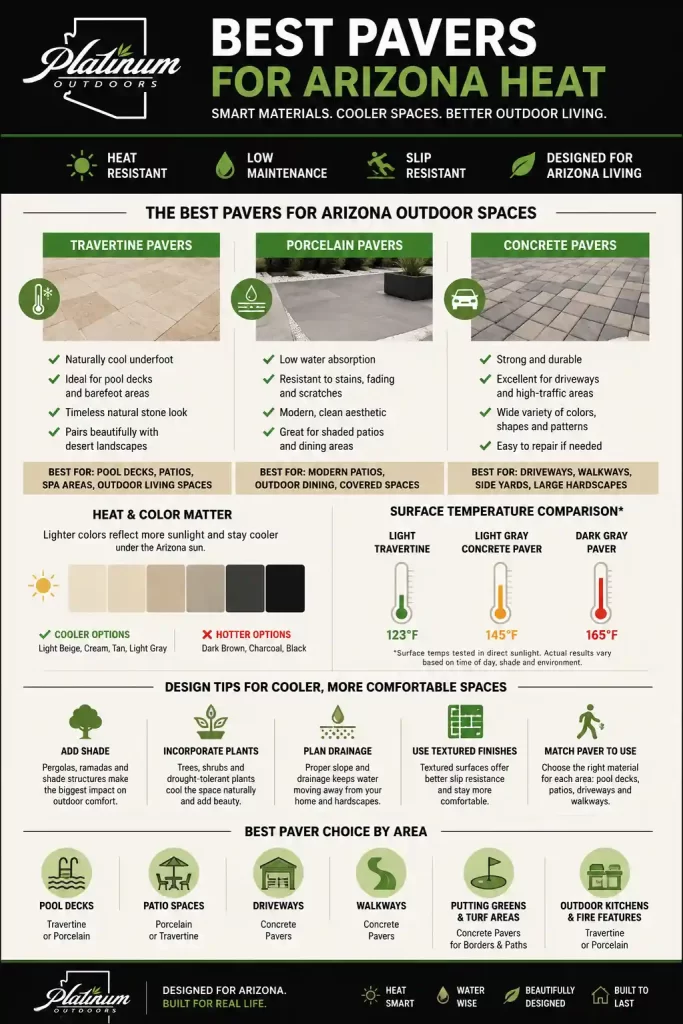
Travertine pavers
Travertine is a natural limestone with a soft, desert-friendly palette that works well in Arizona architecture. Its strongest advantage is comfort in barefoot spaces, which is why it is so often considered for pool surrounds, sun shelves, and patios where people step out without shoes. It also brings a softer visual finish than many manufactured materials, so it can make a yard feel lighter and more relaxed.
Travertine is usually the first material to consider when the question is really about poolside comfort. It is especially strong when the project already includes pool renovation planning and the deck material needs to work with coping, water, and day-to-day barefoot use.
The tradeoff is that natural stone asks for more material awareness. Different varieties behave differently, and outdoor stone should be selected for exterior use rather than chosen only from an indoor sample board. Around grills, dining spaces, or areas where spills are common, travertine may also ask for more care than porcelain.
Porcelain pavers
Porcelain pavers are a strong choice when the priority is a clean modern finish with low absorption and straightforward maintenance. They are dense, typically resist staining well, and are available in looks that echo stone, concrete, or wood while staying visually consistent from piece to piece. That makes them a good fit for contemporary patios, dining zones, and outdoor living areas where homeowners want a more refined surface with less variation.
Porcelain works best when it is specified as an outdoor-rated product with the right finish for wet conditions. Around pools or splash zones, traction matters just as much as appearance. For homeowners who want to understand how those details translate into real-world assemblies, Platinum Outdoors outlines full paver installation details for Phoenix-area projects in more depth.
Compared with travertine, porcelain often feels more design-controlled and lower maintenance. Compared with concrete pavers, it often feels more architectural and less pattern-driven. The main question is whether that modern look matches the house and whether the chosen finish is right for how the surface will be used.
Concrete pavers
Concrete pavers remain one of the most flexible options for Arizona hardscapes because they can handle a wide range of patterns, borders, scales, and load conditions. They are often the most practical answer for driveways and other areas where structure and repairability matter more than barefoot comfort. A well-planned driveway surface also gives more freedom around edge details, transitions, and replacement of individual units if the surface ever needs repair.
For patios, concrete pavers can still work very well, especially in lighter tones and textured finishes. They simply tend to be selected differently than travertine. Instead of being the obvious poolside comfort pick, they are often chosen because they balance performance, appearance, and layout flexibility. If your goal is to compare pattern systems, borders, and integrated walkways as part of a larger surface network, custom patio build options and broader hardscape planning support are the most relevant next reads.
Best pavers by use case
Best pool deck pavers for Arizona heat
For many Arizona homeowners, travertine is the most natural starting point around pools because comfort under bare feet and wet traction tend to matter more there than almost anything else. Porcelain can also work well around pools when the finish is outdoor-rated and the overall design leans more contemporary. Concrete pavers are still viable, especially in lighter colors and textured finishes, but they are usually a more intentional choice in pool areas rather than the default comfort-first option.
Best patio pavers for Arizona living
Patios ask for a more balanced answer. If the space is a lounge area that gets early-morning and evening use, porcelain and travertine are both strong options, with concrete pavers still very relevant depending on the look you want. If the patio is part of a larger entertaining layout, it helps to think beyond the paver field itself. Material choice should line up with seating, circulation, and nearby features such as kitchens and fireplaces. For adjacency planning, see this Phoenix outdoor kitchen planning resource and this fireplace planning guide for Phoenix backyards.
Best driveway pavers in Arizona
Driveways are where concrete pavers usually make the strongest case. They are well suited to vehicular use, pattern flexibility, and repairs over time. A driveway also tends to be less about barefoot comfort and more about durability, visual structure, and how the entry sequence relates to the home. Lighter colors can still help, but the main question is load, layout, and maintenance rather than poolside feel.
Best pavers for specialty layouts
Pavers also show up in more custom Arizona combinations. One of the most common is a low-water backyard that mixes patio space with a small synthetic green, stepping paths, and planting beds. In that type of layout, pavers help organize circulation, reduce irrigated area, and keep wear paths clean around the edge of the green. If that is the direction you are considering, take a look at practice-area layouts with synthetic greens.
Design details that change comfort more than people expect
Most homeowners start with material. Designers usually start with use, sun pattern, and color range. That is usually the better order in Arizona.
Color matters. Light to mid-tone surfaces generally make more sense than dark finishes in full sun.
Shade matters even more. A well-placed pergola, patio cover, or other shade element can do more for real usability than chasing the single coolest material.
Finish matters in wet zones. A pool deck should be chosen for traction as well as comfort.
Drainage matters during monsoon season. A beautiful surface that traps water or pushes runoff the wrong direction is not well planned.
Context matters. The right paver for a driveway may be the wrong paver for a pool deck.
This becomes even more important on smaller lots, where patios, planters, and shade structures all compete for space. For tighter footprints, compact-yard layout ideas for Phoenix homes can help narrow the right surface strategy before materials are finalized.
How to choose without overcomplicating it
If you are deciding between materials, start with four questions:
- Will people walk on it barefoot in direct sun?
- Will it sit next to water, food prep, or both?
- Does it need to carry vehicles, or only foot traffic and furniture?
- Do you want the surface to feel natural, consistent, or pattern-driven?
If barefoot comfort is the priority, start with travertine. If low absorption and a more contemporary look matter most, start with outdoor-rated porcelain. If the project is a driveway or a larger patterned hardscape where flexibility is important, start with concrete pavers.
That approach keeps the decision practical. It also tends to produce better Arizona yards, because the paver is being selected for how the space is actually used rather than for a generic ranking.
Frequently asked questions
Do pavers get hot in Arizona?
Yes. Any hardscape in full desert sun can get hot. The goal is not to find a surface that stays cool in every condition. The goal is to combine a suitable material, lighter tones, the right finish, and shade where it matters most.
Is travertine or porcelain better for an Arizona pool deck?
Travertine is often the stronger comfort-first choice for pool decks, especially where barefoot use is the priority. Porcelain can also work well if the product is rated for outdoor wet conditions and the project calls for a more modern finish.
Are concrete pavers a good choice for Arizona driveways?
Yes. Concrete pavers are often one of the strongest driveway choices because they are durable, flexible in layout, and practical to repair one unit at a time.
What color pavers stay cooler in hot climates?
Lighter and mid-tone colors generally make more sense than darker finishes in full Arizona sun. They should still be paired with shade in the highest-use areas whenever possible.
Do pavers need special drainage planning in Arizona?
They do need careful drainage planning. Even in a dry climate, patios and driveways have to handle summer storms, protect nearby structures, and avoid interrupting the way water is meant to move through the property.