Queen Creek backyards get used in a very specific way. Long sunny seasons, mild winter evenings, and HOA neighborhoods that prioritize clean lines and low-maintenance yards all shape what “a great patio” actually means here. If you’ve been searching phrases like patio builder Queen Creek AZ or patio contractor Queen Creek AZ, it helps to step back for a moment and focus on the planning decisions that make an outdoor space comfortable, durable, and easier to maintain in a desert climate.
This guide is written for homeowners who want a patio that feels intentional—one that fits the home, works with the sun, handles monsoon rain when it shows up, and supports a water-wise landscape around it.
Start With the “Use Plan”: How You Actually Want to Live Outside
Before you choose pavers or sketch a pergola, define how the space needs to function. Patios look simple on paper, but the best ones are designed around real routines:
- Everyday use like morning coffee, reading, kids playing, or pets resting in the shade
- Entertaining zones for grilling, dining, and guest seating
- Seasonal comfort that accounts for summer heat and winter sun
- Your tolerance for long-term maintenance
Starting with a clear use plan makes design decisions easier and helps prevent awkward layouts later.
This Arizona backyard ideas guide can help you think through layout zones that work well in East Valley homes.
Queen Creek Reality Check: Sun, Heat, and Surface Temperature
Heat management is not optional in Queen Creek. The sun is intense, and patio surfaces respond differently depending on color, density, and exposure.
- Darker materials absorb and hold more heat
- Dense surfaces can stay warm into the evening
- Shade dramatically increases how often a patio gets used
The goal isn’t to eliminate heat, but to balance shade, airflow, and smart material selection.
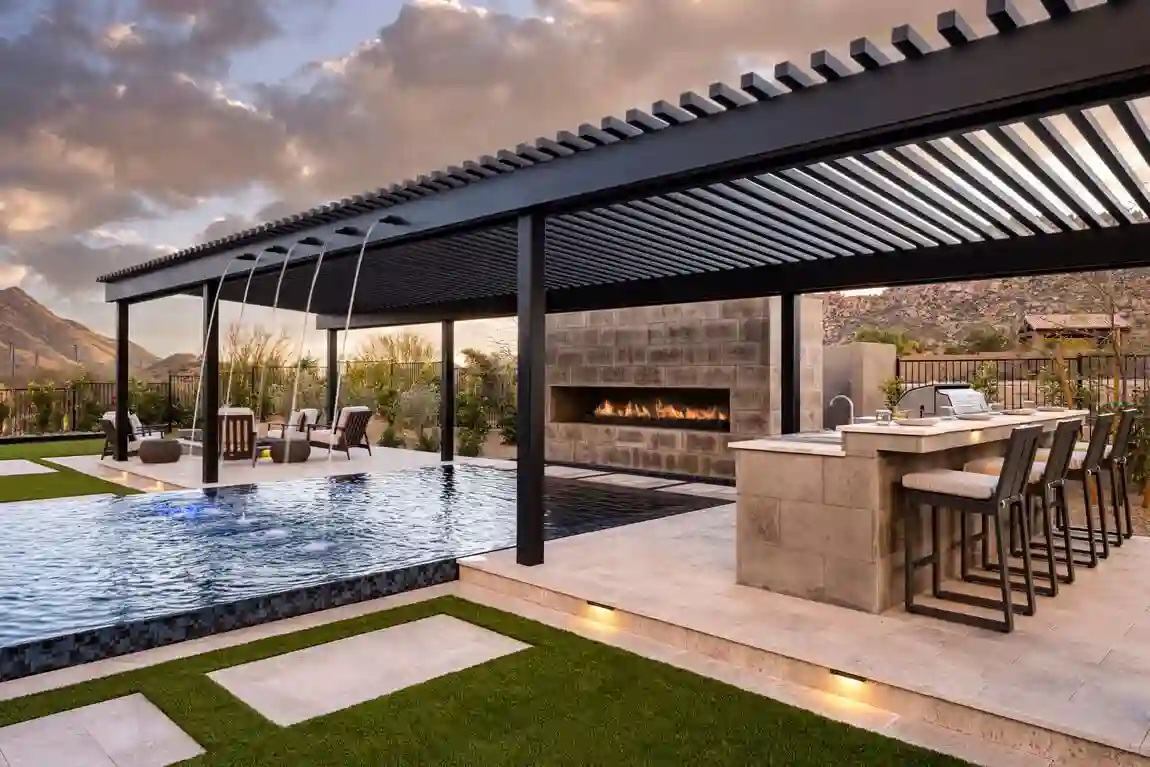
Helpful references include best shade structures for Arizona backyards and pergola designs for Arizona heat.
Layout Planning: Size, Shape, and Flow
Align the patio to the home
Patios feel most natural when aligned to main doors or living spaces. Straight edges are easier to furnish and tend to age better visually.
Create clear walk paths
Walkways reduce wear on landscape areas and keep movement predictable between zones.
Design for furniture clearance
Dining and lounge areas need enough space for chairs to move comfortably. Planning for people first avoids tight, underused layouts.
For deeper guidance, see Hardscaping Essentials in Queen Creek.
Material Selection: Choosing a Patio Surface That Lasts
The patio surface defines the look, comfort, and maintenance needs of the space.
Pavers
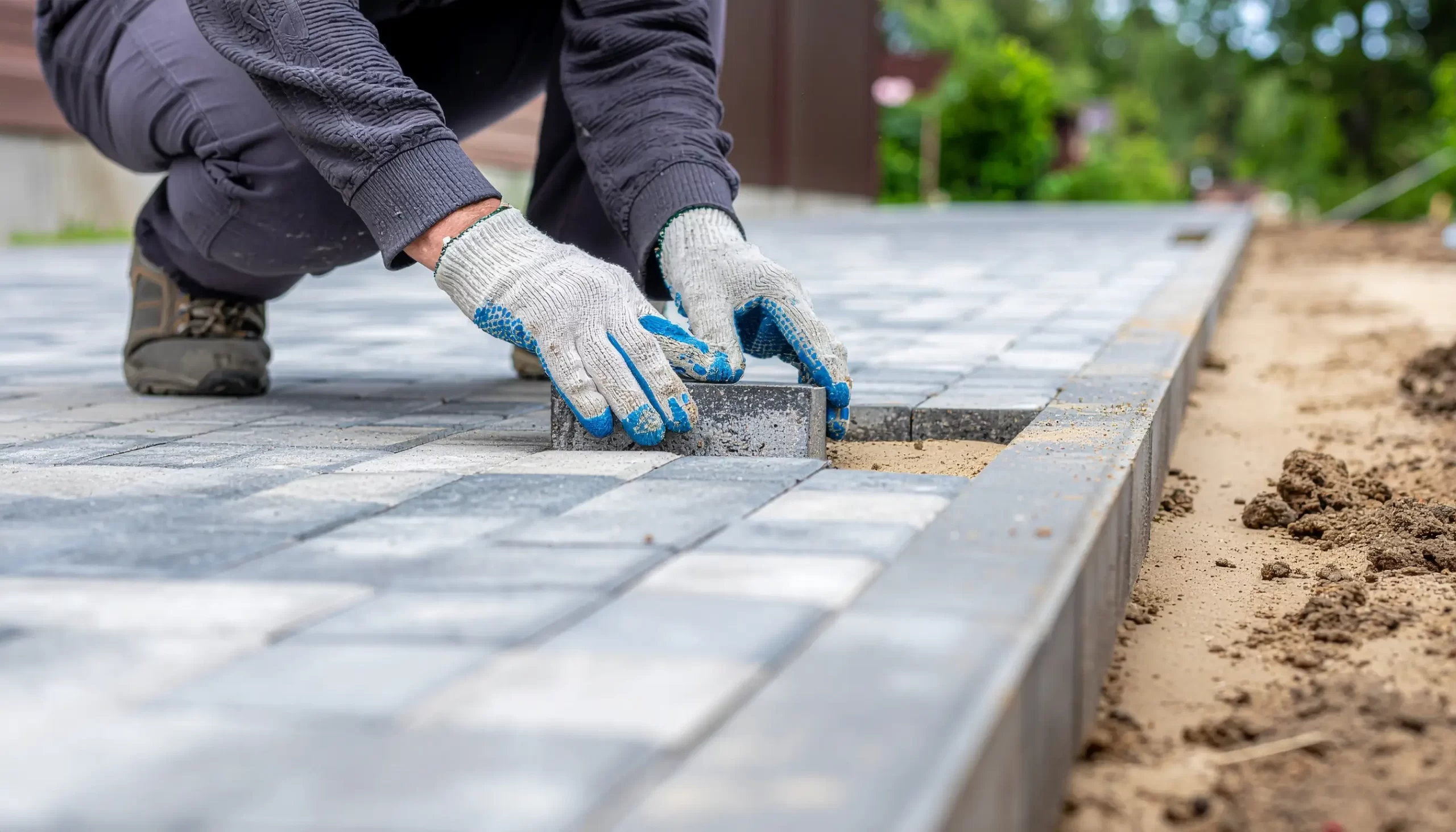
Pavers offer flexibility, pattern options, and easier long-term adjustments. They’re commonly used in Queen Creek because they handle soil movement well.
See travertine vs. porcelain pavers for a material-focused comparison.
Concrete
Concrete delivers clean lines and works well when joints, finishes, and drainage are planned correctly.
Reference: benefits of concrete installation.
Drainage Planning for Monsoon Rain
Even in dry climates, patios must manage heavy, fast rainfall.
- Proper grading away from the home
- Intentional downspout discharge
- Permeable surfaces where appropriate
- Planting basins that slow and absorb water
The University of Arizona Cooperative Extension explains how rainwater harvesting and passive water capture can reduce runoff and support desert landscapes: Using Rainwater in Urban Landscapes.
Water-Wise Landscaping Around the Patio
Patios work best when the surrounding landscape supports comfort and low maintenance.
The City of Phoenix notes that a large share of household water use occurs outdoors, making desert-adapted planting and efficient irrigation critical: City of Phoenix Desert Landscaping.
Xeriscaping principles
AMWUA outlines core principles like planning, lower-water plants, efficient irrigation, soil preparation, mulching, and maintenance: AMWUA Landscaping with Style.
Local guidance: drought-tolerant plants and xeriscaping in Arizona.
Irrigation Design and Seasonal Adjustment
Even low-water landscapes need smart irrigation planning.
- Group plants by water needs
- Adjust schedules seasonally
- Keep irrigation off hardscape edges
Helpful comparison: drip irrigation vs. sprinkler systems.
Shade Strategy: Increasing Patio Comfort
Shade is one of the biggest comfort upgrades for Queen Creek patios.
- Consider sun direction and time of use
- Maintain airflow
- Match structures to the home’s architecture
Design references:
Outdoor Lighting for Function and Atmosphere
Layered lighting extends patio use and improves safety.
- Path lighting
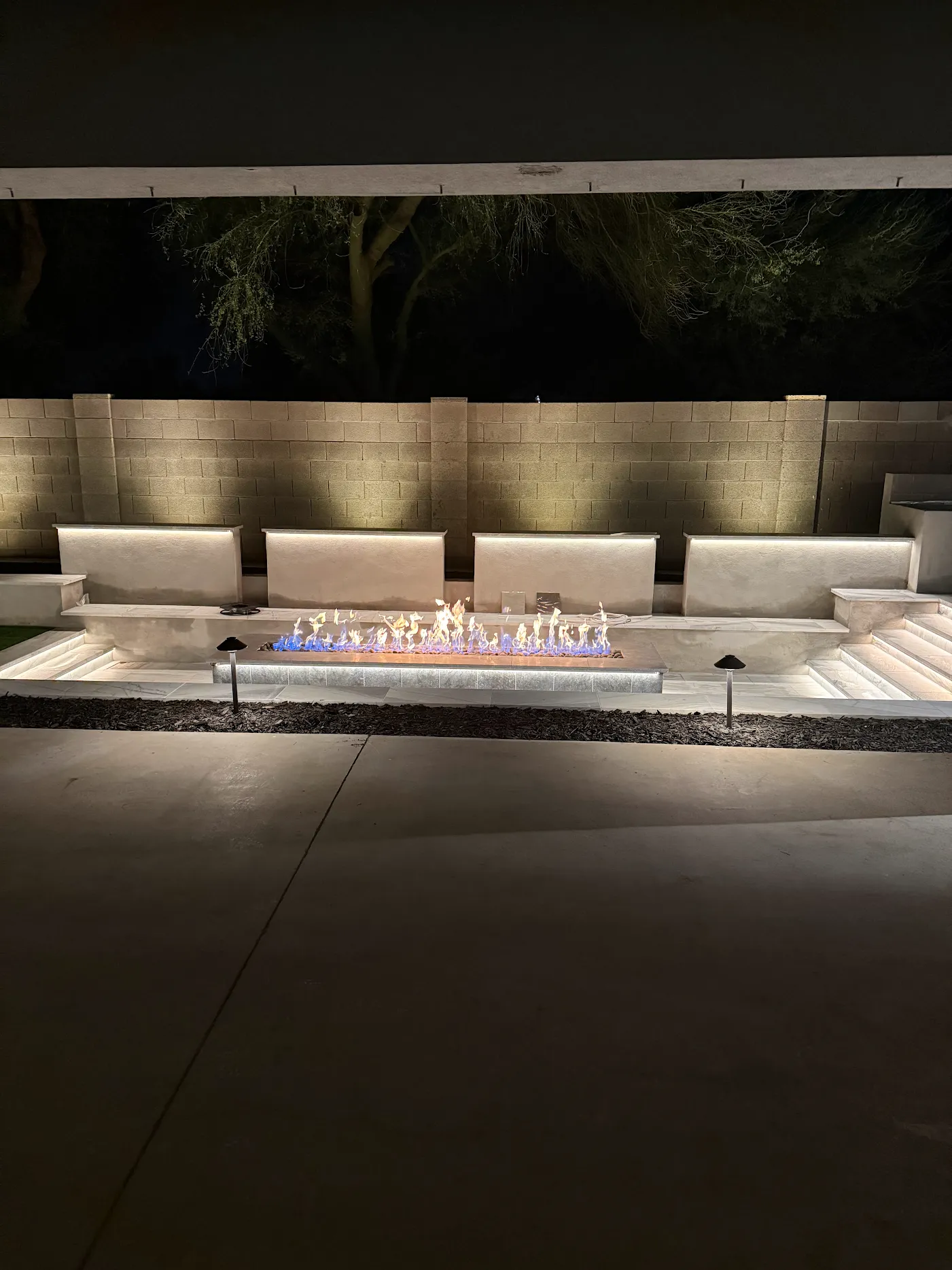
- Step and edge lighting
- Accent lighting
- Task lighting
See outdoor lighting installation guide and Arizona lighting design ideas.
Integrating Outdoor Kitchens and Fire Features
Outdoor kitchens
Utility planning and circulation matter most.
Start with an outdoor kitchen planning checklist.
Fire features
Placement, seating clearance, and wind protection determine comfort.
Reference: choosing a fire pit for Arizona backyards.
HOA and New Construction Considerations
Many Queen Creek neighborhoods have HOA design standards and builder-installed grading that affect patio layout.
New-home guidance: landscaping for new homes.
Maintenance and Longevity
- Design clean edges
- Manage irrigation overspray
- Adjust watering schedules by season
Related planning resource: custom paver patio planning in Queen Creek.
Frequently Asked Questions
Are pavers or concrete better for Queen Creek patios?
Both can work well when designed properly. The right choice depends on layout, sun exposure, drainage, and desired appearance.
Is drainage really necessary?
Yes. Monsoon storms can create issues quickly if water isn’t directed intentionally.
What improves summer comfort the most?
Shade planning has the biggest impact on daily use.
Final Thoughts: Designing a Patio That Fits Queen Creek Living
The most successful patio projects start with thoughtful planning—not just materials. When layout, shade, drainage, irrigation, planting, and lighting are designed together, the space feels cohesive and easier to maintain.
This article is intentionally educational and designed to support planning decisions without replacing service or location pages.