- Pergolas
- Ramadas (fully roofed patio structures)
- Shade sails
We will look at how each one handles heat, sun, wind, and rain, plus design and HOA considerations, so you can choose the right fit for your backyard.
What Makes Shade Design Different in Phoenix?
Before comparing pergolas, ramadas, and shade sails, it helps to understand what your backyard is up against in the Valley. A thoughtful landscape design plan will look at sun exposure, airflow, and how you want to use each part of the yard.
1. Intense Sun and UV Exposure
Phoenix is one of the sunniest major cities in the country. The average UV index regularly hits very high to extreme levels in late spring and summer, which means unprotected skin can burn quickly and surfaces heat up fast.
Good shade design here is not just about comfort. It also:
- Reduces UV exposure for your family
- Helps protect patio furniture, artificial turf, and pavers from fading
- Keeps surfaces like paver patios and concrete cooler to the touch
High quality shade fabrics and well-designed structures can block a large percentage of UV rays while still allowing light and airflow.
2. Extreme Heat and Heat Retention
Summer highs in Phoenix often stay in the triple digits, with many days reaching 110°F or more. Even overnight, temperatures can remain in the 80s and 90s. That means your shade structure has to manage both direct sun and stored heat from surfaces and roofing.
- Solid roofs (like ramadas) give full shade but can trap heat under the structure if there is not enough airflow or fans.
- Open or slatted roofs (pergolas) and fabric shades (shade sails) allow hot air to rise and escape, so the space feels less stuffy.
Choosing materials and design that do not radiate heat back down onto your seating area makes a big difference in real-world comfort.
3. Monsoon Winds, Dust, and Storms
Monsoon season brings dust storms, strong wind gusts, and sudden downpours. Large shade structures must be designed and installed with these conditions in mind.
- Posts and footings should be sized and engineered for local wind loads.
- Connections, anchors, and hardware need to be strong, not just decorative.
- Shade sails should be properly tensioned and may need to be taken down ahead of major storms, depending on the design.
Working with professionals who understand Phoenix weather and Maricopa County building codes helps your shade last longer and stay safer.
4. HOA and Permit Requirements
Across Phoenix suburbs like Queen Creek, Gilbert, Mesa, and Chandler, HOAs often regulate backyard structures. Common rules include:
- Architectural approval for pergolas, ramadas, and shade sails that are visible from neighboring yards or the street
- Height limits and setback rules for any permanent structure
- Approved colors and materials that match or complement the home
- Restrictions or guidelines for shade sails in particular
Larger structures may also require building permits, especially if they are attached to the house or exceed a certain square footage. A good outdoor living contractor will help you navigate both HOA and city requirements.
Pergolas: Airy Shade for Phoenix Backyards

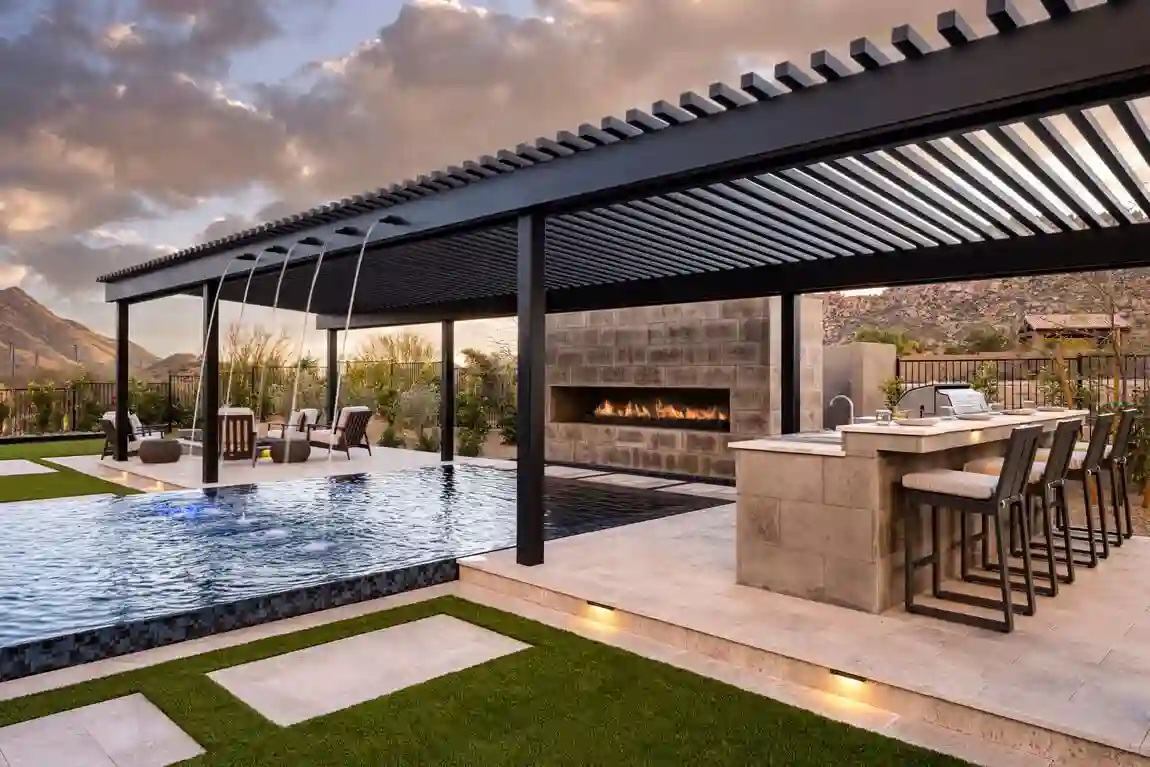
A pergola is an open-sided structure with a roof made of slats, beams, or louvers. In Phoenix, pergolas are one of the most popular backyard shade choices because they balance shade and airflow.
For more design inspiration, you can also read our blog on pergola designs perfect for Arizona heat.
What Kind of Shade Does a Pergola Provide?
Traditional pergolas use fixed slats or lattice for partial shade, creating dappled, filtered light rather than complete darkness. For our climate, that is often ideal. You get relief from direct sun, but the space still feels bright and open.
Modern pergola options include:
- Solid or semi-solid roof panels for more coverage
- Louvered pergolas with adjustable slats that open and close to control sun and rain
- Fabric canopies or shade panels added below the slats for extra shade
For strong afternoon sun, many homeowners aim for a slat layout that gives roughly 70–80% overhead coverage while still letting heat escape.
Pergola Materials for Phoenix
Common pergola materials you will see around the Valley include:
- Aluminum or alumawood – Rust-resistant and low maintenance, does not warp or rot like wood, and can be engineered to look like wood while handling the desert better.
- Steel – Very strong and durable, but must be properly coated to handle heat and occasional moisture.
- Wood (cedar, redwood, pine) – Offers a warm, natural look, but requires regular sealing and can be more vulnerable to pests and weathering over time.
In Phoenix, many homeowners lean toward aluminum or steel for longevity and low upkeep, especially when structures are fully exposed to the sun.
Pros of Pergolas in Phoenix
- Great airflow: The open roof and sides let hot air rise and breezes move through, which is important on 100-degree days.
- Flexible shade: You can tweak slat direction and spacing, or add fabric canopies and vines, to adjust the amount of shade.
- Design versatility: Pergolas can be attached to the home, freestanding near a pool, or cantilevered over a seating area.
- Lower cost than ramadas: In most cases, pergolas require less material and structural engineering than a full roofed structure.
Cons of Pergolas in Phoenix
- Not full protection: Even with tight slats, pergolas do not offer complete shade like a solid roof. Midday sun can still sneak through.
- Limited rain coverage: Unless you add a solid roof or louvered system, pergolas will not keep out monsoon rain.
- More exposure to dust: Dust storms can blow debris through the open roof, so furniture and surfaces still need regular cleaning.
Best Use Cases for Pergolas
Pergolas are a strong choice when you want:
- A shaded lounge or dining area that still feels bright
- Poolside shade with plenty of airflow
- A structure you can upgrade later with fans, outdoor lighting, or fabric panels
- A lower-cost option compared to a fully roofed outdoor room
Ramadas: Full-Coverage Shade and Outdoor Rooms
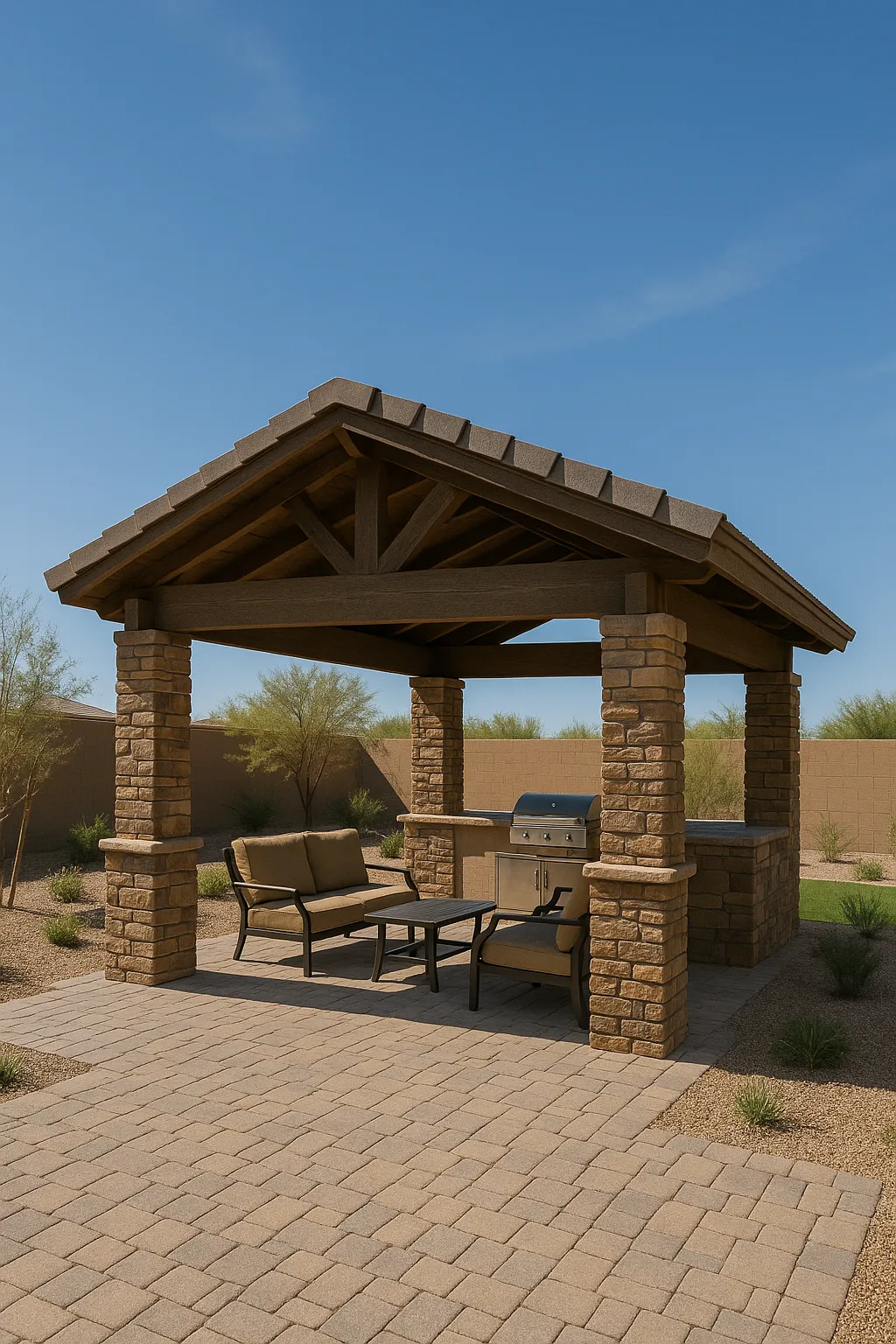
A ramada is a fully roofed outdoor structure, usually with open sides and a solid roof similar to a house roof. In Arizona, ramadas are common over outdoor kitchens, bars, and dedicated TV and lounge areas.
What Kind of Shade Does a Ramada Provide?
Ramadas provide complete overhead coverage, blocking direct sun and offering full UV protection from above. They also offer better protection from rain and dust compared to most other shade structures.
Homeowners often integrate:
- Ceiling fans for airflow
- Recessed or decorative lighting
- Outdoor-rated TVs and sound systems
- Built-in kitchens, grills, and bars
If you are planning a full cooking space, our outdoor kitchen planning checklist is a great place to start.
Ramada Materials for Phoenix
Most ramadas are framed like a small house, with structural posts or columns, framing, and roofing that match or complement the main home. Tile, shingle, or metal roofs are common. Because they offer full protection, materials must handle constant sun, heavy rain during storms, and heat retention under the roof.
Using lighter roof colors and plenty of ventilation helps reduce heat buildup under the structure. Ceiling fans are also helpful for keeping air moving during peak summer temperatures.
Pros of Ramadas in Phoenix
- Maximum shade and protection: Ramadas are ideal for families who want to use their backyard in all seasons and weather.
- Perfect for outdoor kitchens and living rooms: Appliances, TVs, and furniture last longer when they are not exposed to direct sun and rain.
- Adds a true extension of the home: A well-designed ramada can feel like an extra room and add real value to the property.
Cons of Ramadas in Phoenix
- Higher cost: Ramadas require more material, structural engineering, and permitting compared to pergolas or shade sails.
- Can trap heat: Without good airflow and fans, a solid roof can hold hot air underneath, especially on still days.
- More HOA and city scrutiny: Because ramadas are more like attached structures or mini-buildings, they often face stricter HOA review and zoning rules.
Best Use Cases for Ramadas
Consider a ramada if you want:
- A full outdoor kitchen with grill, fridge, sink, and bar seating
- A dedicated TV or sports-watching area that is shaded all day
- Year-round use, including during winter rains and summer afternoons
- A high-impact upgrade that feels like an extension of your interior living space
Shade Sails: Flexible, Modern Shade for Phoenix Backyards
Click to Enlarge
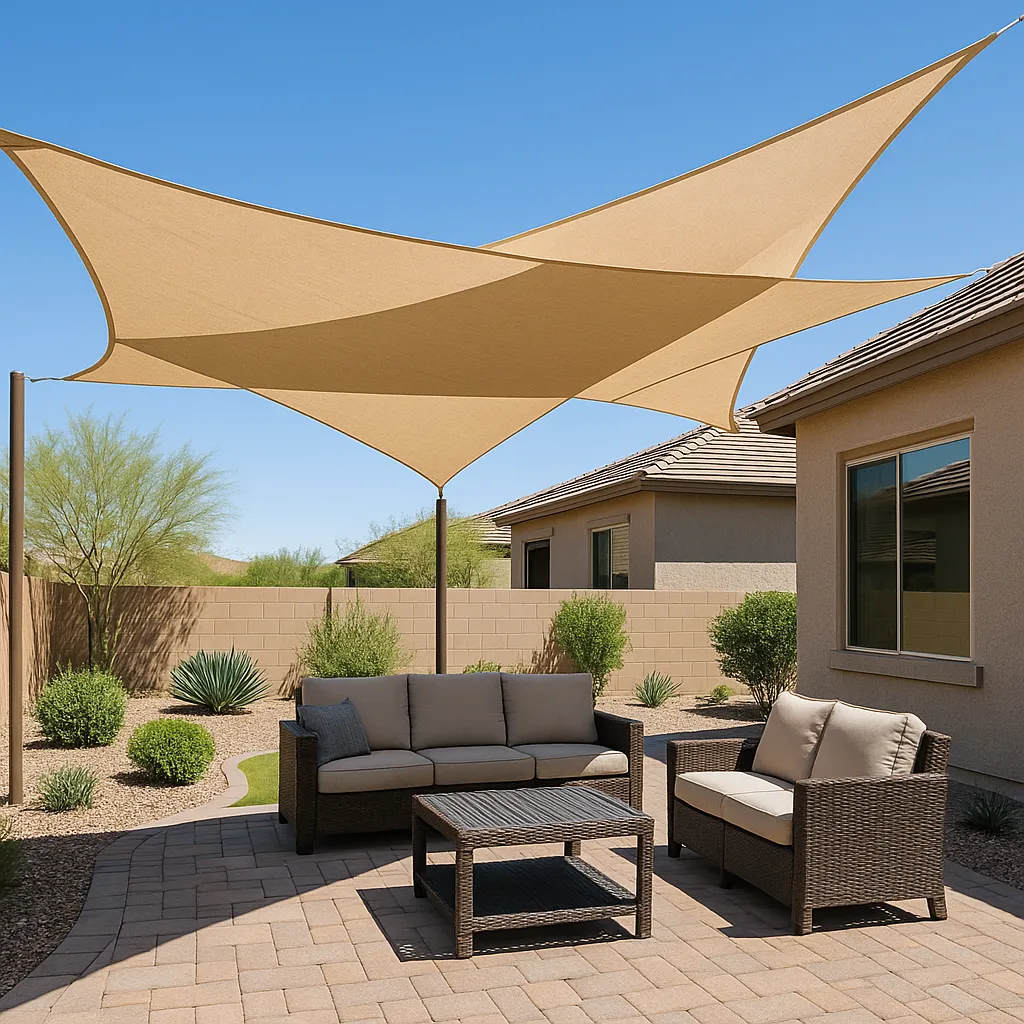
Shade sails use tensioned, UV-blocking fabric stretched between posts or attachment points on your home. They are common in parks and commercial spaces and have become a popular option in residential backyards as well.
What Kind of Shade Do Shade Sails Provide?
High quality shade sail fabrics can block a large percentage of UV rays while allowing air to flow through the material. This helps keep the shaded area cooler than it would be under some solid covers.
In general:
- Darker fabrics often provide stronger UV protection but may feel slightly warmer.
- Lighter fabrics reflect more visible light but can have slightly lower UV ratings.
The key is choosing fabric that is rated for both UV protection and durability in intense sun.
Pros of Shade Sails in Phoenix
- Strong UV protection with airflow: Shade sails offer serious sun protection without creating a closed-in feeling.
- Flexible design: You can tilt sails to block harsh afternoon sun, overlap multiple sails, or change them seasonally.
- Good for larger areas: With the right posts and hardware, sails can cover play spaces, turf for pets, or parts of a pool deck effectively.
- Modern look: Triangular and rectangular sails give a contemporary, architectural feel that pairs well with modern desert landscaping.
Cons of Shade Sails in Phoenix
- Wind vulnerability if installed poorly: Sails must be tightly tensioned and anchored to properly sized posts. Loose sails can flap and tear, and weak anchor points can fail during wind events.
- HOA restrictions: Some communities restrict or prohibit shade sails or require specific colors and designs.
- Fabric lifespan: Even high quality fabric eventually degrades under extreme UV and will need replacement after a number of years.
- Limited rain protection: Most breathable sails are not fully waterproof, and waterproof sails can trap heat and experience more wind stress.
Best Use Cases for Shade Sails
Shade sails are a great fit when you want:
- Flexible shade over kids’ play areas or pet zones
- Cover over a portion of turf, a putting green, or part of the pool deck
- A cost-conscious solution without building a full structure
- A modern look and seasonal adjustability
Pergola vs. Ramada vs. Shade Sail: Side-by-Side Comparison
| Feature / Concern | Pergola | Ramada | Shade Sail |
|---|---|---|---|
| Shade level | Partial to high (with upgrades) | Full overhead coverage | High UV block, some side sun |
| Airflow | Excellent | Good (with fans and ventilation) | Excellent |
| Rain protection | Limited unless louvered or solid | Strong | Limited unless waterproof fabric |
| Heat retention | Lower | Higher without fans | Low (breathable fabric) |
| Wind performance | Good if engineered | Very strong if engineered | Good with proper design and tension |
| HOA friendliness | Generally favorable | Favorable, but more scrutiny | Mixed; some communities restrict sails |
| Cost (relative) | $$ | $$$$ | $–$$ (depending on size and quality) |
| Best for | Lounges, patios, poolside | Outdoor kitchens and full outdoor rooms | Play areas, turf, select pool or patio areas |
Design Tips for Phoenix Backyards
Regardless of which structure you choose, these local design tips will help your shade work better in the Phoenix sun. If you are planning a full yard refresh, our article on hardscaping essentials is also a helpful resource.
1. Think About Sun Angles and Orientation
- West-facing patios get the harshest afternoon sun, so consider deeper overhangs, vertical shade elements, or layered shade (structure plus screen or plants).
- Pergola slats can be oriented and spaced to block more midday or afternoon sun. Louvered roofs give you fine control.
- Shade sails can be tilted and overlapped to catch low-angle sun from specific directions.
A strong design starts by looking at where the sun actually hits your yard throughout the day and throughout the year.
2. Pair Structures With Landscaping
Strategic planting around your shade structure can:
- Add extra filtered shade with desert-friendly trees and xeriscaping services
- Soften the look of posts and columns
- Help reduce reflected heat from gravel or hardscape
Placing ramadas or pergolas near pools and gardens can also reduce water loss and surface heat.
3. Plan for Fans, Lighting, and Power
In Phoenix, a ceiling fan under a ramada or solid-roof pergola makes a huge difference. Even a modest breeze can make the space feel more comfortable.
When you design the structure, think ahead about:
- Electrical for fans, sconces, and outlets
- Low-voltage outdoor lighting installation for paths, steps, and seating areas
- TV and audio wiring if you are planning an outdoor entertainment area
It is much easier and more affordable to include these elements from day one than to add them later.
4. Respect HOA and City Rules From the Start
Before you commit to a design:
- Review your community design guidelines for pergolas, ramadas, and shade sails.
- Confirm height limits, setbacks, and materials allowed.
- Check whether shade sails are permitted or restricted.
- Verify if a building permit and engineering are required for larger structures.
A professional design and build team that regularly works with Phoenix-area HOAs can save you a lot of back-and-forth during the approval process.
Which Shade Structure Is Best for Your Arizona Backyard?
There is no single best option for every backyard. The right choice depends on how you plan to use your space, your budget, and your HOA or city requirements.
Choose a pergola if:
- You want an airy, open feel with partial shade and strong airflow.
- You are shading a patio or pool area and still want some natural light.
- You would like a more budget-conscious structure that you can upgrade over time.
Choose a ramada if:
- You are planning a full outdoor kitchen or living room.
- You want complete overhead shade and protection from rain and dust.
- You are ready to invest more in a permanent backyard room.
Choose shade sails if:
- You want flexible coverage over turf, play areas, or parts of the pool deck.
- You prefer a modern, sculptural look and seasonal adjustability.
- Your HOA allows sails and you are okay with eventual fabric replacement.
In many Phoenix backyards, the best solution is actually a mix. For example, you might have a ramada over the outdoor kitchen, a pergola over the main lounging area, and shade sails over turf or a sun-exposed section of the pool. That layered approach lets you match the level of shade and protection to each part of your yard.
Final Thoughts
Designing shade for a Phoenix backyard means balancing heat, UV, airflow, wind, and real-life use. You are not just choosing a pretty structure from a catalog. You are deciding how you and your family will enjoy the outdoors for years to come by working with a specialized outdoor living contractor.
When you are ready to plan your project, use this article as a starting checklist for your design consultation:
- What areas do you want shaded (patio, pool, turf, kitchen)?
- What time of day do you struggle most with the sun?
- How important is full rain protection versus maximum airflow?
- What does your HOA allow or restrict?
If you are ready to take the next step, you can request a free quote or book a pergola installation in Phoenix to start designing the right shade solution for your Arizona backyard.
For more ideas, visit our outdoor living blog for tips on turf, lighting, hardscaping, and more.