Designing a desert landscape in Arizona is different from landscaping in other parts of the country. Between triple-digit summer temperatures, drought conditions, HOA expectations, and water conservation concerns, homeowners across Phoenix and the East Valley are looking for outdoor spaces that are visually impressive without requiring constant upkeep.
That is why low maintenance desert landscaping has become one of the most popular approaches for modern Arizona homes. A well-planned desert landscape front yard can combine drought-tolerant plants, decorative rock, pavers, shade structures, outdoor lighting, and carefully selected accents to create a clean, elevated appearance that fits naturally within the Sonoran Desert.
Modern desert landscaping is also evolving. Today’s Arizona landscape designs are less about empty gravel yards and more about layered textures, functional outdoor spaces, and balanced combinations of hardscape and greenery. Homeowners want landscapes that look intentional year-round while staying practical in extreme heat.
Whether you are updating an older front yard, landscaping a new construction home, or planning a complete yard remodel, these desert landscape ideas can help inspire a front yard that feels modern, durable, and easy to maintain.
For homeowners looking at broader outdoor upgrades beyond the front yard, Platinum Outdoors also shares ideas on modern Arizona backyard trends and outdoor living ideas.
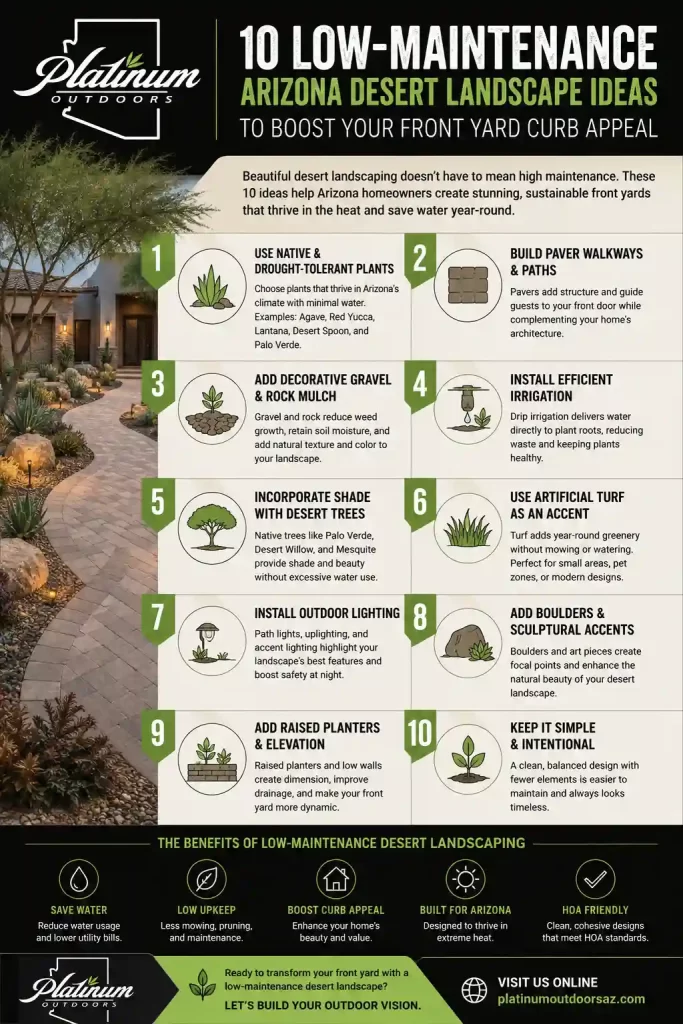
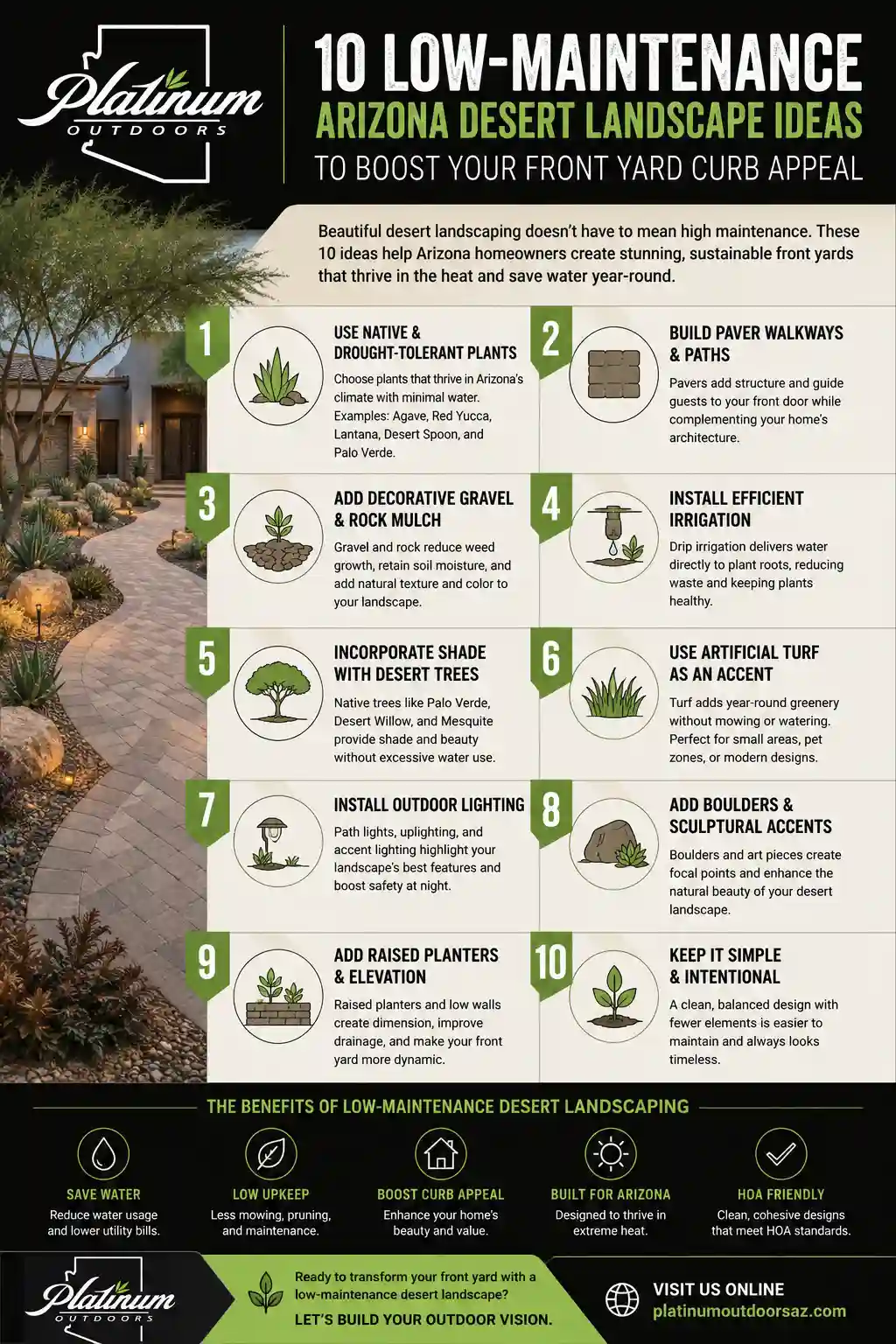
1. Replace Large Grass Areas With Drought-Tolerant Plant Layers
One of the biggest shifts happening in Arizona landscape design is moving away from oversized grass lawns and replacing them with layered desert plants that thrive in dry climates.
Traditional lawns require large amounts of irrigation, ongoing mowing, edging, fertilizing, and seasonal maintenance. In Arizona’s climate, that often means higher water bills and more upkeep than many homeowners want to manage.
A layered desert landscape uses a mix of:
- Accent cacti
- Agave varieties
- Desert spoon
- Red yucca
- Globe mallow
- Lantana
- Native grasses
- Drought-tolerant shrubs
According to Water – Use It Wisely, xeriscape landscapes prioritize native desert-adapted plants that thrive with minimal precipitation and abundant sunshine. They also note that xeriscaping can still feel lush, colorful, and visually layered rather than sparse or empty.
Instead of relying on a single plant type, modern desert landscaping combines different heights, textures, and colors to create depth throughout the front yard.
This layered approach helps landscapes feel more natural while reducing ongoing maintenance requirements.
For additional inspiration on drought-conscious layouts, see these drought-tolerant planting and xeriscaping ideas.
2. Use Decorative Gravel and Rock for Texture Instead of Empty Space
One misconception about desert landscaping is that it only consists of plain gravel yards with a few scattered plants. Modern Arizona desert landscape ideas are much more intentional.
Decorative gravel, decomposed granite, river rock, and crushed stone are now being used as design elements rather than simply ground cover.
Different materials can help define zones throughout the yard while creating contrast between plants, pathways, and hardscape features.
Popular desert landscape front yard combinations include:
- Light-colored decomposed granite paired with black mulch accents
- Mixed river rock around cacti and agave groupings
- Crushed granite pathways between planting beds
- Decorative boulders used as focal points
- Layered gravel colors for modern geometric layouts
Using decorative rock also helps suppress weeds and reduce evaporation around plant roots.
Many HOA communities throughout the Phoenix area also favor decorative gravel landscapes because they maintain a cleaner appearance throughout the year compared to traditional lawns.
When combined with structured hardscaping and carefully selected plants, decorative rock helps create a front yard that feels modern rather than unfinished.
3. Add Paver Walkways to Create Structure and Curb Appeal
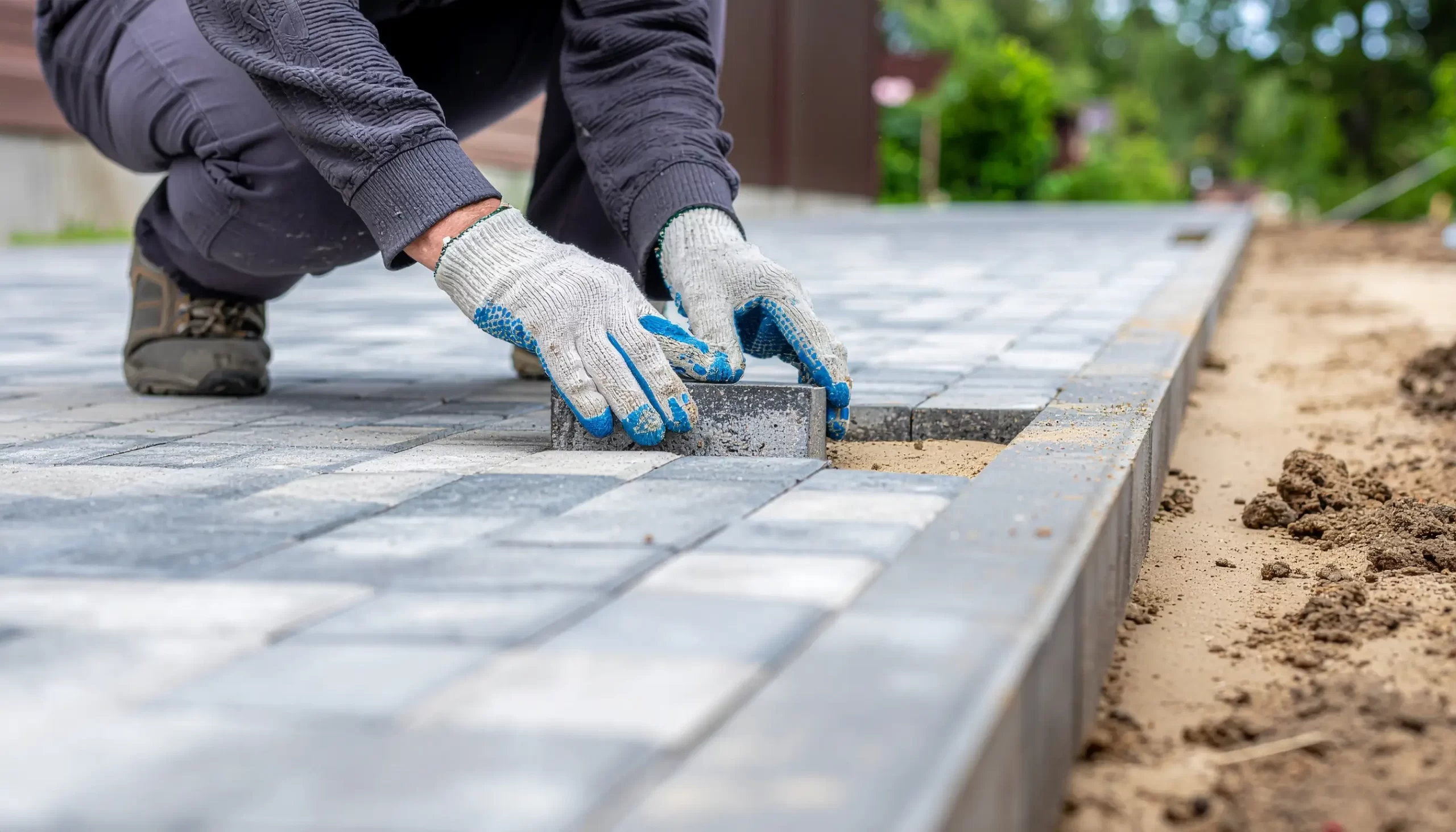
Pavers are one of the most effective ways to elevate an Arizona landscape while keeping maintenance low.
A thoughtfully designed paver walkway immediately gives the front yard more structure and improves how guests move through the space.
Instead of plain concrete paths, many Arizona homeowners are choosing:
- Large-format pavers
- Stepping stone walkways
- Floating paver paths
- Linear modern layouts
- Travertine entry pathways
- Porcelain paver transitions
Pavers also pair naturally with desert landscaping because they complement the neutral tones commonly found throughout Arizona homes and outdoor environments.
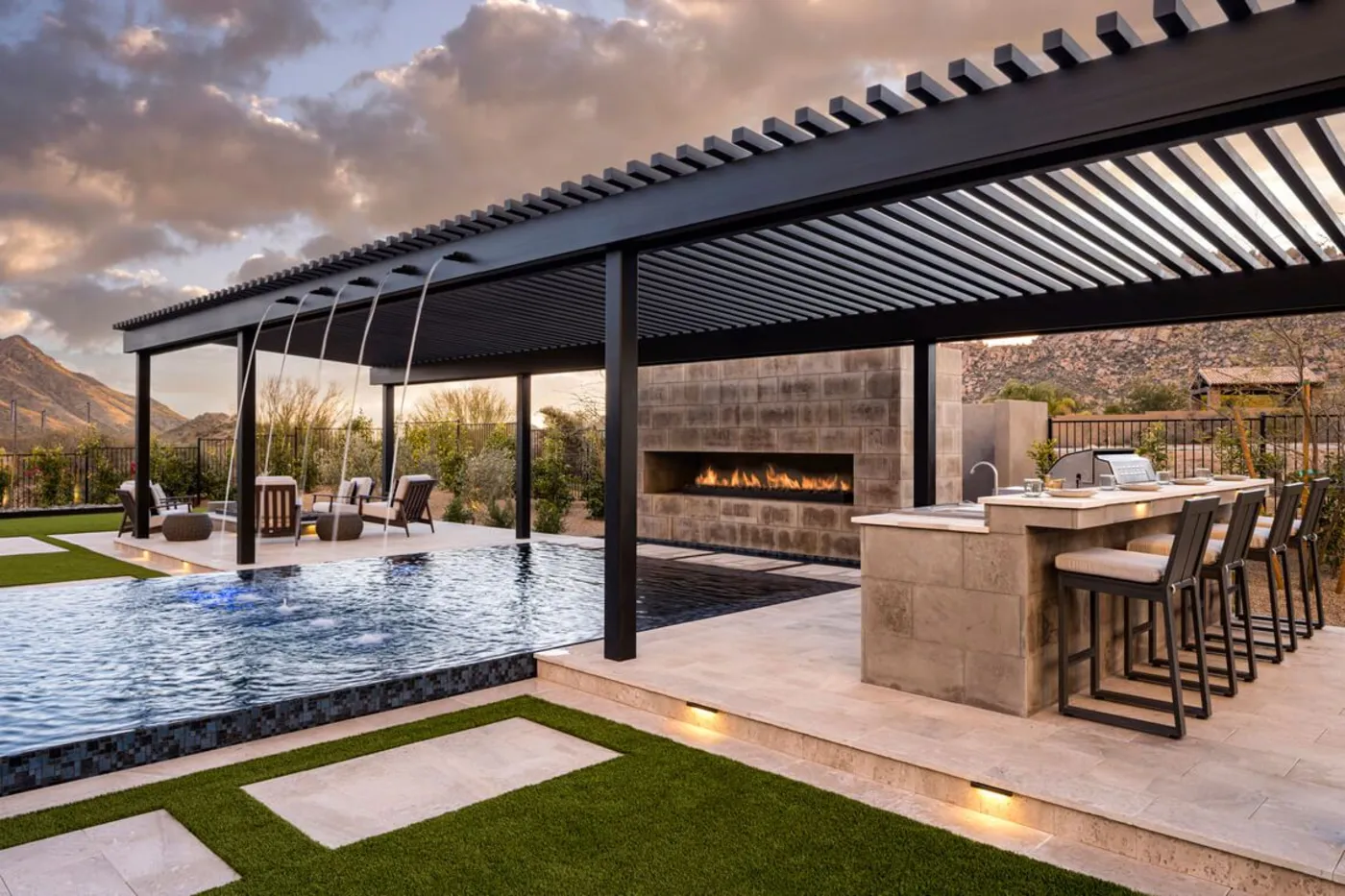
Modern desert landscape ideas often combine pavers with gravel joints or artificial turf strips to soften the appearance of hardscape surfaces.
Choosing the right material matters in Arizona heat. Surface temperatures, glare, durability, and long-term maintenance all play a role in selecting pavers for front yard applications.
Homeowners comparing materials can review this guide on travertine versus porcelain pavers for Arizona homes.
For larger front entry upgrades or full hardscape installations, Platinum Outdoors also offers custom paver patio and walkway installation services.
4. Incorporate Artificial Turf as an Accent Instead of a Full Lawn
Artificial turf remains one of the most popular upgrades in Arizona landscaping, but many homeowners are now using it differently than they did several years ago.
Instead of replacing the entire yard with turf, many modern desert landscape designs use artificial grass strategically as an accent material.
This creates a cleaner, more natural-looking balance between hardscape and greenery.
Popular uses for artificial turf in desert landscaping include:
- Framing stepping stone pathways
- Softening modern hardscape layouts
- Adding contrast around gravel areas
- Creating small pet-friendly sections
- Adding greenery near front entries
- Highlighting seating areas
Using turf selectively often creates a more upscale appearance while still dramatically reducing water usage and maintenance.
Arizona homeowners also appreciate that quality turf products eliminate mowing, reseeding, mud, and dead patches commonly associated with natural grass in desert climates.
For homeowners comparing landscaping approaches, this guide on artificial turf versus natural grass in Arizona explains how each option performs in extreme heat.
5. Use Native Trees to Add Shade Without Excess Water Use
Shade is one of the most valuable elements in any Arizona landscape.
Without shade, front yards can feel harsh during summer months. Surfaces become hotter, plants dry out faster, and outdoor areas become less usable.
Fortunately, several native and drought-tolerant trees perform extremely well in Arizona landscapes while still requiring relatively low maintenance.
Popular desert landscape tree options include:
- Palo verde
- Desert willow
- Arizona ash
- Mesquite
- Ironwood
- Acacia
According to Yellowstone Landscape, palo verde trees provide excellent shade while maintaining low water requirements and naturally sculpted forms ideal for Arizona landscapes.
Desert willow trees are another favorite because they add softer movement and seasonal blooms without requiring heavy irrigation.
Strategically placing shade trees can also help cool portions of the front yard naturally while improving overall curb appeal.
Many newer Arizona communities now encourage drought-conscious tree selections as part of HOA-approved landscape planning.
6. Blend Hardscaping With Desert Landscaping for a More Modern Look
Modern desert landscaping works best when plants and hardscape are designed together rather than treated separately.
That is one reason hardscaping has become such an important part of Arizona landscape design.
Hardscape elements create structure, define outdoor spaces, and help reduce maintenance while making the landscape feel more complete.
Popular hardscape features for desert landscape front yards include:
- Retaining walls
- Raised planters
- Concrete pads
- Paver borders
- Decorative seating walls
- Modern entry stairs
- Steel edging
- Boulder accents
Combining hardscape materials with desert plants creates a balanced contrast between organic and architectural elements.
This design approach is especially common in modern and contemporary Arizona homes where homeowners want clean lines and a more curated appearance.
For additional inspiration, Platinum Outdoors shares more ideas in this article on hardscaping ideas for Arizona landscapes.
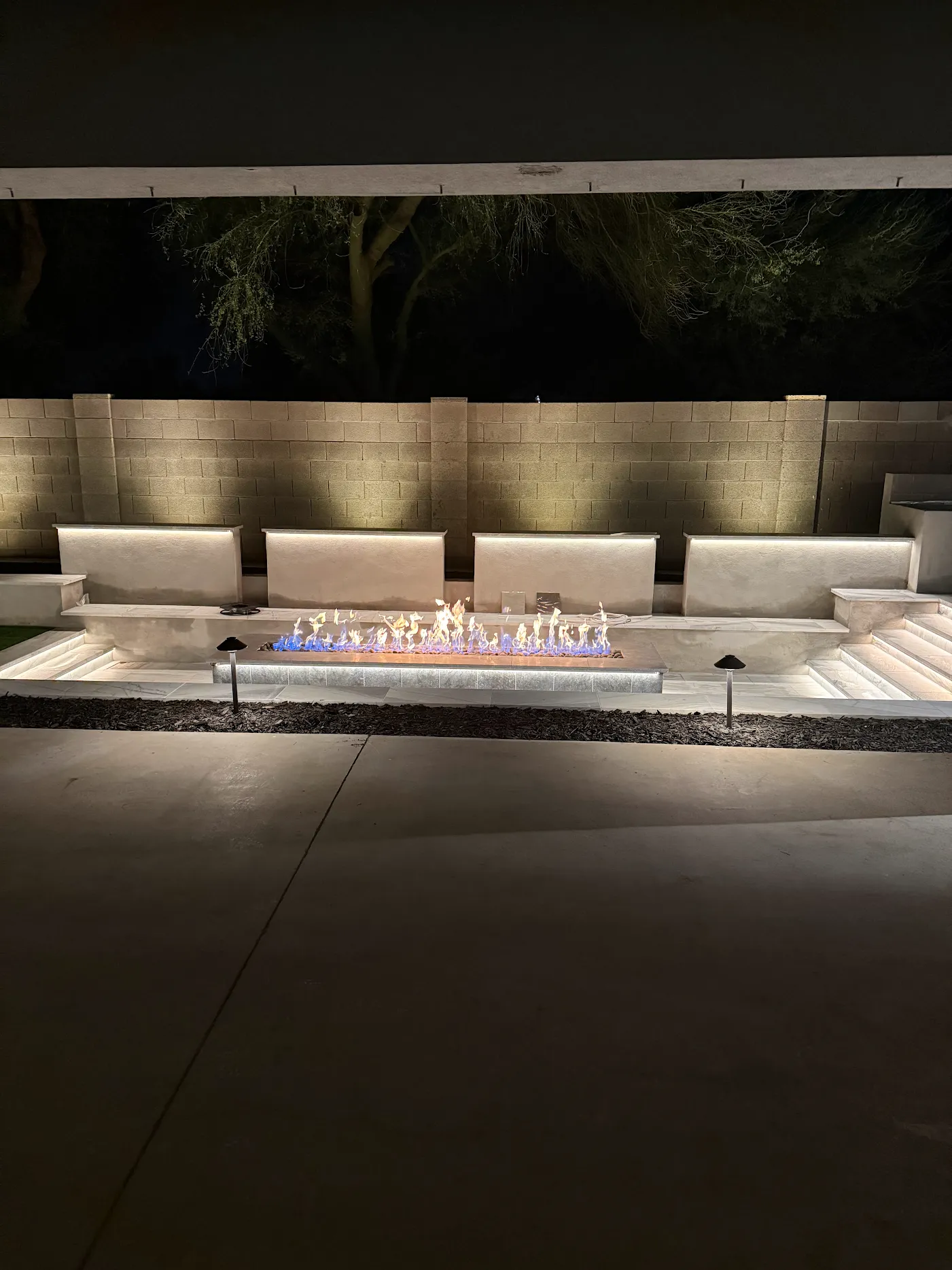
7. Add Outdoor Lighting to Improve Evening Curb Appeal
Outdoor lighting is often overlooked in front yard landscape design, but it can completely transform how the property looks after sunset.
Low-voltage lighting allows homeowners to highlight pathways, architectural features, plants, and trees while improving visibility and creating a more welcoming appearance.
Popular outdoor lighting applications in desert landscaping include:
- Path lighting
- Uplighting for cacti and trees
- Wall wash lighting
- Step lighting
- Accent lighting around boulders
- Soft lighting near entryways
Lighting also helps bring depth and texture to the landscape at night, especially when paired with layered plantings and hardscape features.
Many Arizona homeowners prefer warmer color temperatures because they complement desert tones more naturally than bright white lighting.
For design inspiration, see these outdoor lighting ideas for Arizona homes.
8. Create a Desert Landscape That Fits HOA Expectations
HOA requirements play a major role in landscaping decisions throughout many Phoenix-area communities.
Some HOAs regulate:
- Plant selections
- Gravel colors
- Turf usage
- Tree placement
- Wall heights
- Landscape visibility
- Lighting styles
Low maintenance desert landscaping often aligns well with HOA guidelines because it creates a cleaner and more consistent appearance throughout the neighborhood.
However, homeowners should still review HOA requirements before making major changes to the front yard.
Working with professionals experienced in Arizona landscape installations can help simplify this process and reduce the likelihood of redesigns later.
Platinum Outdoors provides professional landscape installation services for homeowners across the Phoenix metro and East Valley.
9. Use Raised Planters and Elevation Changes to Add Depth
One challenge many Arizona homeowners face is creating visual interest in relatively flat front yards.
Raised planters and subtle elevation changes help solve this problem by creating layers throughout the landscape.
Instead of having all plants sit on the same plane, raised elements naturally draw the eye upward and make the yard feel more dynamic.
Raised planters also:
- Create stronger focal points
- Improve drainage
- Help separate planting zones
- Reduce erosion
- Make smaller plants more visible
- Add architectural structure
Concrete block planters, steel-edged beds, and integrated retaining walls are especially popular in modern Arizona landscape design.
When combined with accent lighting and drought-tolerant plants, elevation changes can dramatically improve curb appeal without increasing maintenance requirements.
10. Keep the Overall Design Simple and Intentional
One of the most effective low maintenance desert landscaping strategies is avoiding overdesign.
Many of the best Arizona landscape designs rely on simplicity rather than excessive features or overcrowded planting beds.
Instead of filling every inch of the yard, modern desert landscaping often uses:
- Negative space
- Clean material transitions
- Minimal but impactful plant selections
- Simple geometric layouts
- Balanced color palettes
- Structured hardscaping
This creates a more timeless appearance while reducing long-term upkeep.
Simple landscapes also tend to age better because they are easier to maintain consistently over time.
For homeowners planning larger upgrades that combine landscaping, pavers, lighting, and outdoor living spaces together, Platinum Outdoors shares additional inspiration through their outdoor living design and construction services.
How Desert Landscaping Helps Reduce Maintenance in Arizona
Many homeowners initially focus on desert landscaping because of appearance, but long-term maintenance reduction is often the biggest benefit.
Compared to traditional lawns and high-water landscapes, low maintenance desert landscaping helps reduce:
- Mowing
- Edging
- Overseeding
- Fertilizing
- Large irrigation demands
- Mud and dead grass patches
- Seasonal lawn repair
- Weed growth
Drip irrigation systems also allow water to be distributed more efficiently to plant roots rather than sprayed broadly across the yard.
According to Water – Use It Wisely, drip irrigation minimizes water waste while ensuring plants receive only the water they need.
For Arizona homeowners looking to conserve water while still maintaining curb appeal, desert landscaping often provides the best long-term balance.
Common Mistakes to Avoid With Arizona Desert Landscaping
While desert landscaping can dramatically improve curb appeal, poor planning can lead to problems over time.
Some of the most common mistakes homeowners make include:
Using Too Many Plant Types
Overcrowded landscapes often feel chaotic and become harder to maintain. Simpler plant palettes usually create cleaner results.
Ignoring Mature Plant Sizes
Small desert plants can eventually become much larger than expected. Planning for mature growth helps prevent overcrowding later.
Choosing the Wrong Gravel Colors
Bright white gravel can create excessive glare in Arizona sunlight. Neutral earth tones often look more natural and stay visually balanced throughout the year.
Overwatering Desert Plants
Many desert plants perform worse when watered too frequently. Proper irrigation planning is essential.
Skipping Lighting
Outdoor lighting helps landscapes feel finished and usable after dark. Without lighting, even professionally designed landscapes can disappear visually at night.
Adding Too Much Turf
Artificial turf works best when used strategically rather than covering the entire yard.
Why Low-Maintenance Front Yards Are Growing in Popularity Across Arizona
Several trends are driving the popularity of low maintenance desert landscaping throughout Phoenix and the East Valley.
These include:
- Rising water conservation awareness
- New HOA requirements
- Smaller lot sizes in master-planned communities
- Extreme summer heat
- Busy homeowner lifestyles
- Interest in modern outdoor aesthetics
- Higher long-term lawn maintenance costs
Homeowners increasingly want front yards that:
- Look clean year-round
- Require less ongoing maintenance
- Use water responsibly
- Complement Arizona architecture
- Improve property value
- Feel modern without being overly trendy
That combination has made desert landscaping one of the most requested outdoor design styles throughout Arizona.
FAQ: Arizona Desert Landscaping
What is the best desert landscape design for Arizona homes?
The best desert landscape design depends on the property size, architecture, HOA guidelines, and maintenance preferences. Most Arizona homeowners benefit from layered drought-tolerant plants, decorative gravel, hardscaping, shade trees, and efficient irrigation systems.
What plants work best in low maintenance desert landscaping?
Popular low-maintenance desert plants include agave, red yucca, lantana, desert spoon, globe mallow, palo verde, and desert willow. Native plants adapted to Arizona conditions generally require less water and upkeep.
How do you make a desert landscape look modern?
Modern desert landscaping typically uses clean lines, structured hardscaping, simple plant palettes, layered textures, and carefully selected materials like large-format pavers, steel edging, decorative gravel, and architectural plants.
Is desert landscaping cheaper than grass?
While installation costs vary, desert landscaping often reduces long-term maintenance and irrigation expenses compared to traditional grass lawns. It also eliminates mowing and many seasonal lawn care requirements.
Does artificial turf work well in desert landscapes?
Yes. Artificial turf is commonly used as an accent material within desert landscaping to add greenery and soften hardscape layouts while reducing water usage and maintenance.
What type of irrigation works best for Arizona desert landscaping?
Drip irrigation systems are typically the most efficient option because they deliver water directly to plant roots and minimize evaporation in Arizona heat.
Can desert landscaping increase home value?
Well-designed desert landscaping can improve curb appeal, reduce maintenance requirements, and create a more updated appearance, all of which may positively influence property value.
How often should desert landscaping be maintained?
Most low maintenance desert landscapes require occasional pruning, irrigation checks, weed prevention, and seasonal cleanup. Maintenance needs are generally much lower than traditional lawns.
What gravel is best for desert landscaping?
Popular options include decomposed granite, crushed stone, river rock, and decorative gravel in earth-tone colors that complement Arizona homes and reduce visual glare.
Are desert landscapes HOA-friendly?
Many HOAs throughout Arizona prefer low-water desert landscaping because it creates a cleaner appearance and supports water conservation goals. Homeowners should still confirm specific community requirements before starting a project.
Final Thoughts on Desert Landscape Ideas for Arizona Homes
A thoughtfully designed desert landscape can completely transform the appearance of an Arizona home while dramatically reducing maintenance and water usage. Consider working with our outdoor fireplace contractors to create a warm and inviting space you’ll use year round.
The best low maintenance desert landscaping combines:
- Drought-tolerant plants
- Efficient irrigation
- Decorative gravel
- Pavers and hardscaping
- Strategic shade
- Outdoor lighting
- Intentional layout planning
Rather than fighting Arizona’s climate, modern desert landscaping works with it.
That approach helps create front yards that feel cleaner, more sustainable, and easier to maintain year-round.
Homeowners looking for additional outdoor inspiration can also explore:
For broader educational resources on drought-conscious landscaping and water conservation in Arizona, homeowners can also review information from: