Backyard upgrades in Phoenix are different from most parts of the country. The heat is intense, water use matters, and the way people actually use their outdoor space shifts toward mornings, evenings, and shaded areas. That is why the best projects are not just about appearance—they are about making the space more usable, more comfortable, and easier to maintain year-round.
If you are researching what are the top outdoor renovation ideas, comparing outdoor renovation companies, or planning your own project, this guide breaks down the upgrades that consistently perform well in Phoenix. These are the ideas that not only improve how your yard looks, but also how it functions in a desert climate.
Many of these concepts are also supported by broader landscape design principles, such as those outlined by the University of Arizona Cooperative Extension, which emphasizes climate-appropriate design and water efficiency in desert regions.
1. Build Shade First So the Rest of the Yard Works
In Phoenix, shade is not a luxury—it is what determines whether a yard gets used at all. Without it, patios can become too hot to enjoy, seating areas feel exposed, and even well-designed features go unused during much of the day.
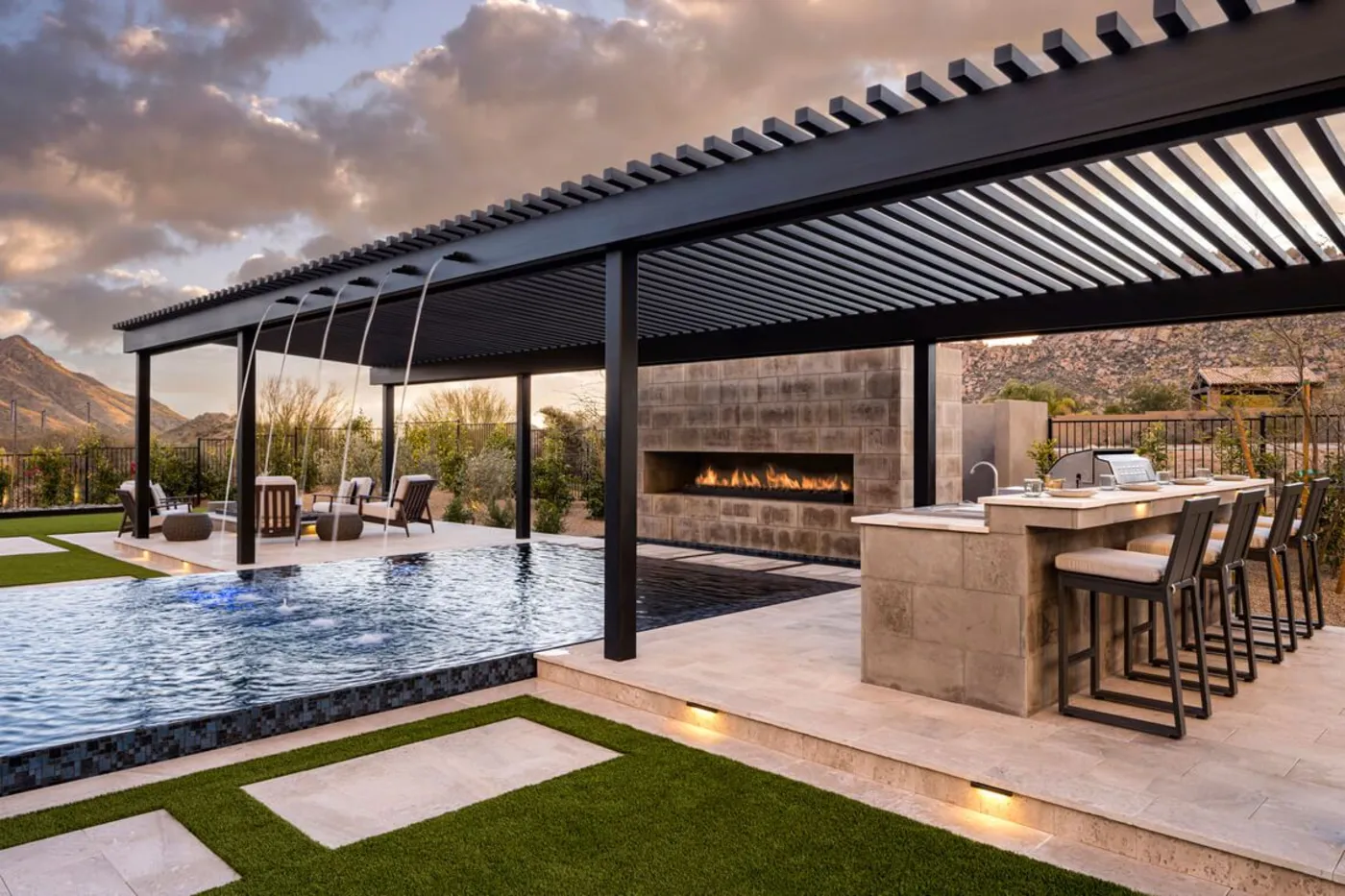
This is why shade structures are one of the most important outdoor renovations. Pergolas, for example, are one of the most versatile options because they define space while still allowing airflow. Many homeowners use them to cover dining areas or create a transition from the home into the yard. If you are exploring design options, these pergola ideas for Arizona heat are a great starting point.
For more complete coverage, larger structures can make an even bigger impact. Covered patios, ramadas, and extended rooflines can turn part of the yard into a fully usable outdoor room. Homeowners comparing options often look at different shade structures for Arizona backyards to understand what works best for their layout.
Placement matters just as much as the structure itself. West-facing sun is usually the most intense, so blocking that exposure often delivers the biggest comfort improvement. According to U.S. Department of Energy guidance on shading, properly placed shade can significantly reduce heat gain and improve overall energy efficiency.
When shade is done right, everything else—patios, kitchens, seating areas, and lighting—becomes more enjoyable. That is why many experienced outdoor renovation specialists treat shade as the foundation of the entire design.
2. Upgrade Your Patio With Pavers That Stay Cooler and Look Finished
The patio is usually the center of the backyard, so improving it often has the biggest overall impact. Replacing plain concrete or unfinished surfaces with pavers instantly gives the yard more structure and usability.
In Phoenix, material choice matters. Dark surfaces absorb heat and can become uncomfortable underfoot, while lighter pavers reflect more sunlight and stay cooler. According to research shared by Cool Pavement programs, reflective surfaces can help reduce surface temperatures and improve comfort in outdoor spaces.
Pavers also allow for more design flexibility. They can create defined zones for seating, dining, and walkways while helping the yard feel more cohesive. If you are comparing materials, this travertine vs. porcelain paver guide helps break down the differences.
Layout plays a big role too. A well-designed patio does not just fill space—it improves how people move through the yard. If you are still planning your layout, this paver patio planning guide is useful for thinking through spacing, flow, and design.
Paver work is also a core part of larger backyard renovation services and often connects with broader hardscaping upgrades. For many homeowners, this is the step that transforms a yard from basic to complete.
3. Add an Outdoor Kitchen That Extends Your Living Space
Outdoor kitchens continue to be one of the most requested upgrades because they change how people use their yard. Instead of going in and out of the house, everything stays outside. Cooking, serving, and gathering all happen in one place.
The key is designing a kitchen that fits your lifestyle. Some homeowners prefer a simple grill and prep space, while others want a more built-out setup with refrigeration, storage, and bar seating. The goal is not to add everything—it is to add what will actually get used.
Planning helps avoid common mistakes. If you are still figuring out what to include, this outdoor kitchen checklist walks through the most important decisions. For a broader overview, this Phoenix outdoor kitchen guide provides additional insight.
Placement matters in Arizona. Kitchens should be positioned near shade and seating, not out in full sun. Airflow, spacing, and orientation all impact comfort. Many homeowners pair kitchens with pergolas or covered patios to keep the area usable even in warmer months.
As part of a larger outdoor living design, kitchens often become the anchor of the entire yard. Once the kitchen is placed, it becomes easier to organize seating, lighting, and pathways around it.
4. Use Outdoor Lighting to Make the Yard Usable at Night
In Phoenix, evenings are often the most comfortable time to be outside. Without lighting, however, much of the yard goes unused after sunset. That is why lighting is one of the most impactful upgrades, even though it is often overlooked at the beginning of a project.
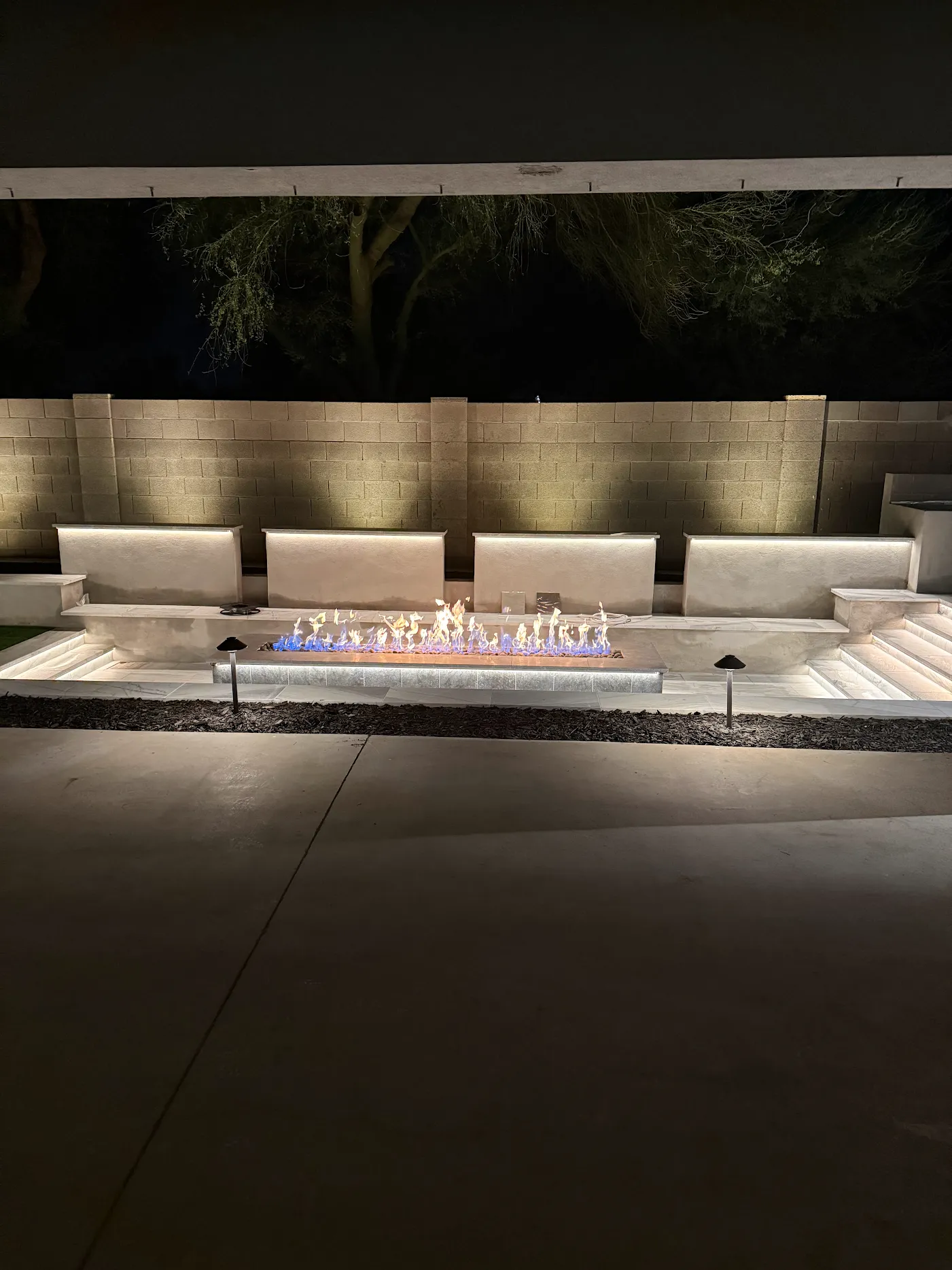
A well-designed lighting plan uses multiple layers. Path lights guide movement, accent lights highlight trees or structures, and overhead lighting makes seating areas more functional. If you want inspiration, these Arizona lighting ideas show how different layers work together.
For homeowners new to lighting, this installation guide explains fixture types and planning considerations.
Lighting should be integrated early in the design, not added at the end. That allows for better wiring placement and a cleaner overall look. It also avoids relying on a few overly bright fixtures, which can make the space feel harsh instead of inviting.
When done well, lighting improves both safety and atmosphere. It makes the yard feel finished and extends how often it gets used. Working with the right outdoor fireplace contractor like Platinum Outdoors can ensure your outdoor living space is well-lit and comfortable year round.
5. Replace Traditional Grass With Turf Where It Makes Sense
Maintaining natural grass in Phoenix can be difficult and water-intensive. That is why artificial turf is one of the most practical outdoor home renovation ideas. It provides a consistent green look without the same level of upkeep.
The best designs use turf strategically. It works well in play areas, pet zones, or as a visual contrast against pavers and desert landscaping. Instead of covering the entire yard, many homeowners combine turf with hardscape and planting beds for a more balanced look.
If you are comparing options, this turf vs. grass guide explains the tradeoffs. Pet owners can also review this turf for pets resource.
Turf is especially popular in newer homes where the backyard starts as bare dirt. In those cases, new home landscaping services often include turf as part of a full design.
For homeowners looking to reduce maintenance while still keeping a clean, finished yard, turf remains one of the most effective solutions.
6. Use Xeriscaping to Create a Low-Water, High-Impact Landscape
Xeriscaping is one of the most practical approaches for Phoenix homes because it aligns with the desert environment. Instead of forcing a high-water landscape to survive, it uses plants that naturally perform well here.
Modern xeriscaping is not just rock and cactus. The best designs use a mix of textures, colors, and plant heights to create visual interest. If you want direction on plant selection, this drought-tolerant planting guide is a helpful resource.
For larger projects, xeriscaping services can help connect planting with irrigation and layout planning.
According to the EPA WaterSense program, water-efficient landscaping can significantly reduce outdoor water use, which is especially important in arid regions like Phoenix.
Xeriscaping is one of the best outdoor renovations for homeowners who want a yard that looks intentional while keeping long-term maintenance low.
7. Upgrade Irrigation to Support the Entire Design
Irrigation is often overlooked, but it plays a major role in how well a yard performs over time. A strong design can struggle if watering is inconsistent or inefficient.
Drip irrigation is commonly used in Phoenix because it delivers water directly to plant roots. If you are comparing systems, this drip vs. sprinkler comparison explains the differences.
Modern systems also include zoning and smart controls that adjust watering based on plant type and conditions. This helps prevent overwatering and keeps plants healthier.
For full installations, irrigation services can ensure the system is designed correctly from the start.
While irrigation may not be the most visible upgrade, it is one of the most important for long-term success.
8. Add a Fire Feature to Create a Natural Gathering Area
Fire features add a focal point and make the yard feel more complete. Even in Phoenix, they are useful during cooler months and evenings.
Fire pits create a more casual, social setting, while fireplaces provide structure and visual height. If you are deciding between options, this fire pit guide is helpful.
For more built-in designs, this fireplace planning resource outlines what to consider.
Fire features also pair well with professional installation services and are often included in larger yard remodels.
They are not always the first upgrade, but they are often one of the most enjoyed once the project is finished.
9. Focus on Layout So Everything Works Together
The biggest difference between an average backyard and a strong one is layout. A good design connects everything—patio, kitchen, turf, lighting, and planting—into a cohesive plan.
Instead of adding features randomly, it is better to think through how the yard will be used. Where do people sit? Where do they walk? Where does shade matter most? Once those questions are answered, the design becomes much easier to build.
For inspiration, these Arizona backyard ideas and small backyard design ideas can help guide planning.
Homeowners ready to take a more structured approach often start with landscape design services before construction begins.
Final Thoughts on the Best Outdoor Renovations in Phoenix
The best outdoor renovations are not about adding the most features—they are about choosing the right combination. Shade, pavers, kitchens, lighting, turf, xeriscaping, and irrigation all work best when they are planned together.
If you are comparing outdoor renovation companies or exploring outdoor renovation services, focus on how each upgrade improves comfort, usability, and long-term maintenance in a Phoenix environment.
When those pieces come together, the backyard stops feeling like unused space and starts functioning as one of the most valuable parts of the home.